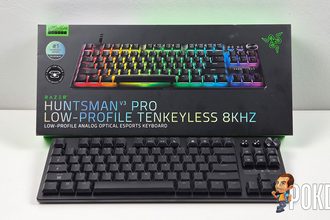

- Unboxing the Razer Huntsman V3 Pro Low-Profile TKL 8KHz
- Walkaround
- Specifications
- The Good
- Rapid Trigger Implementation Is Among the Best Available
- 8,000Hz Polling Rate Delivers Measurable Input Advantage
- Low-Profile Form Factor Is Well Executed
- Snap Tap and Snap Flex Add Meaningful Competitive Utility
- Analog Input and Dynamic Keystroke Expand Use Cases
- On-the-Fly Adjustments Without Software
- The Bad
- Full Feature Access Requires Synapse
- Wired Only in 2025
- No USB Passthrough
- Linear Switch Feel May Not Suit All Typists
- Price Faces Stiff Competition
- Chroma RGB Ecosystem Lock-In
- Razer Huntsman V3 Pro Low-Profile TKL 8KHz Verdict
Offer price: 1149
Currency: MYR
-
Appearance - 8/108/10
-
Features - 8.5/108.5/10
-
Materials - 7/107/10
-
Performance - 9/109/10
-
Portability - 7.5/107.5/10
-
User Experience (UX) - 8/108/10
-
Value - 8/108/10
Summary
The Razer Huntsman V3 Pro Low-Profile TKL 8KHz is a focused, well-executed keyboard built specifically for competitive gaming, and within that scope it delivers convincingly.
Overall
8/10Pros
- Rapid Trigger Implementation Is Among the Best Available
- 8,000Hz Polling Rate Delivers Measurable Input Advantage
- Low-Profile Form Factor Is Well Executed
- Snap Tap and Snap Flex Add Meaningful Competitive Utility
- Analog Input and Dynamic Keystroke Expand Use Cases
- On-the-Fly Adjustments Without Software
Cons
- Full Feature Access Requires Synapse
- Wired Only in 2025
- No USB Passthrough
- Linear Switch Feel May Not Suit All Typists
- Price Faces Stiff Competition
- Chroma RGB Ecosystem Lock-In
Unboxing the Razer Huntsman V3 Pro Low-Profile TKL 8KHz
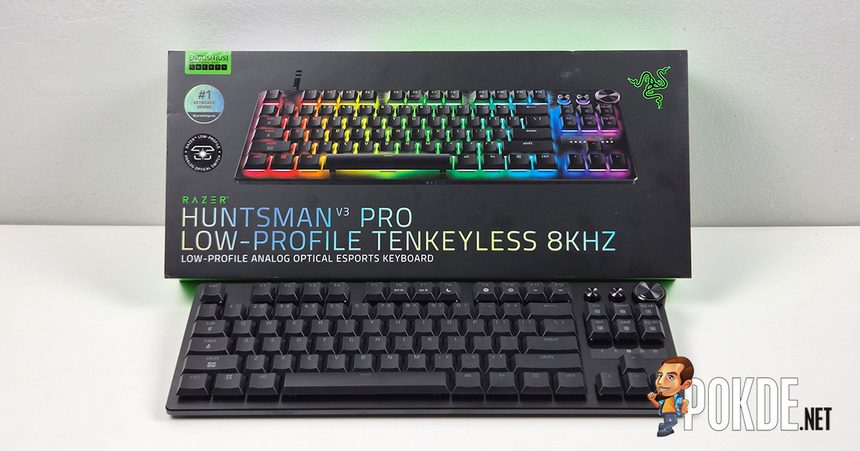
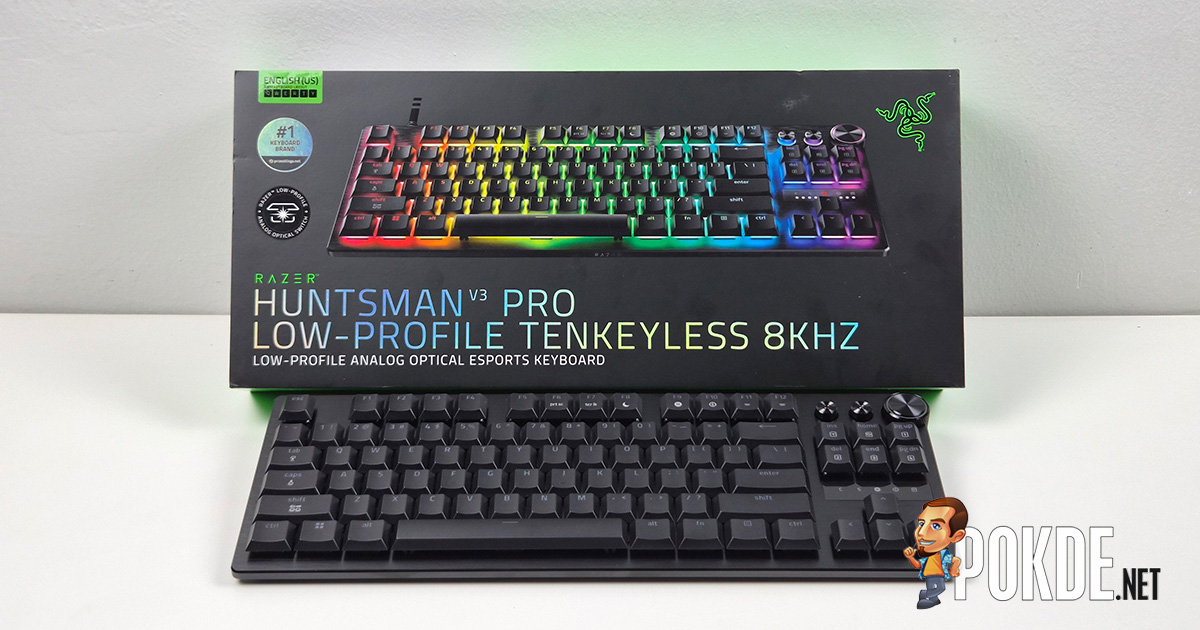
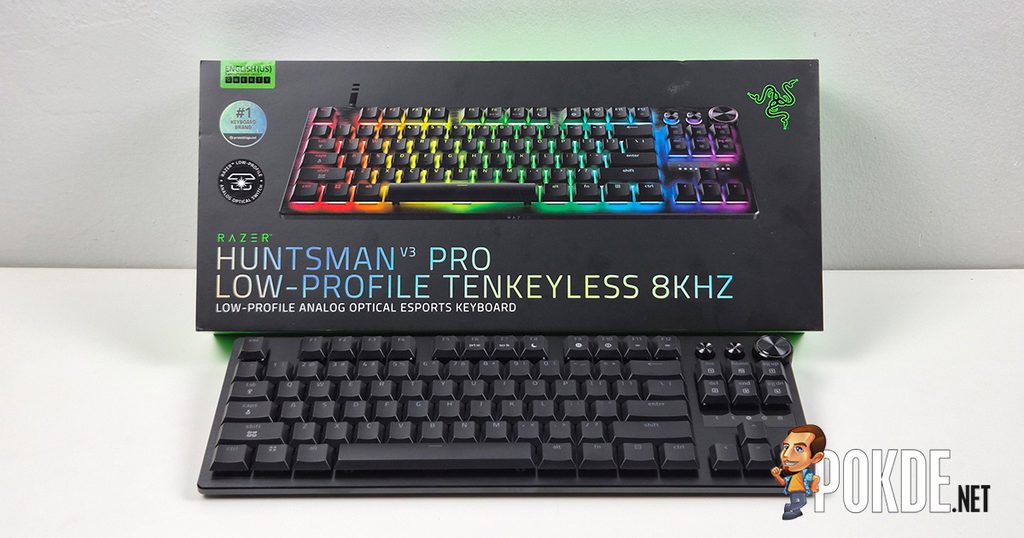
The Razer Huntsman V3 Pro Low-Profile TKL arrives in standard Razer packaging, the familiar black and green colourway that is instantly recognisable to anyone who has bought a Razer peripheral before. Inside the box you get the keyboard itself, a detachable braided USB-C cable, documentation, and Razer brand stickers. The detachable cable is a practical inclusion that makes cable management and transport tidier, and the braided construction feels durable rather than an afterthought.
Walkaround
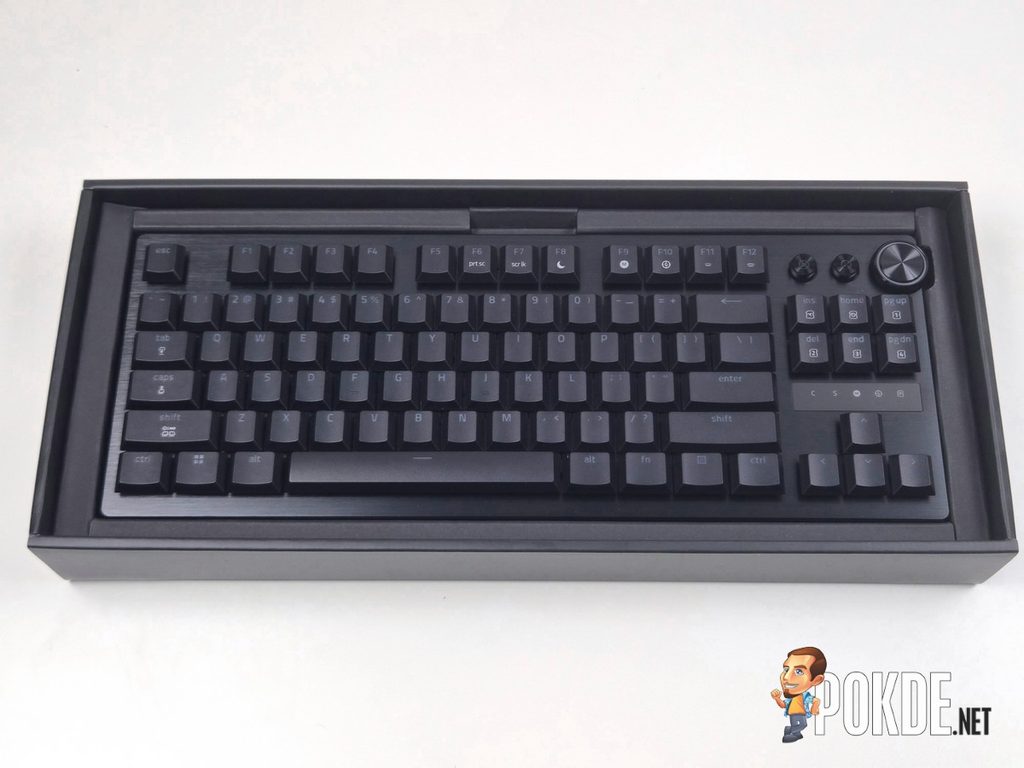
The Huntsman V3 Pro Low-Profile TKL cuts a clean, professional profile. The black chassis with a 5052 aluminium alloy top plate gives it a build quality that feels reassuringly solid for a tenkeyless keyboard, with no flex across the frame under normal typing pressure and a substantial enough weight that it does not shift around on the desk during intense gaming sessions.
The low-profile form factor is the defining physical characteristic here. At roughly 35% lower than a standard keyboard, the key travel is reduced from the usual 4mm to approximately 2.8mm maximum actuation depth, and the overall typing position is flatter, which many users find more comfortable for extended sessions without a wrist rest. For anyone switching from a laptop keyboard or who simply prefers a lower hand position, the transition feels natural quickly. For those accustomed to the pronounced height of standard mechanical keyboards, the adjustment takes a little longer but is not steep.
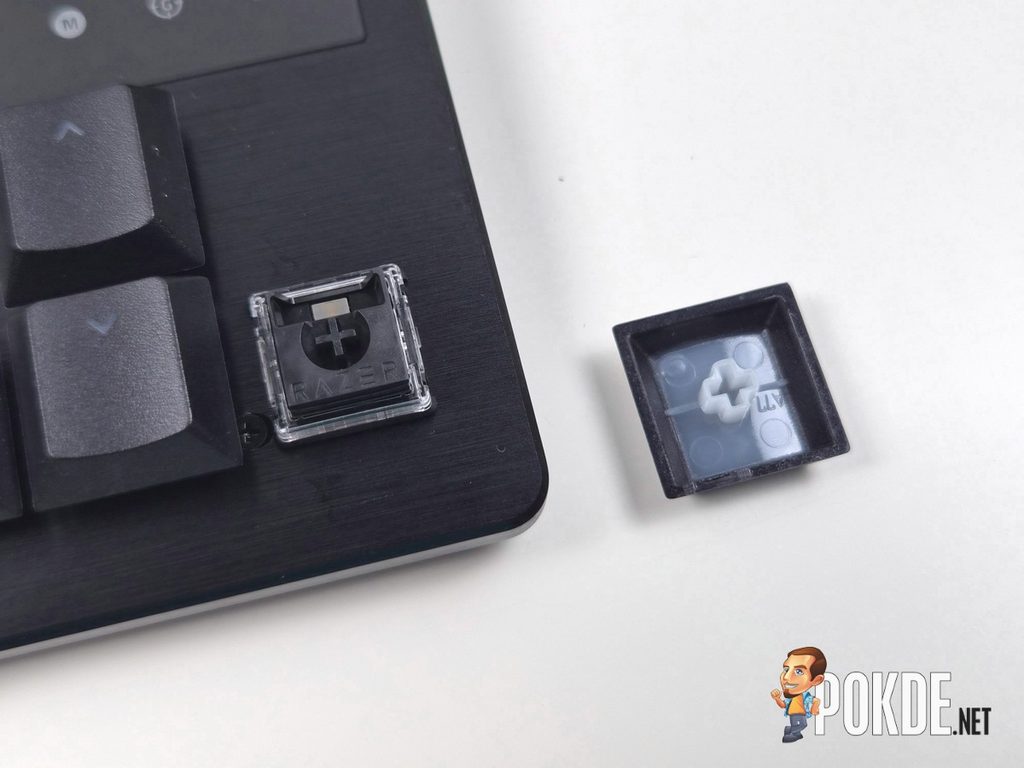
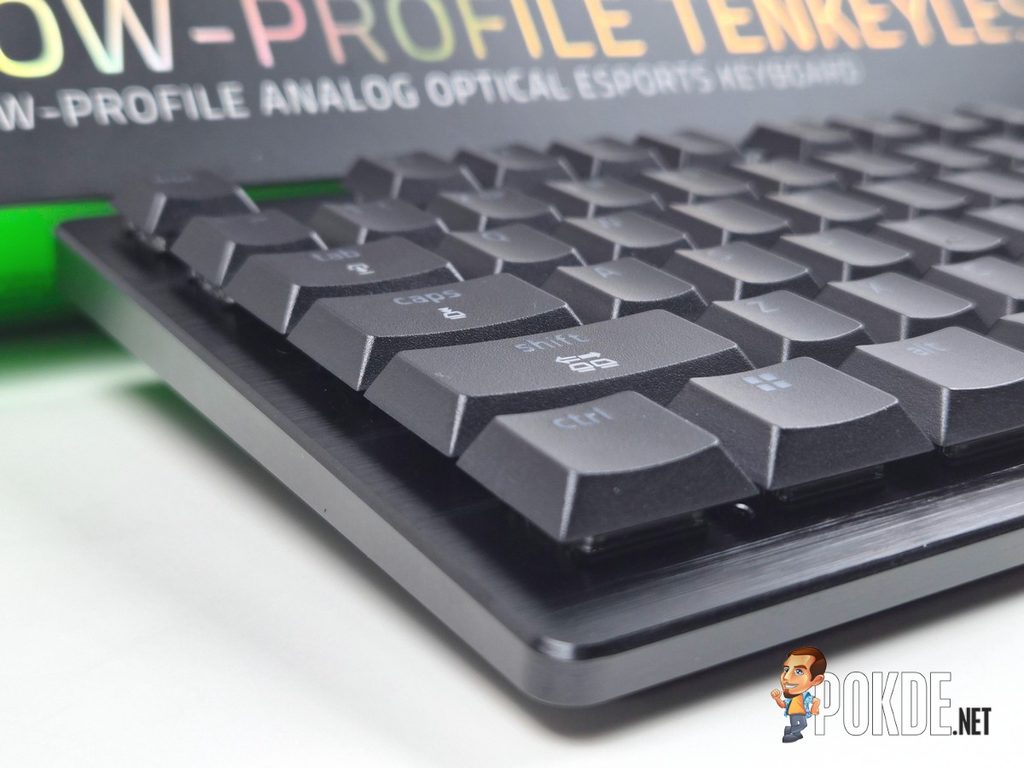
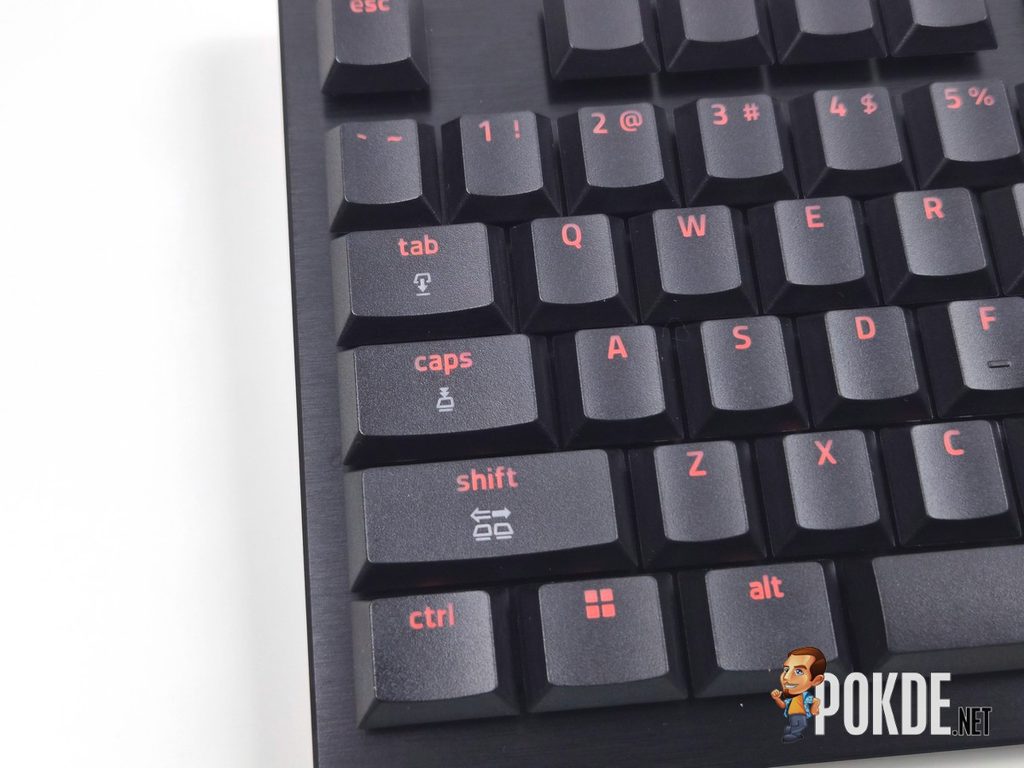
The doubleshot PBT keycaps are a strong inclusion at this price point. PBT is more resistant to shine and wear than the ABS plastic used on cheaper keyboards, and the doubleshot construction means the legends will not fade over time. The legends themselves are cleanly printed, and the keycaps have a pleasant texture under finger that works well with the low-profile switches beneath them. There is no USB passthrough here, and whether it matters depend entirely on how you intend to use the board.
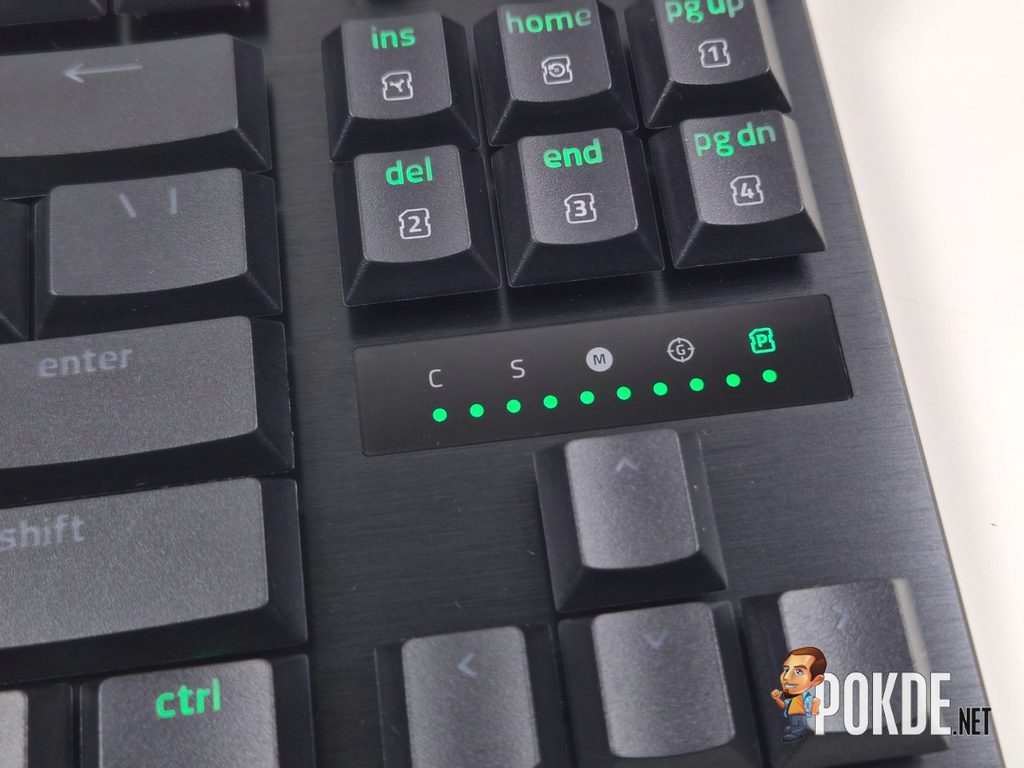
The Razer Chroma RGB shines through the keycaps with good uniformity across the layout, and as with all Chroma keyboards, the lighting is customisable through Synapse or adjustable directly on the keyboard for users who prefer to keep their setup offline.
Specifications
| Specification | Details |
|---|---|
| Switch | Razer Low-Profile Analog Optical Switches Gen-2 |
| Key Feel | Linear |
| Layout | Tenkeyless (TKL) |
| Keycaps | Doubleshot PBT |
| Top Case | 5052 Aluminium Alloy |
| Polling Rate | Up to 8,000Hz |
| Actuation Range | 0.1 to 2.8mm adjustable |
| Rapid Trigger | Yes, 0.1mm resolution |
| Analog Input | Yes |
| Snap Flex | Yes |
| Snap Tap | Yes |
| Dynamic Keystroke | Yes |
| Onboard Memory | Hybrid, up to 6 profiles |
| Lighting | Razer Chroma RGB |
| Connectivity | Detachable USB-C cable |
| Anti-Ghosting | N-Key Rollover |
| Gaming Mode | Yes |
| Macro Recording | Yes, on-the-fly |
| Software | Razer Synapse |
| Wrist Rest | Not included |
| Media Keys | Multi-function digital dial and dedicated control buttons |
| Passthrough | None |
| In the Box | Keyboard, detachable braided USB-C cable, documentation, Razer stickers |
| Price | RM1,149 |
The Good
Rapid Trigger Implementation Is Among the Best Available
The Razer Low-Profile Analog Optical Switch Gen-2 delivers a rapid trigger implementation that is consistently smooth and responsive in competitive play. With a minimum actuation sensitivity of 0.1mm and a reset point equally precise, inputs feel immediate and the registration is clean without false triggers during normal typing. Counter-strafing and fast directional changes in shooters felt noticeably more responsive compared to standard mechanical switches, and the difference is practical rather than marginal. Among rapid trigger keyboards currently available, this one sits at the top end for execution quality.
8,000Hz Polling Rate Delivers Measurable Input Advantage
The 8,000Hz polling rate, which reports inputs to the PC eight times per second rather than the standard 1,000Hz, reduces the window between a keypress and the game registering it to 0.125ms. For competitive gaming where timing windows can be measured in single-digit milliseconds, this is a genuine technical advantage. The implementation here is stable across extended sessions without the CPU overhead spikes that plagued early 8KHz implementations from other manufacturers.

Low-Profile Form Factor Is Well Executed
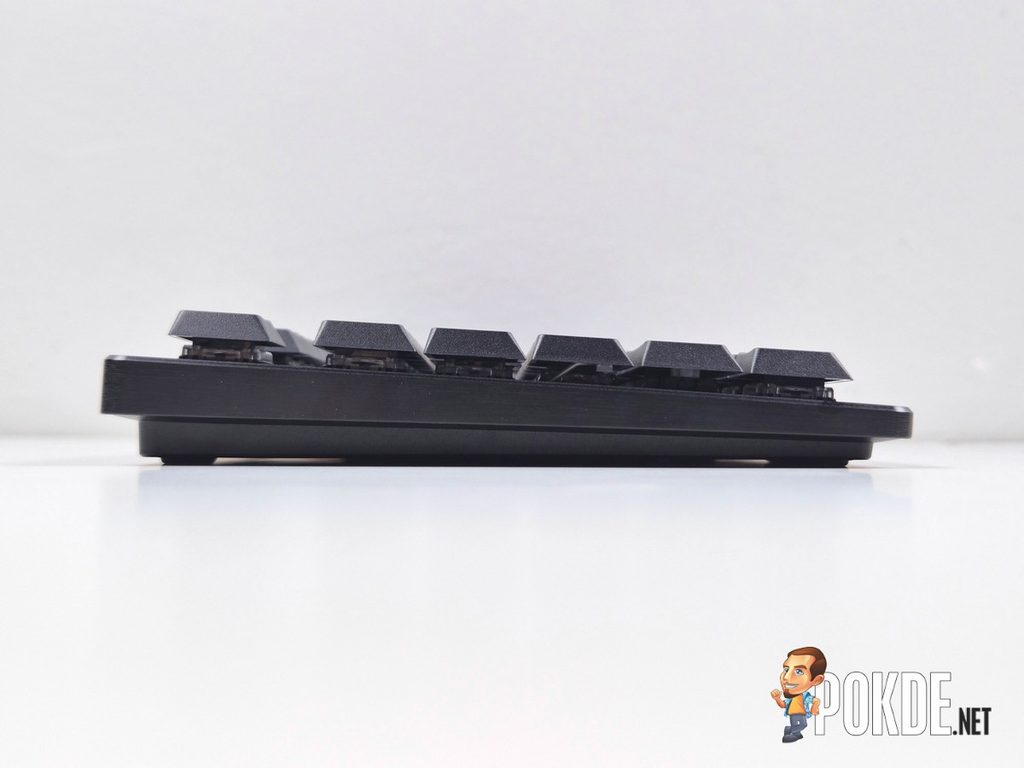
The reduced key height and travel distance do not feel like compromises in the way that early low-profile mechanical keyboards sometimes did. The switches are smooth throughout the travel, the actuation is consistent, and the typing experience is genuinely comfortable for both gaming and productivity use. The flatter typing angle also reduces wrist extension for many users, which contributes to comfort during long sessions.
Snap Tap and Snap Flex Add Meaningful Competitive Utility
Snap Tap, which prioritises the most recently pressed directional key when two opposing inputs are detected simultaneously, addresses SOCD inputs in a way that is clean and consistent in implementation. Snap Flex, which provides additional customisation around how multiple simultaneous inputs are handled, gives more advanced users meaningful control over input priority behaviour. Both features work as described and deliver real benefits in fast-paced competitive scenarios.
Do take note that both features are not allowed in certain competitive games. You can still use the keyboard with both features disabled but make sure to check if your allows you to use it to avoid getting banned.
Analog Input and Dynamic Keystroke Expand Use Cases
The ability to use the analog optical switches for variable input, registering different actions or intensities at different points in the key travel, opens up a range of creative applications beyond standard binary key input. Dynamic Keystroke allows two separate inputs to be mapped within a single keypress travel, with the first action triggering at a shallow press and the second at a deeper press. The practical applications range from dual-function keys in productivity workflows to rapid ability and ultimate input in competitive gaming.
On-the-Fly Adjustments Without Software
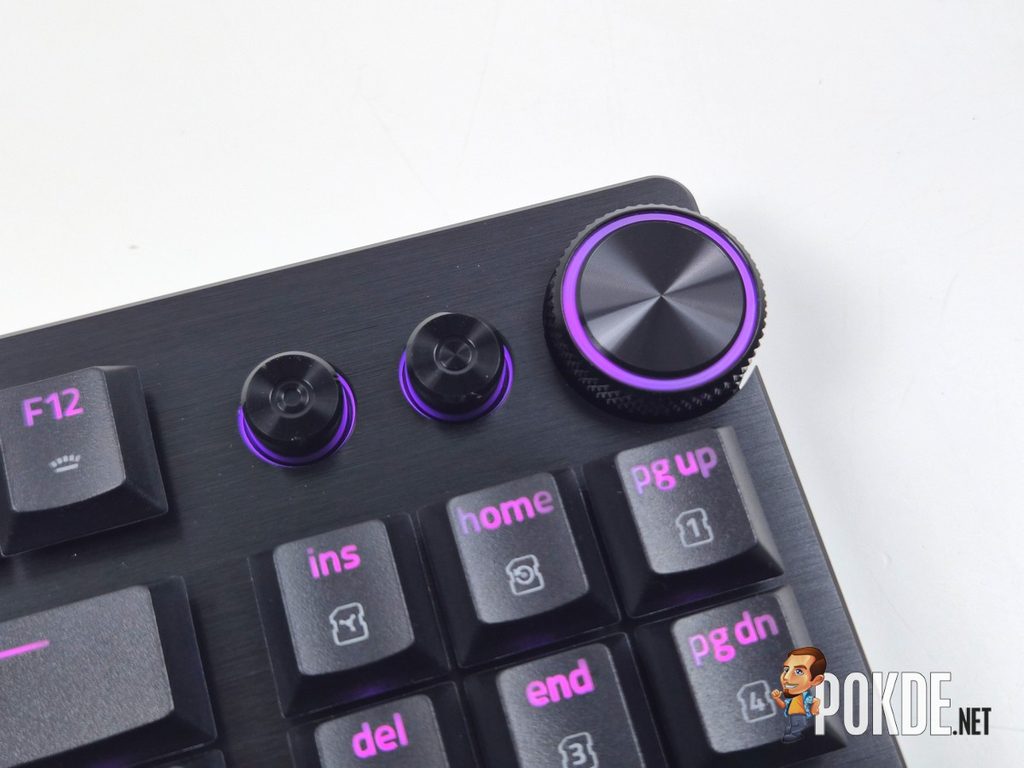
Quick onboard adjustment for actuation point and rapid trigger sensitivity without requiring Synapse is a genuinely useful feature for users who compete at LAN events or simply do not want to open software every time they want to tweak their settings. The keyboard retains six onboard profiles, giving ample room for different configuration sets without cloud dependency.
The Bad
Full Feature Access Requires Synapse
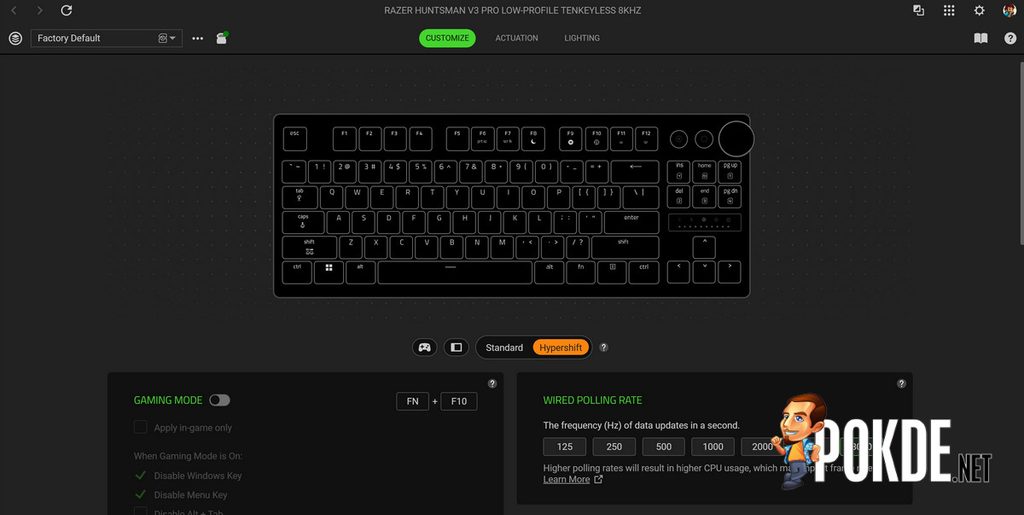
While the onboard adjustments for actuation and rapid trigger are accessible without software, the deeper customisation of Dynamic Keystroke, Snap Flex profiles, Chroma lighting effects, and macro programming all require Razer Synapse installed and running. For users who prefer to keep their system lean or who game on machines where installing peripheral software is not practical, this dependency is a genuine limitation. Synapse itself is a capable application, but the requirement rather than the option is the friction point.
Wired Only in 2025
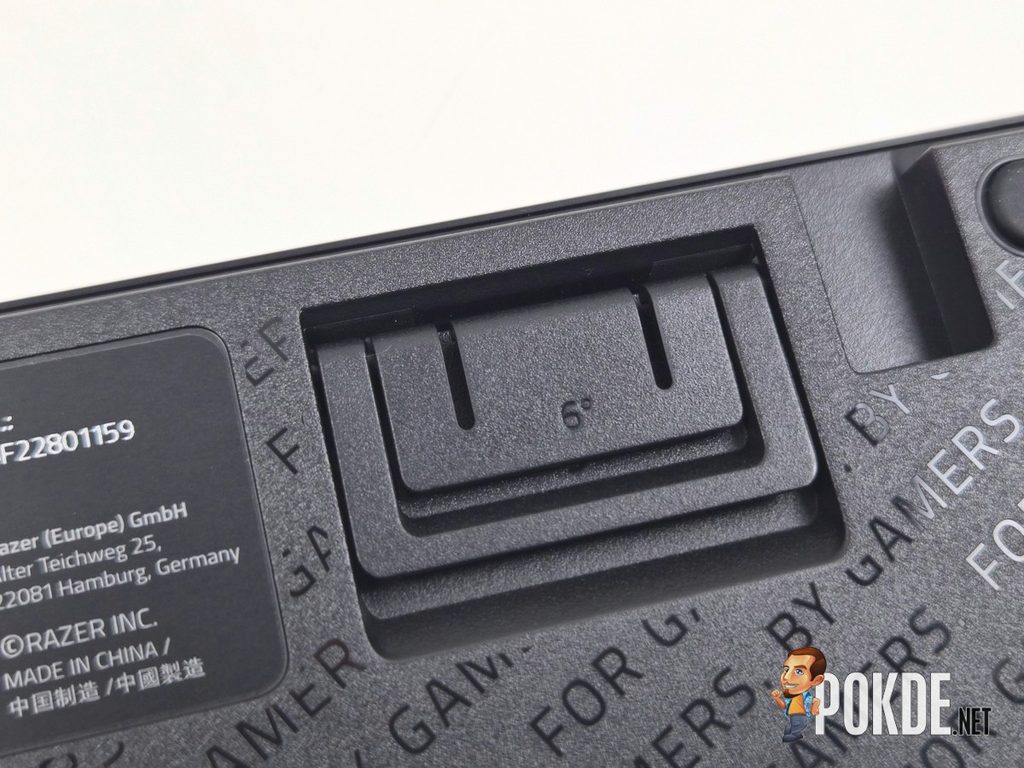
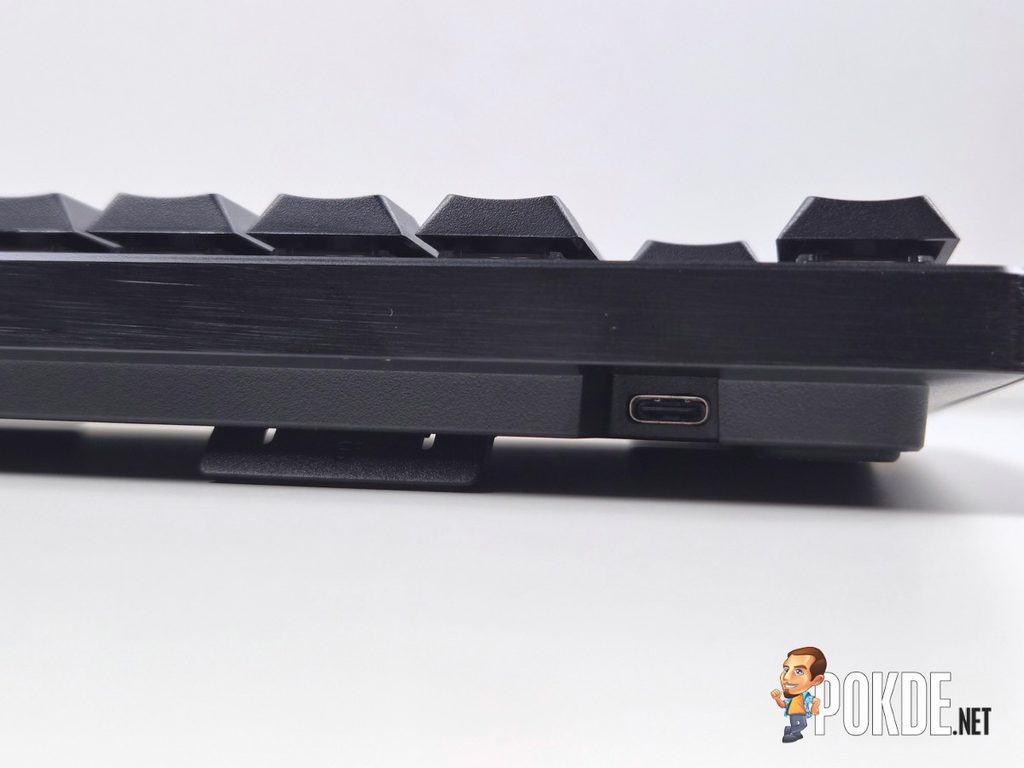
The Huntsman V3 Pro Low-Profile TKL has no wireless option. At RM1,149, competing keyboards offer wireless connectivity at or below this price point, and for users who value a cable-free desk setup, this is a clear gap. The braided detachable cable mitigates the inconvenience of managing the cable, but it does not resolve the absence of a wireless mode entirely.
No USB Passthrough
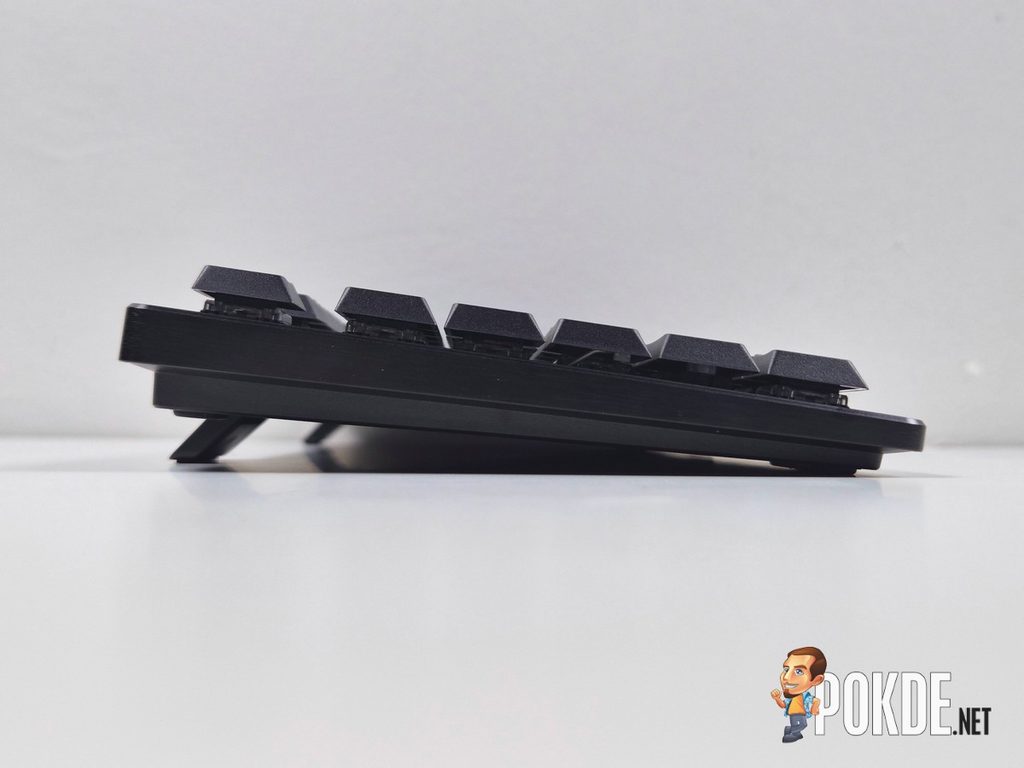
The TKL layout inherently sacrifices the numpad, but the absence of USB passthrough is an additional omission that might affect your daily workflow outside of gaming. Using a keyboard USB port for a mouse or USB drive all require workarounds that a more feature-complete keyboard at this price would not. These are deliberate decisions rather than oversights, but it’s something to keep in mind before investing in it.
Linear Switch Feel May Not Suit All Typists
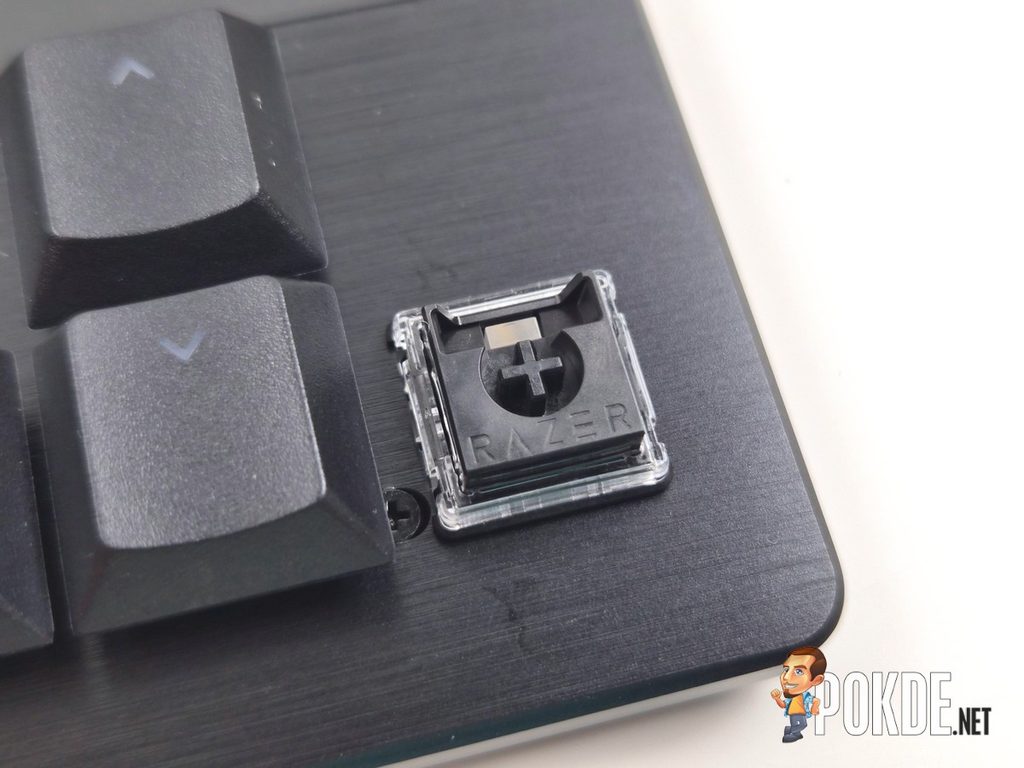
The low-profile linear switches are excellent for gaming but may not be the preferred typing feel for users accustomed to tactile or clicky switches. The absence of a bump or auditory feedback means bottoming out is easy and happens frequently during typing, which can contribute to finger fatigue over extended productivity sessions for users who have not previously used linear switches. This is a personal preference consideration rather than a flaw, but it is relevant context for buyers who type extensively.
Price Faces Stiff Competition
At RM1,149, the Huntsman V3 Pro Low-Profile TKL sits in a range where it competes with keyboards that offer wireless connectivity, more comprehensive feature sets, or wider switch variety. Razer’s rapid trigger implementation and analog optical switches are among the best available, but buyers who do not specifically need the low-profile form factor or the Razer ecosystem integration will find compelling alternatives at this price or below. In simpler terms, it’s only a worthwhile investment for those who want the absolute fastest / responsive keyboard for competitive games.
Chroma RGB Ecosystem Lock-In
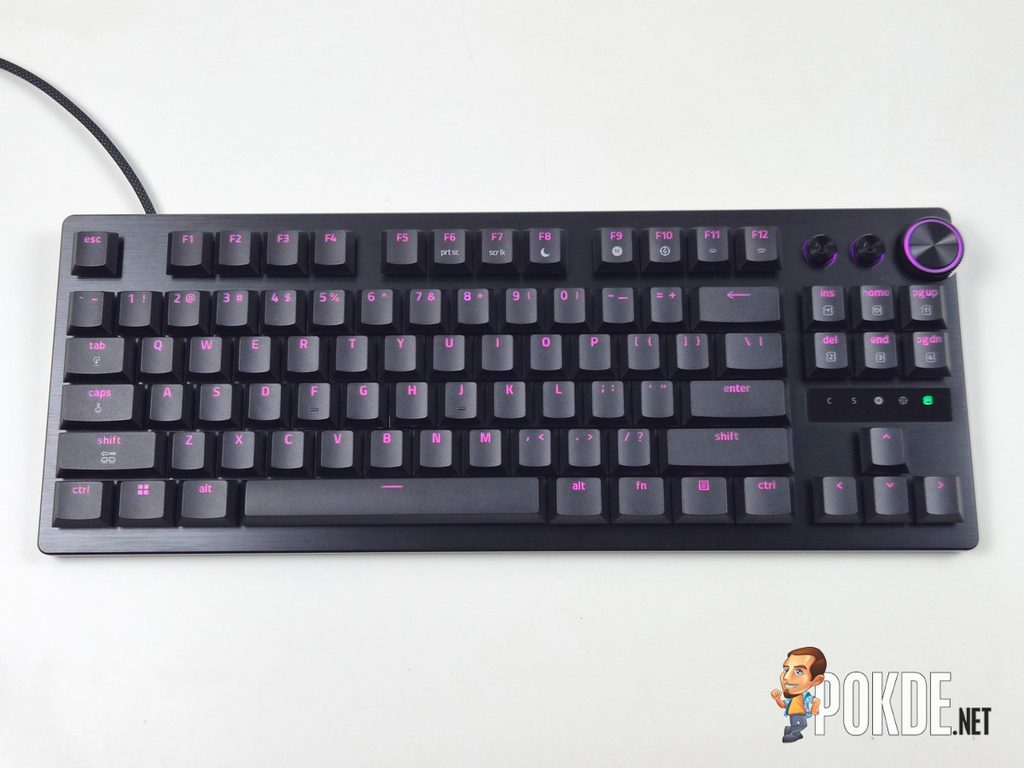
The Chroma RGB integration is visually impressive and works well within the Razer ecosystem, but users who run lighting systems from other manufacturers will find that full synchronisation requires Synapse, and cross-brand lighting sync can be inconsistent depending on the third-party software involved. For a mixed-brand setup, the RGB is effectively a standalone feature rather than a cohesive ecosystem element.
Razer Huntsman V3 Pro Low-Profile TKL 8KHz Verdict
The Razer Huntsman V3 Pro Low-Profile TKL 8KHz is a focused, well-executed keyboard built specifically for competitive gaming, and within that scope it delivers convincingly. The rapid trigger implementation is smooth and precise, the 8,000Hz polling rate is stable and genuinely advantageous in timing-sensitive scenarios, and the low-profile form factor is more comfortable for extended sessions than I initially expected. The build quality for RM1,149 is also notably strong, with the aluminium top plate and doubleshot PBT keycaps lending a premium feel that the price alone does not guarantee.
The limitations are real but specific. Synapse dependency for advanced features, the absence of wireless, and the lack of passthrough collectively mean this keyboard is built for a narrow use case and does not apologise for it. If that use case matches yours, it is a strong recommendation. If you want a keyboard that covers competitive gaming and daily productivity equally well, or if wireless is a priority, the value calculation looks less straightforward at this price.
With that in mind, I award the Razer Huntsman V3 Pro Low-Profile TKL 8KHz with our Silver Pokdeward.

Big thanks to Razer Asia Pacific for sending us this keyboard for the purpose of this review.