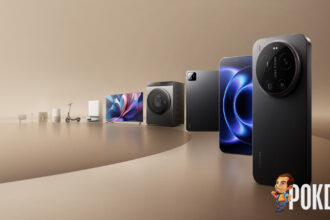

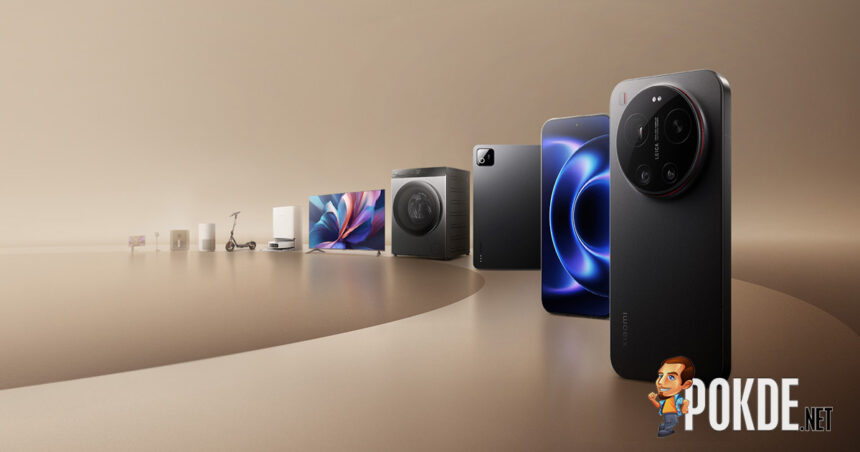
Xiaomi posted total revenue of 107.2 billion Chinese Yuan (approx. RM66.19bn) for the third quarter of 2026, marking the second consecutive quarter the figure has exceeded RMB 100 billion. Despite rising memory component costs and a broader smartphone market downturn, Xiaomi Q3 2026 results held firm, with adjusted net profit reaching RMB 4.9 billion.
The smartphone and AIoT segment contributed RMB 83.4 billion in revenue, with a gross profit margin of 20.4%. The new energy vehicle (NEV), AI, and other new initiatives segment contributed RMB 23.9 billion, with new vehicle deliveries reaching 100,975 units during the quarter, holding above the 100,000-unit mark for the second consecutive quarter.
Xiaomi Q3 2026 Smartphone Performance Beats Market Expectations
Global smartphone shipments totaled 30.7 million units in Q3 2026, a period in which memory prices rose two to threefold from the beginning of the year and global smartphone shipments industrywide fell 20% year-over-year, the steepest quarterly decline on record. Against that backdrop, Xiaomi’s smartphone revenue reached RMB 45.6 billion, up 8.2% quarter-over-quarter, with a gross profit margin of 9.2%, up 0.6 percentage points quarter-over-quarter.
The average selling price (ASP) of Xiaomi smartphones rose 39.8% year-over-year to a record high of RMB 1,486. According to Omdia, Xiaomi’s global smartphone shipments ranked in the top three for the 25th consecutive quarter (in other words, slightly more than 6 years), with market share rising to 12.1%, the third consecutive quarter of quarter-over-quarter market share growth.
By region, Xiaomi ranked second in Southeast Asia (19.8% market share), Latin America (16.5%), and the Middle East (15.1%), and third in Europe (18.8%) and Africa (10.8%). Overall, Xiaomi’s smartphone shipments ranked in the top three in 55 countries and regions and in the top five in 67 countries and regions globally.
In the ultra-premium segment, Xiaomi’s market share by sales volume in mainland China in the retail price bracket of RMB 6,000 and above grew 1.2 percentage points year-over-year. The Xiaomi 18 Fold, launched in September 2026, pairs a 7.58-inch inner display with a 5.38-inch outer display and is priced from RMB 10,999. Sales volume at debut surged over 310% compared with the previous generation of large foldable smartphones.
Xiaomi Auto & AIoT Ecosystem Expand Rapidly
Xiaomi Auto completed its dual-series product portfolio during the quarter with the September 2026 launch of the Xiaomi SkyNomad Series extended-range SUVs. Four models were introduced: the SkyNomad N70 Pro, N70 Max, N90 Max, and N90 Max Studio, priced from RMB 209,900 to RMB 299,900. Locked-in orders exceeded 10,000 units within four minutes of initial sales and topped 70,000 units in the first month.

In October 2026, the SkyNomad N90 Series ranked first in sales among large SUVs across all energy types in mainland China, while the SkyNomad N70 Series topped both extended-range vehicles and mid-to-large SUVs. Monthly deliveries for Xiaomi Auto surpassed 50,000 vehicles in October 2026, a new high for the year. The Xiaomi SU7 Series also ranked first in sales among sedans priced above RMB 200,000 in mainland China that same month.
On the AIoT front, the number of connected IoT devices on Xiaomi’s platform (excluding smartphones and tablets) reached a record 1,203.5 million as of 30 September 2026, up 16.2% year-over-year. Users with five or more devices connected to the platform grew 18.7% year-over-year to 25.6 million. Monthly active users of the Xiaomi Home App reached 124.1 million in September 2026, while Xiaomi AI Assistant MAU reached 175.9 million.
IoT and lifestyle products revenue for the quarter reached RMB 27.2 billion, with a gross profit margin of 21.7%, up 1.6 percentage points quarter-over-quarter. Xiaomi’s tablet shipments ranked fourth globally for the 10th consecutive quarter, while TWS earbud and wearable band shipments ranked second globally. Internet services revenue reached RMB 9.5 billion, with overseas internet services accounting for 34.1% at RMB 3.2 billion. Global MAU reached 771.9 million in September 2026, with mainland China MAU at 199.3 million, both record highs.
Chip Development & AI Robotics Milestones
Xiaomi’s R&D expenditure for Q3 2026 reached RMB 9.2 billion, holding above the RMB 9.0 billion mark for the second consecutive quarter. In August 2026, the company unveiled three next-generation chips: the Xiaomi XRING O3 flagship AI SoC (already deployed in the Xiaomi 18 Fold and Xiaomi Pad 9 Pro Max), the Xiaomi XRING O100 high-bandwidth AI accelerator with memory bandwidth of up to 1.22TB/s, and the Xiaomi XRING D100 AI chipset designed for assisted driving.
In AI software, Xiaomi released and open-sourced the Xiaomi MiMo-V2.6 Series omnimodal model in September 2026, with API pricing positioned at 1/20 to 1/60 of comparable overseas models. In robotics, Xiaomi’s robots completed eight hours of stable operation at a production station in Xiaomi’s auto factory, while the Agentic system built on the Xiaomi-Robotics-1 embodied foundation model completed long-horizon validation spanning three rooms and over 50 tasks, with pilot operations underway at Xiaomi Youth Apartments.
Xiaomi Auto’s safety credentials were also reinforced during the quarter. The C-IASI assessment released in August 2026 awarded the Xiaomi YU7 the highest G+ rating across occupant safety, pedestrian safety, and vehicle assistance safety. Looking ahead, Xiaomi Auto has signed Memoranda of Understanding with eight leading German automotive dealer groups at IFA Berlin 2026, with European market entry planned for 2027.
Pokdepinion: Selling cars, chips, robots, and fridges all at once, and still hitting RM66 billion in a single quarter. Xiaomi is built different.