
Product Name: Q65 Ultra 2026
Brand: PRISM+
Offer price: 2699
Currency: MYR
-
Appearance - 7/107/10
-
Features - 7.5/107.5/10
-
Materials - 7/107/10
-
Performance - 7.5/107.5/10
-
User Experience (UX) - 8/108/10
-
Value - 8.5/108.5/10
Summary
The PRISM+ Q65 Ultra 2026 has one thing going for it: it’s an affordable option for those looking for a combination of 4K resolution, Google TV, QLED panel, and in a 65-inch form factor.
Overall
7.6/10Pros
- Bright & vivid QLED display
- Built-in noise reduction combats compression artifacts
- Serviceable audio quality
- Stock Google TV experience
- Smooth performance
Cons
- DLG comes with sharpness tradeoffs
- Batteries not included for remote control
Unboxing & Walkaround
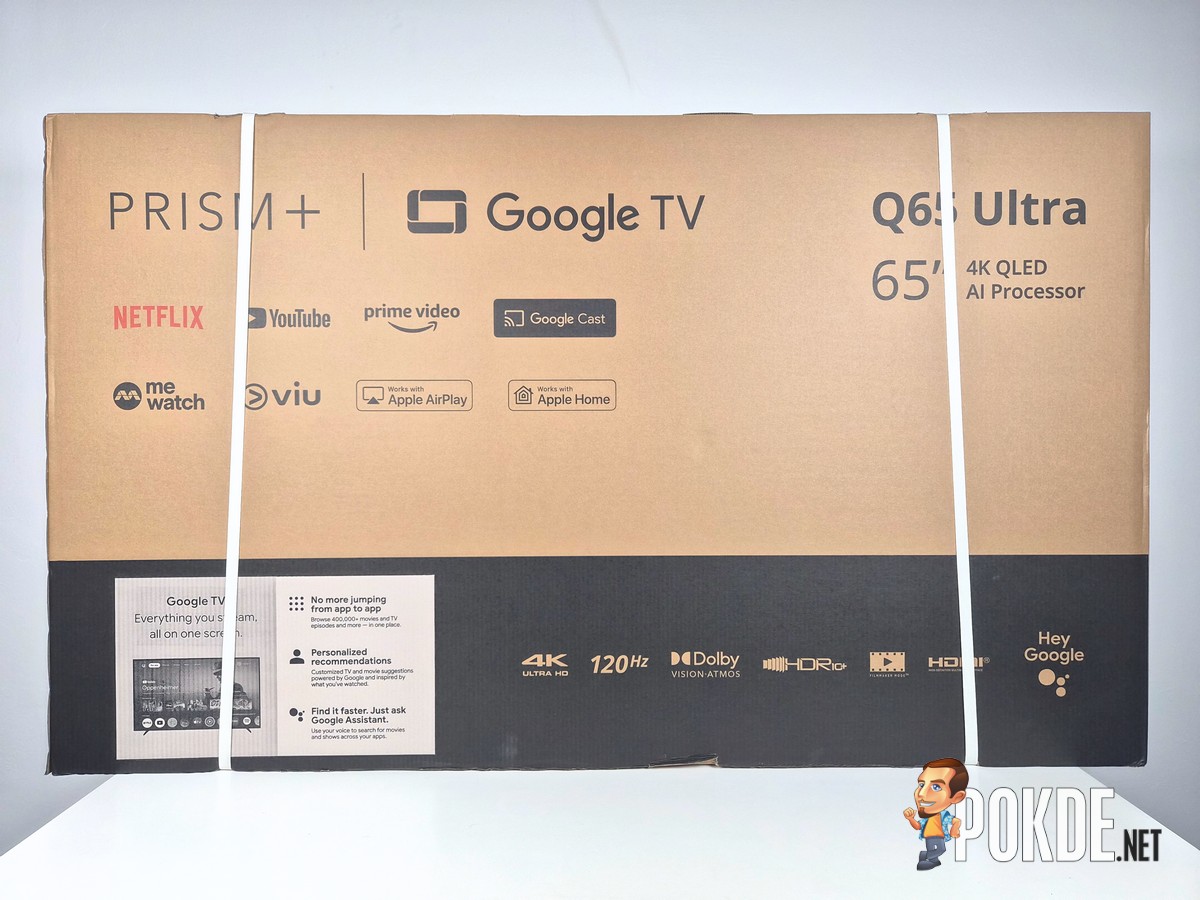
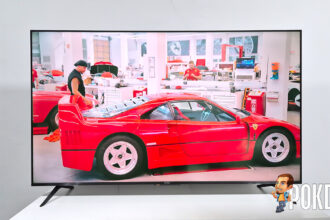
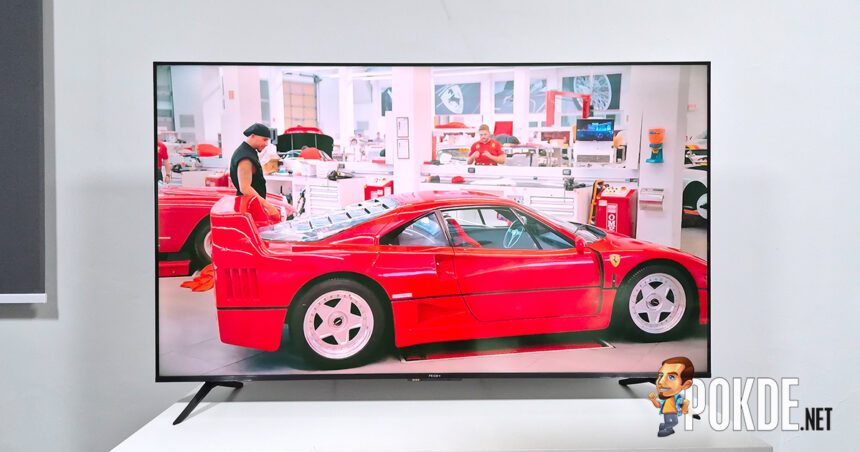
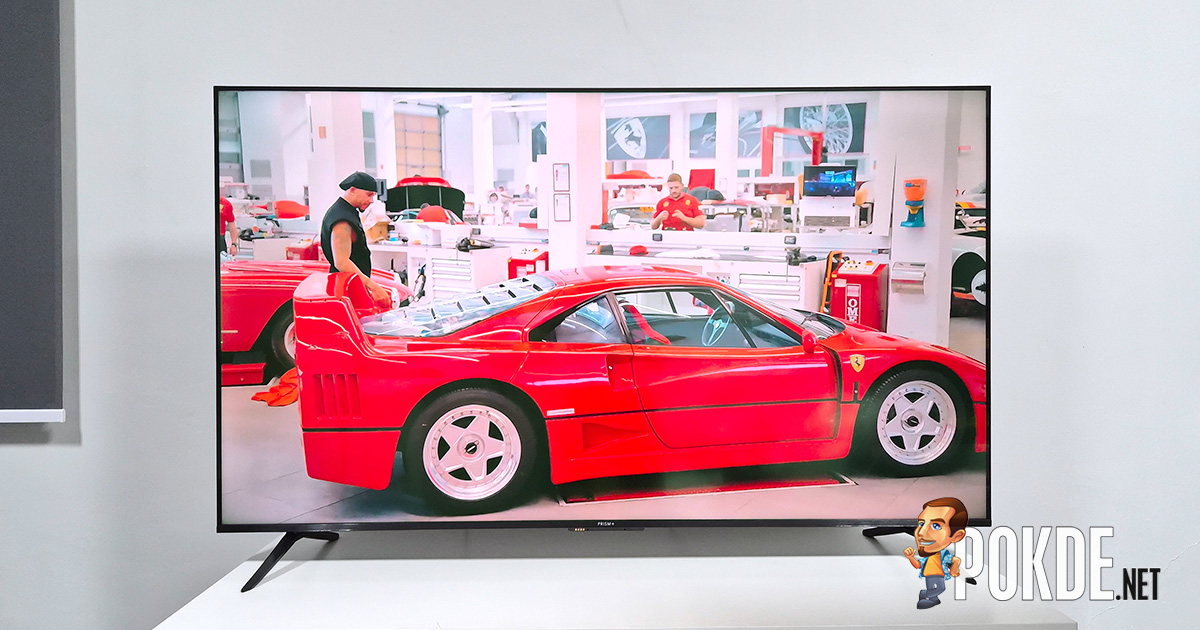
PRISM+’s Q-series QLED TV returns with the new 2026 model year lineup, and here we have the PRISM+ Q65 Ultra 2026 in the 65-inch form factor (there are also 43-inch, 55-inch, 75-inch, and 85-inch alternatives available for this model year, though the 100-inch has been left out this time).
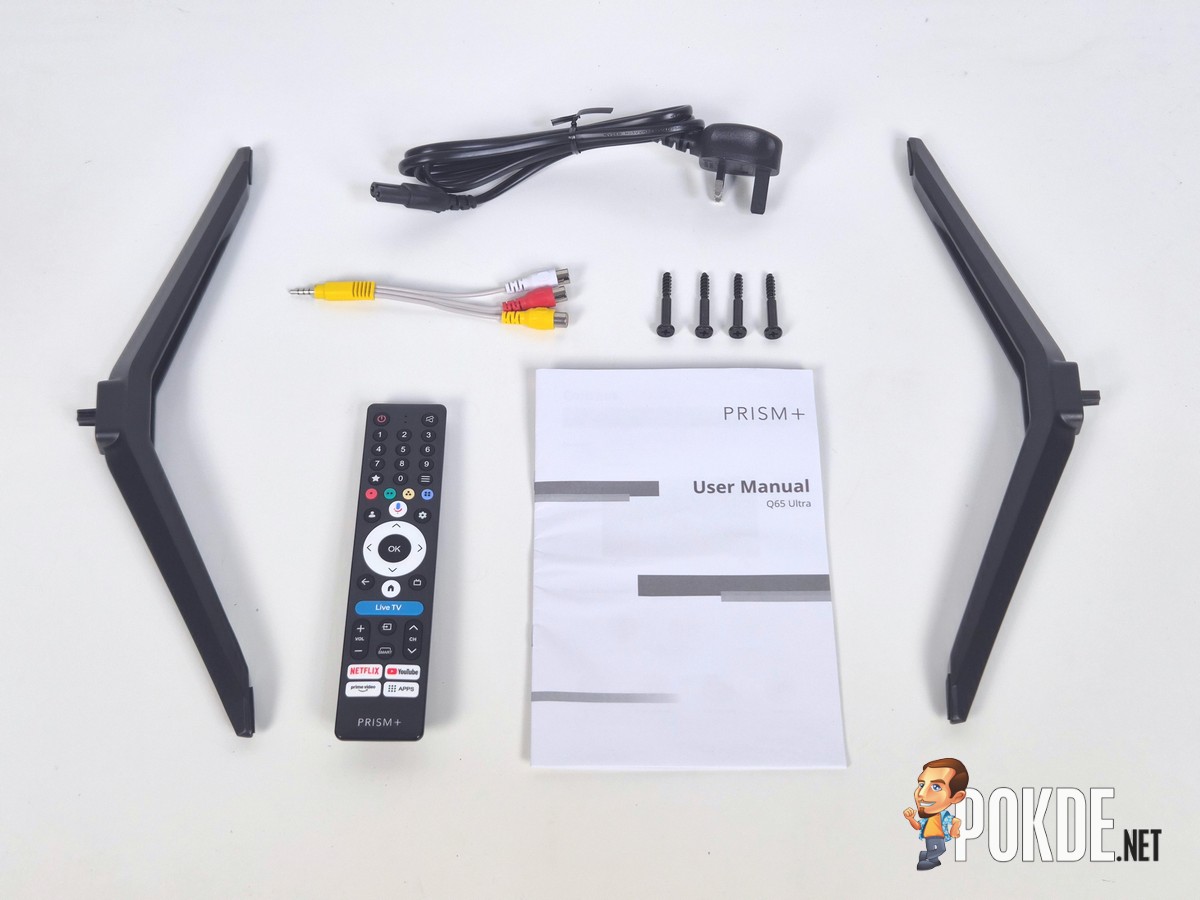
The items you get alongside the TV includes: a pair of plastic TV stand and their mounting screws, a remote control (sans batteries – you need to bring your own AAA cells), a user manual, an RCA composite cable, and the AC cable. Quite surprising to see RCA cables still provided in 2026 with how out-of-date RCA set top boxes are at this point.
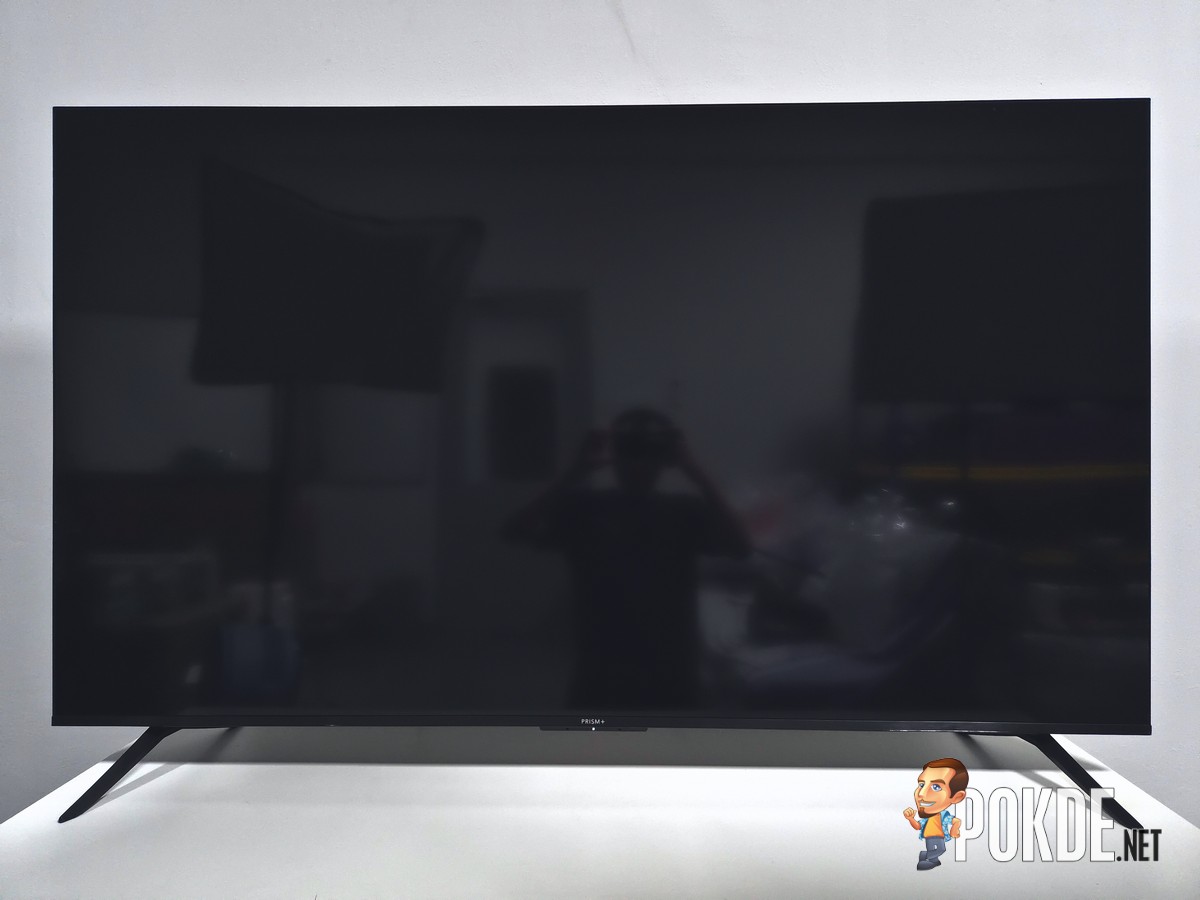
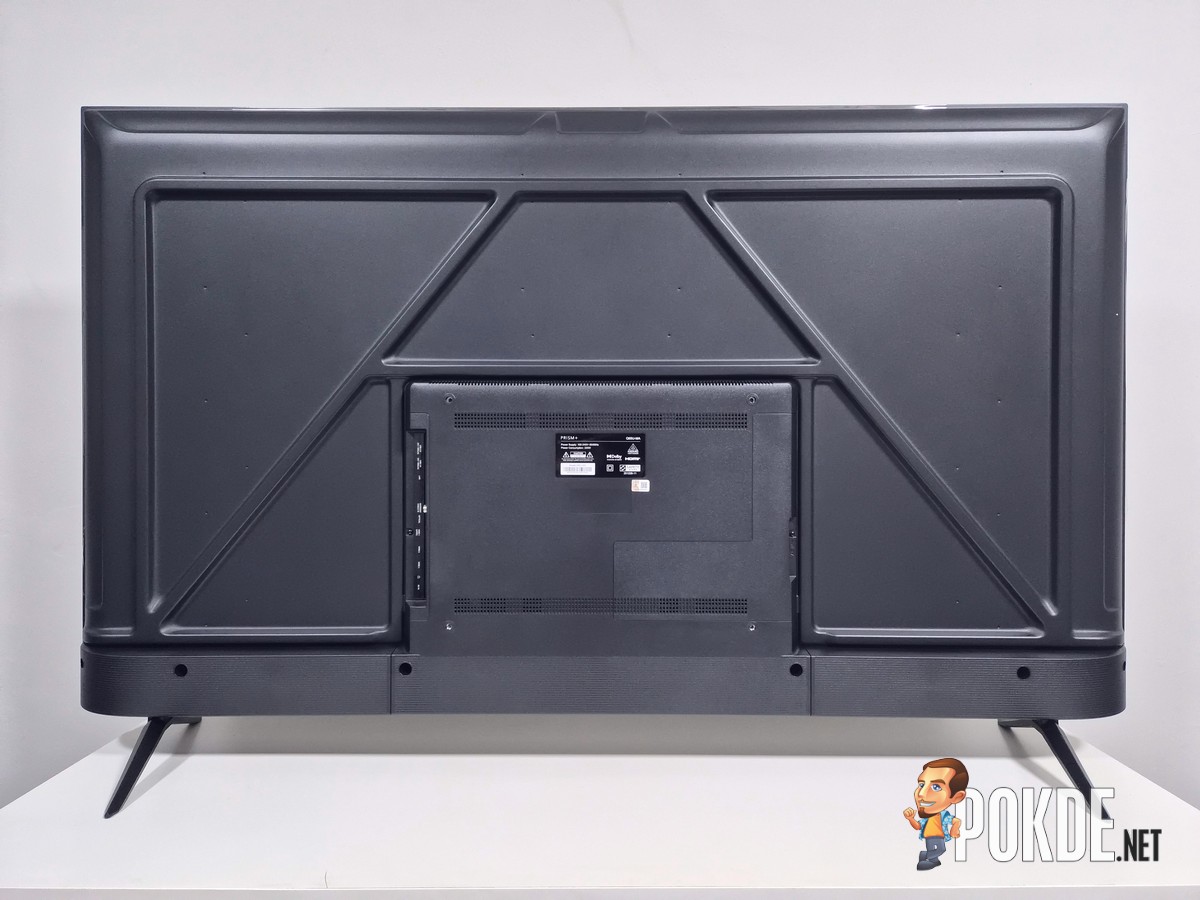
This 65-inch QLED panel is, of course, running at 4K (3840 x 2160) resolution; like many TVs out there, it uses a semi-gloss panel to keep glare reasonably under control while still keeping black levels deep. The I/O is located on the bulge behind the unit, where virtually all of the connections are on the left (or facing right side when viewed from the front of the TV).
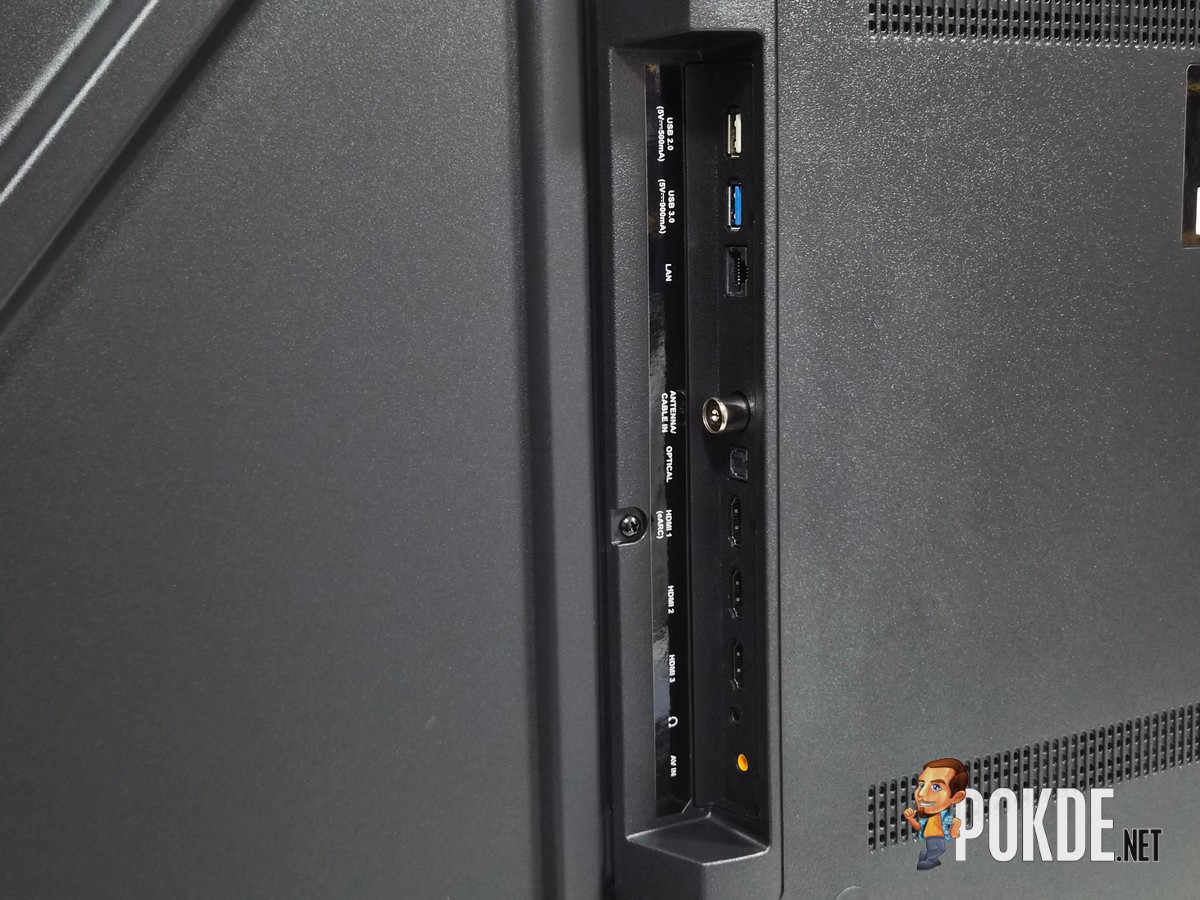
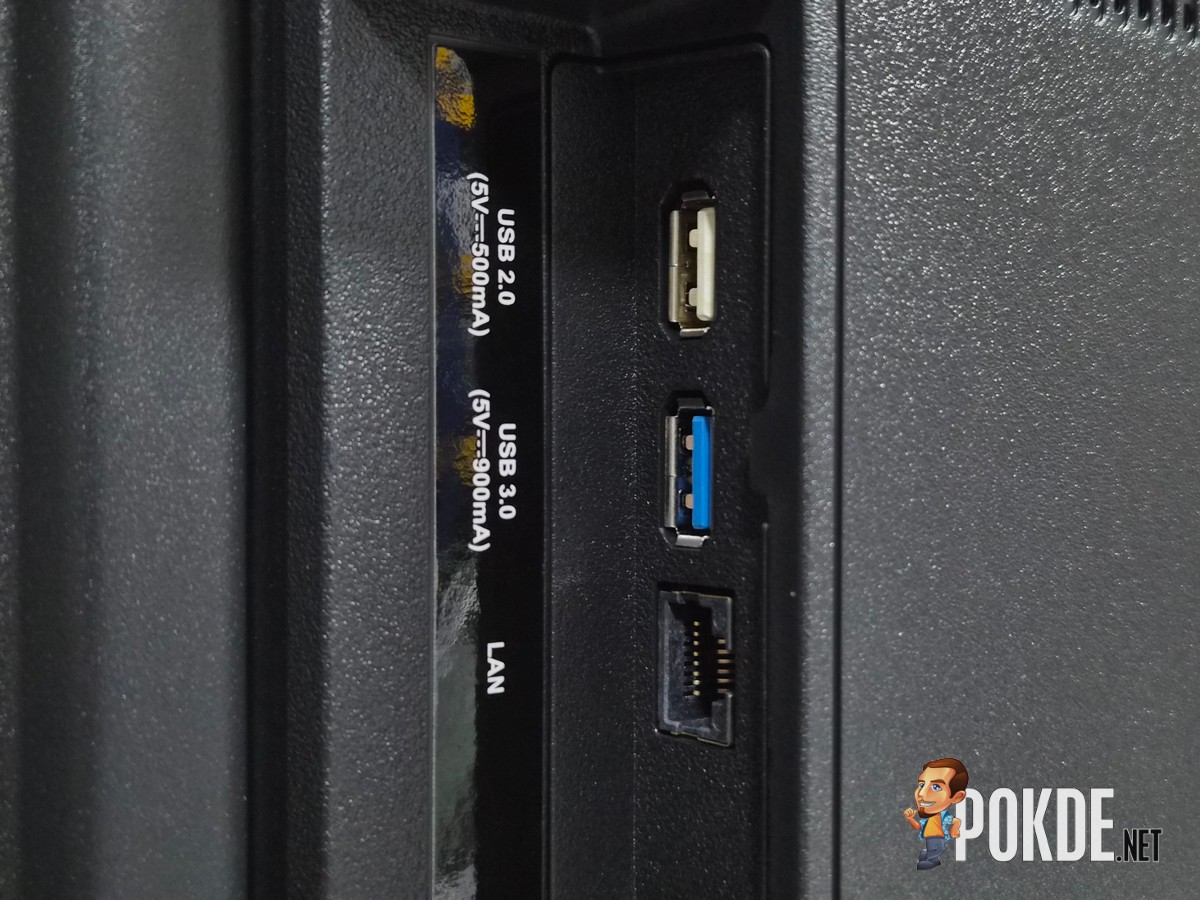
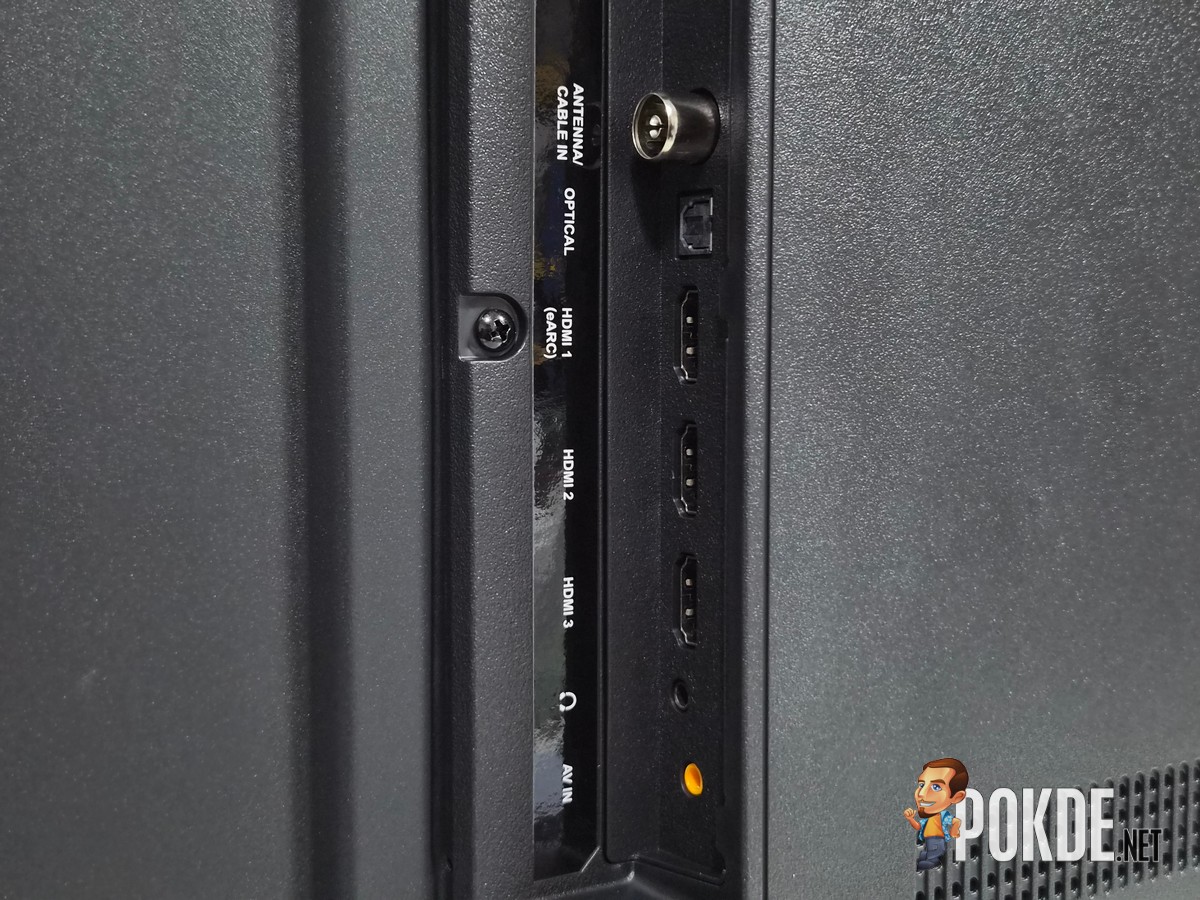
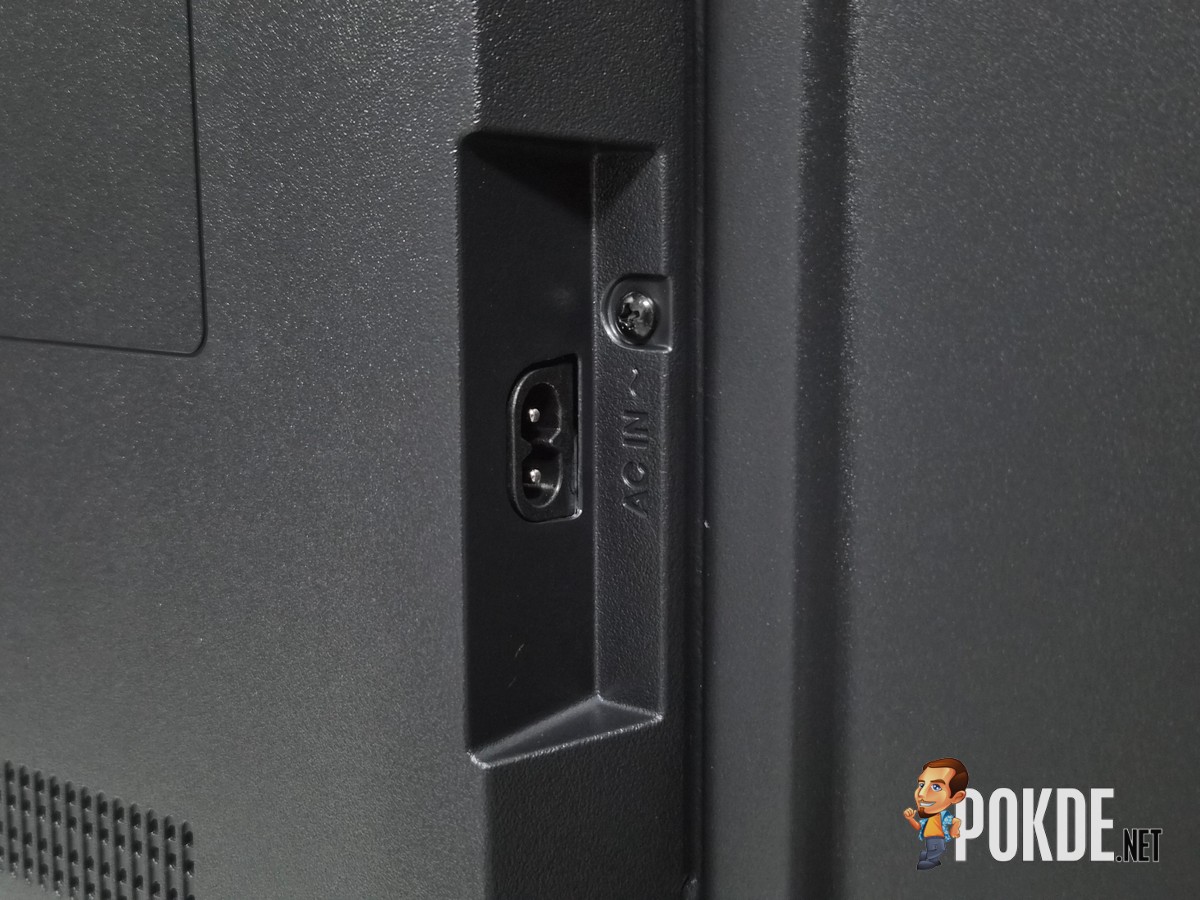
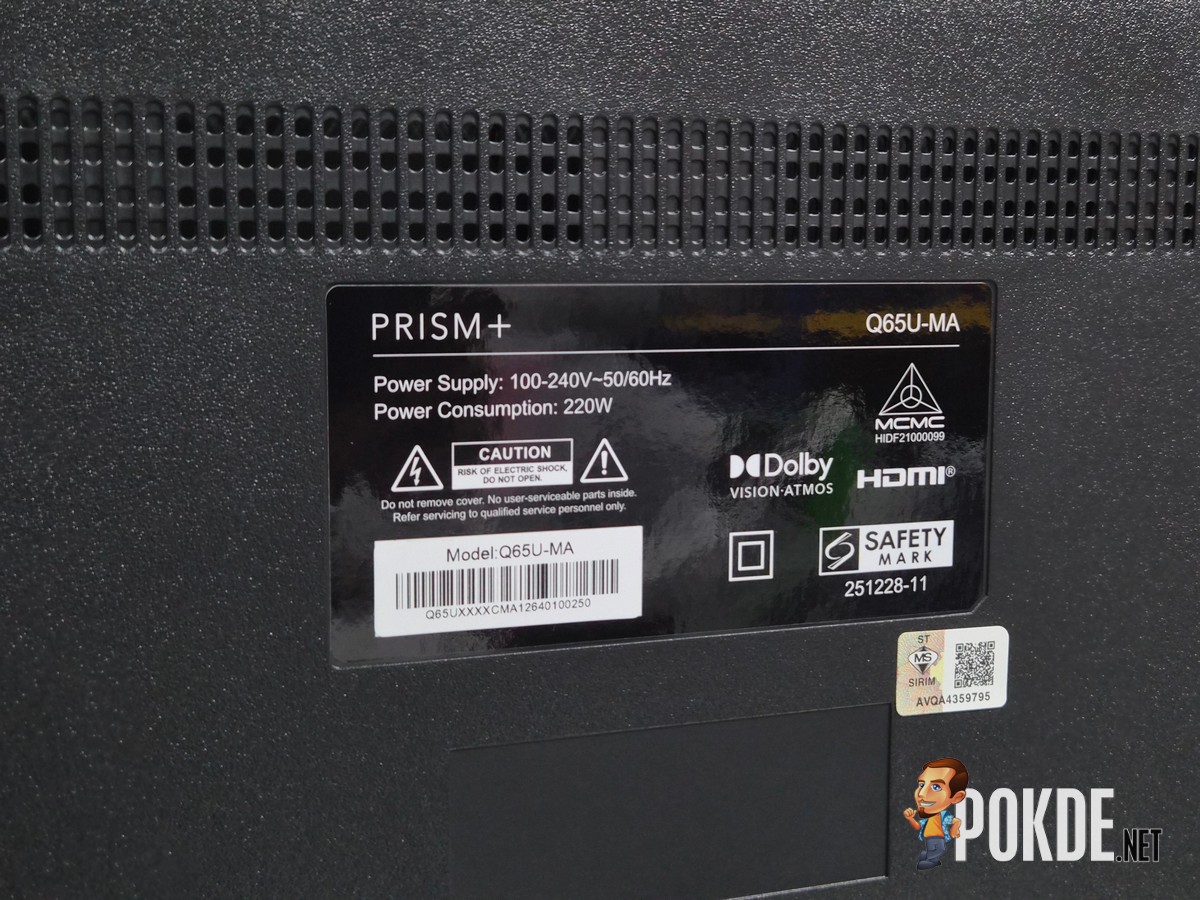
The I/O on the Q65 Ultra 2026 consists of: two USB ports (one USB 2.0 and one USB 3.0), an Ethernet port, a coaxial input for antennas, S/PDIF optical audio, three HDMI ports (the first of which supports eARC), a headphone jack, and finally – this is a rare connector these days – an RCA composite input. The power supply is connected to the right side of the hump (facing left when viewed from TV’s front).
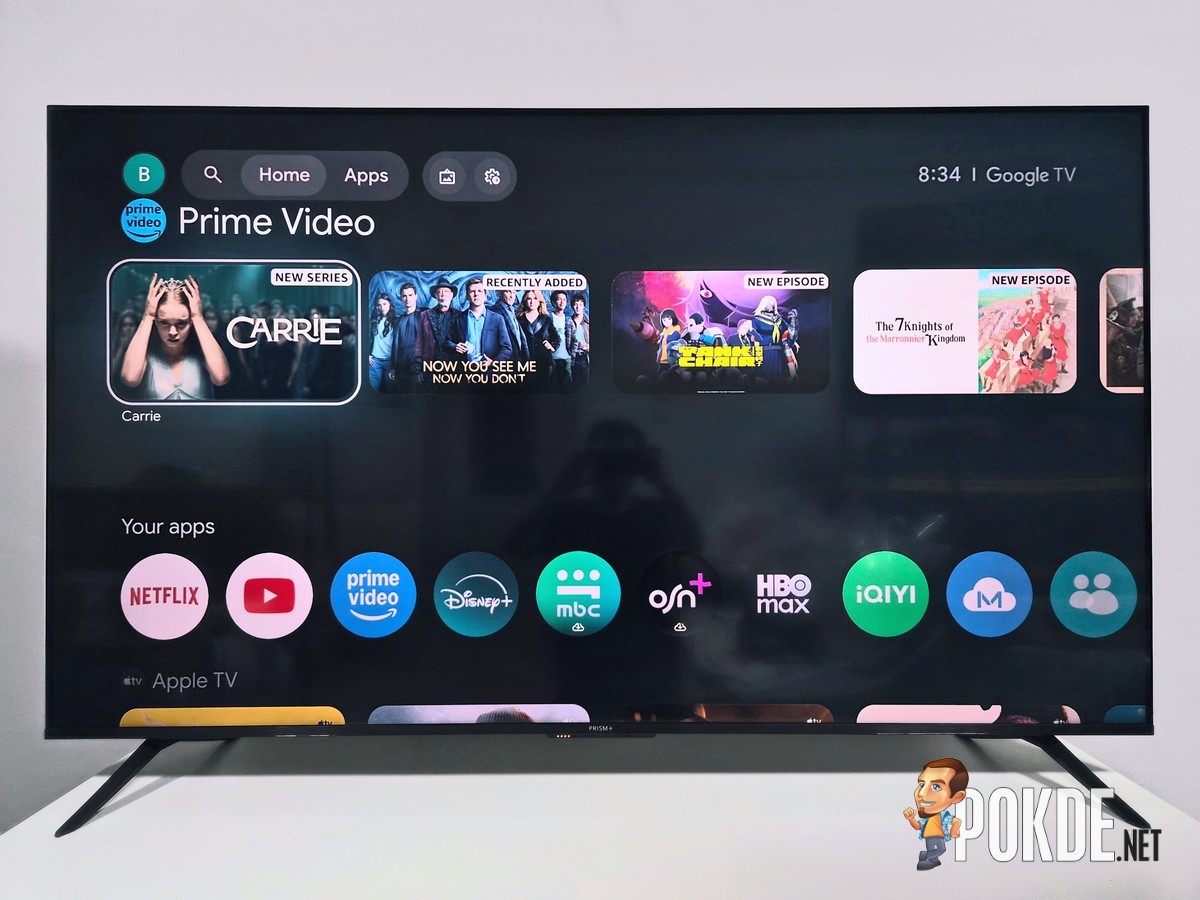
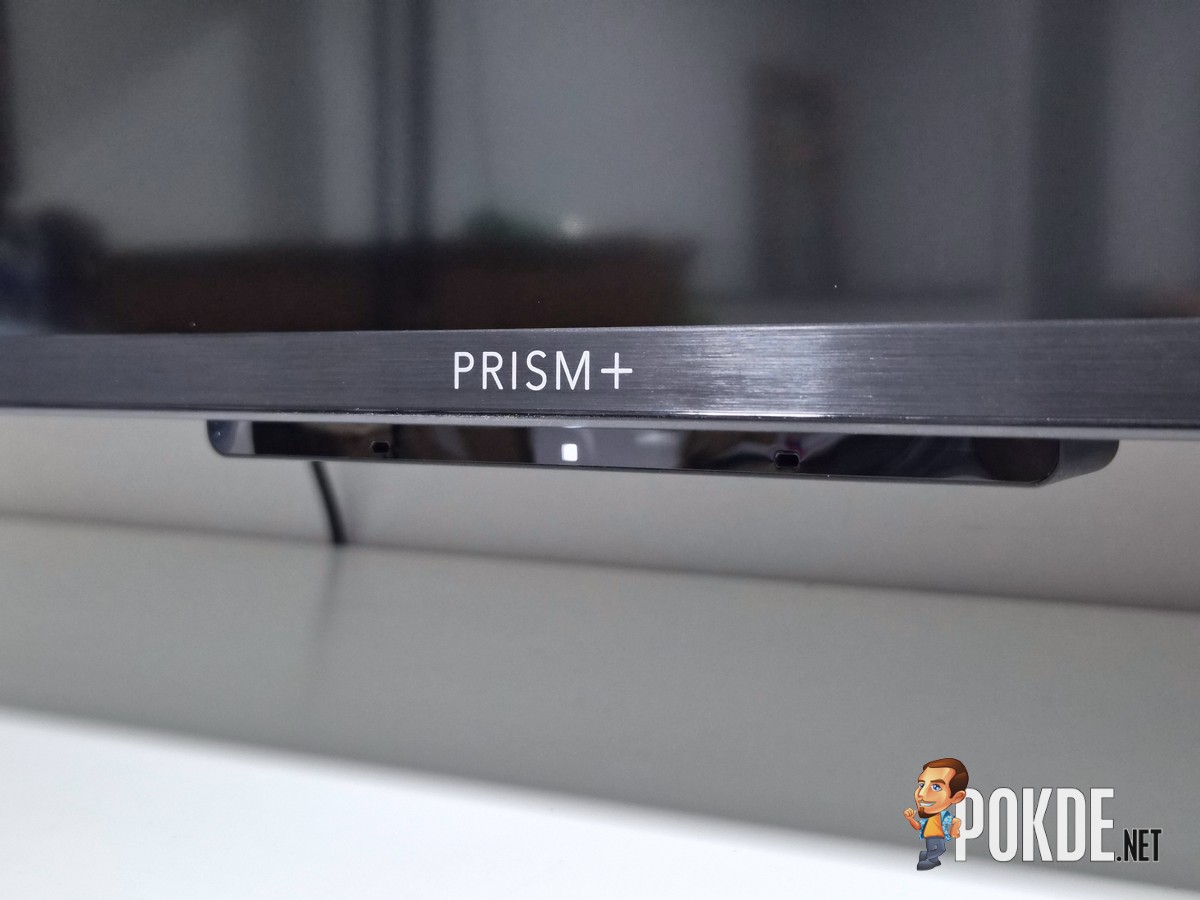
The TV runs on Google TV (based on Android 14), the setup process of which can be done very quickly if you have a smartphone to help with the process – simply sign into the Google account of your choosing and the TV can quickly grab all the necessary information, such as Wi-Fi settings, and get up and running within a minute or two. Like many TVs, the Q65 Ultra comes with a status LED at the bottom of the chassis, where you can also find a physical power button underneath.
Specifications
PRISM+ Q65 Ultra 2026 (Q65U-MA)
Full specifications available on product webpage.
| Size | 65-inch |
| Display Panel Type | QLED (Quantum Dot LED) |
| Resolution | 3840 x 2160 |
| Refresh Rate | 60Hz Max. 120Hz (via Dual Line Gate) |
| Pixel Response Time | Unspecified |
| Gamut Coverage | Up to 110% DCI-P3 |
| Color Depth | 10-bit via 8-bit + FRC (1.07B colors) |
| HDR Support | HDR10+ Dolby Vision |
| Brightness | 320 nits |
| Contrast Ratio | Unspecified |
| Variable Refresh Rate Support | None |
| Display Certifications | None |
| Processing Hardware | Unspecified |
| Operating System | Google TV (Android 14) |
| I/O | 1x AC-in 1x USB 2.0 1x USB 3.0 1x RJ-45 LAN 1x Coaxial 1x S/PDIF (TOSLINK) out 3x HDMI (eARC on HDMI 1) 1x 3.5mm headphone jack 1x RCA Composite input |
| Connectivity | Wi-Fi dual-band (2.4 GHz + 5 GHz) Bluetooth 5.1 |
| Onboard Speakers | 60W stereo Dolby Atmos support |
| Power Consumption | 220W Energy Commission rating: 2 Stars (228.7 kWh/yr) |
| VESA Mounting | 400 x 300 mm |
| Stand Type | Two-piece stand, plastic |
| Dimensions & Weight | TV only: 1445.6 x 83.2 x 834.3 mm, 14.0 kg TV with stand: 1445.6 x 338 x 902.7 mm, 14.2 kg |
User Experience
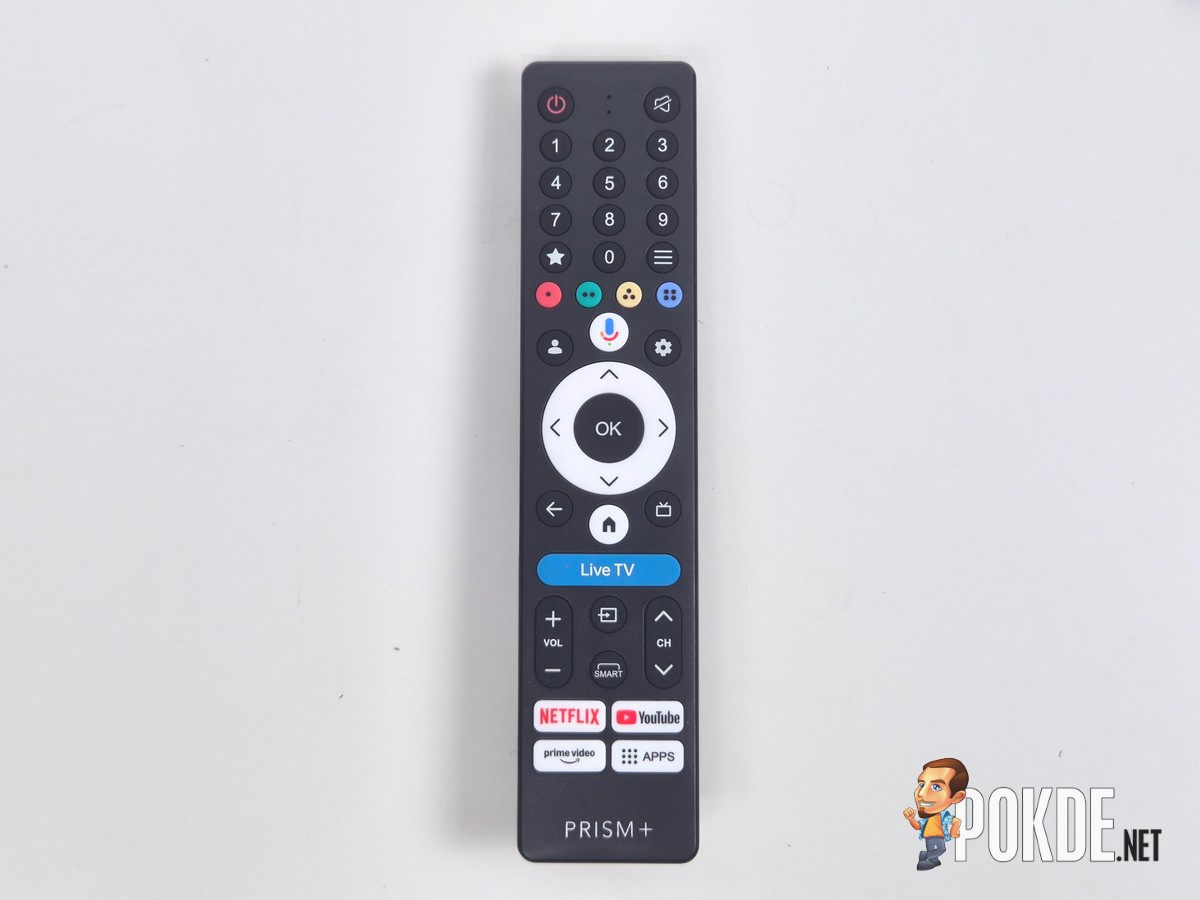
Like the Xiaomi TV A Pro 2026 we reviewed earlier this year, the remote is all buttons – good news if you dislike over-minimalist remote controls that takes more time than necessarily to learn using, and it’s not overly littered with app shortcut buttons where it becomes a nuisance for some. No obvious lag has been observed during the usage and testing process as far as inputs are concerned, which is a plus; though you do need to bring your own pair of AAA batteries first.


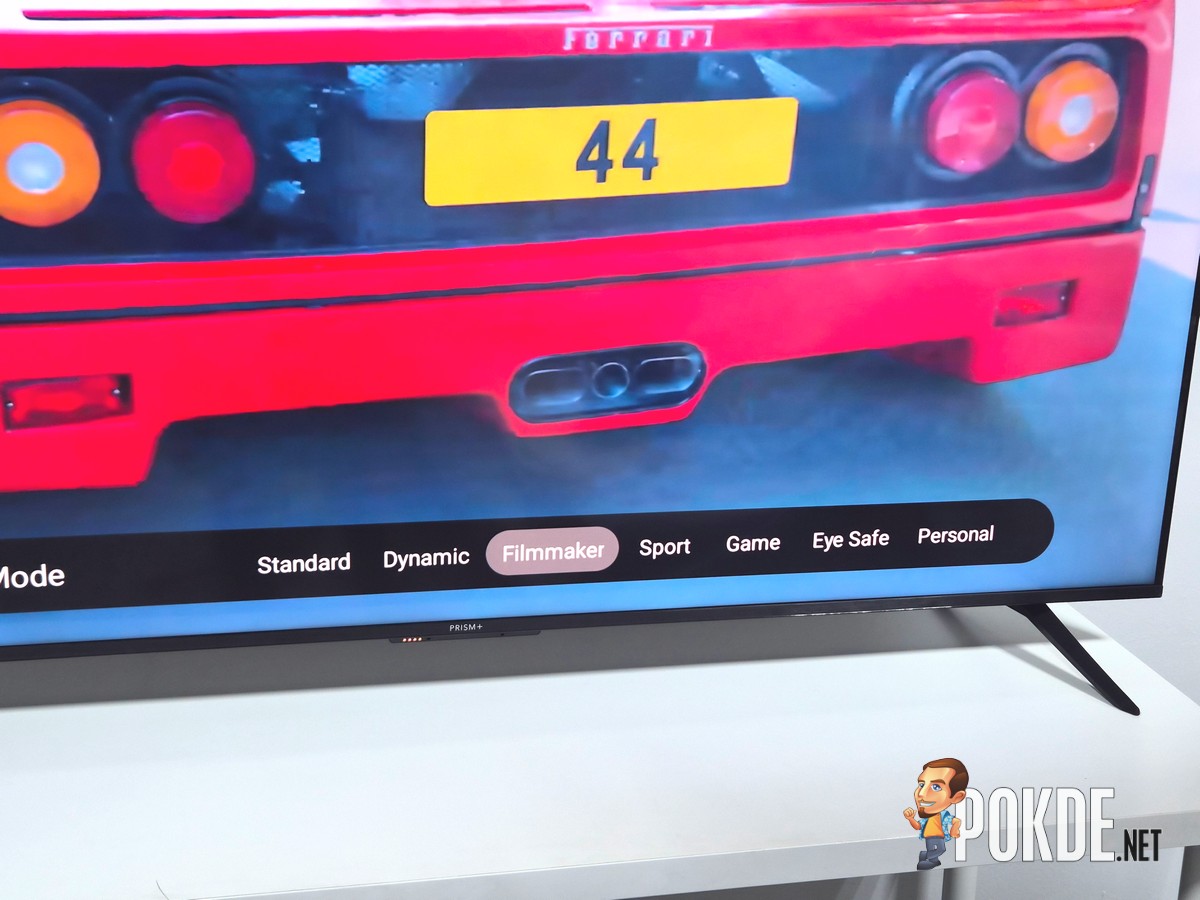
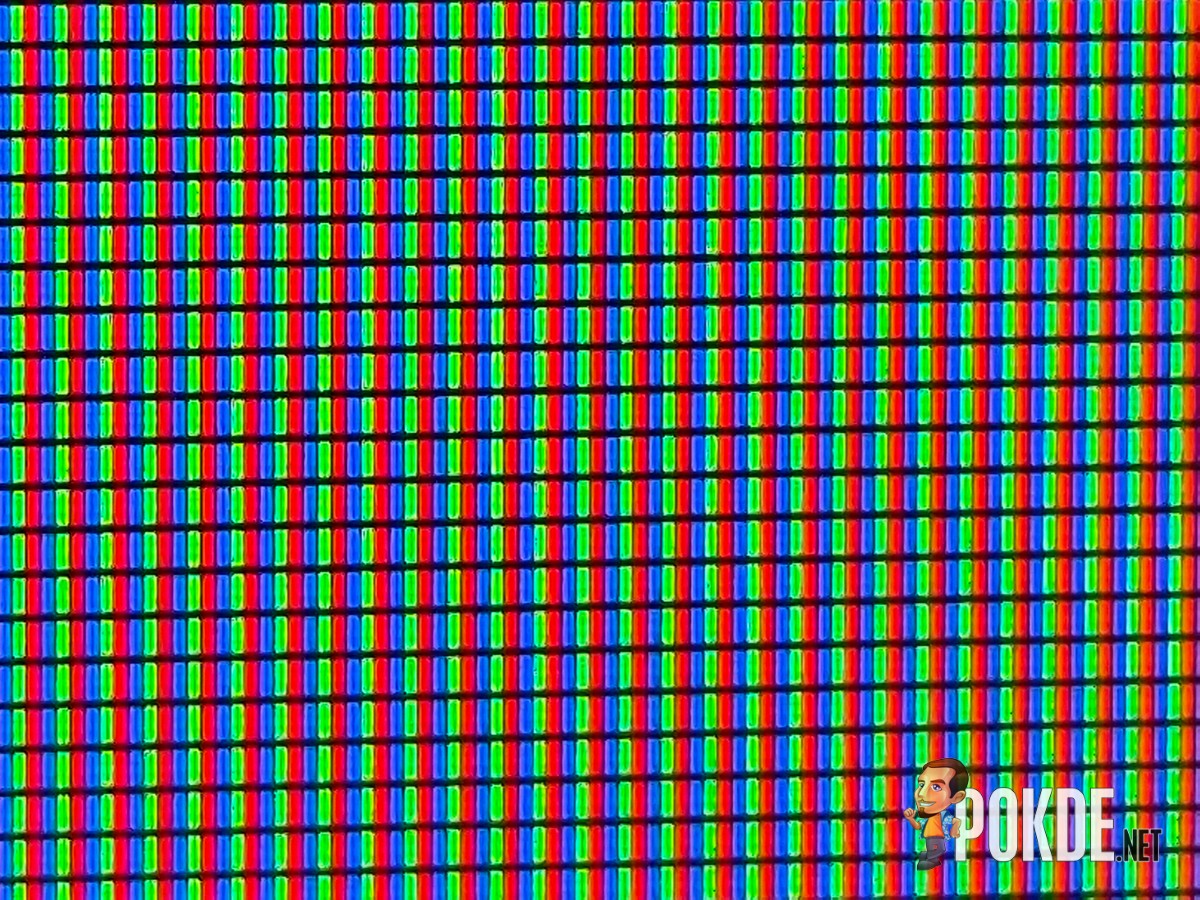
The PRISM+ Q65 Ultra 2026 comes with 7 preset modes, all pretty self-explanatory; that said, you may need to use Personal preset to dig deeper into some post-processing settings, including MEMC (do turn this off as soon as you get the TV going), dynamic contrast, noise reduction, AI-PQ, gamut clamping, and more. The QLED panel uses BGR subpixel layout, which may cause text fringing issues if you use it as a PC display.


One interesting feature we found is Noise Reduction, which is surprisingly good at cleaning up the compression artifacts in YouTube videos. Using this video as example (comparison shown above), you can see various spots of garbled pixels throughout the display when noise reduction is off. The TV offers three levels of noise reduction – Low, Medium, and High – and we find Low or Medium usually does best in terms of balancing between noise reduction and unwanted processing.
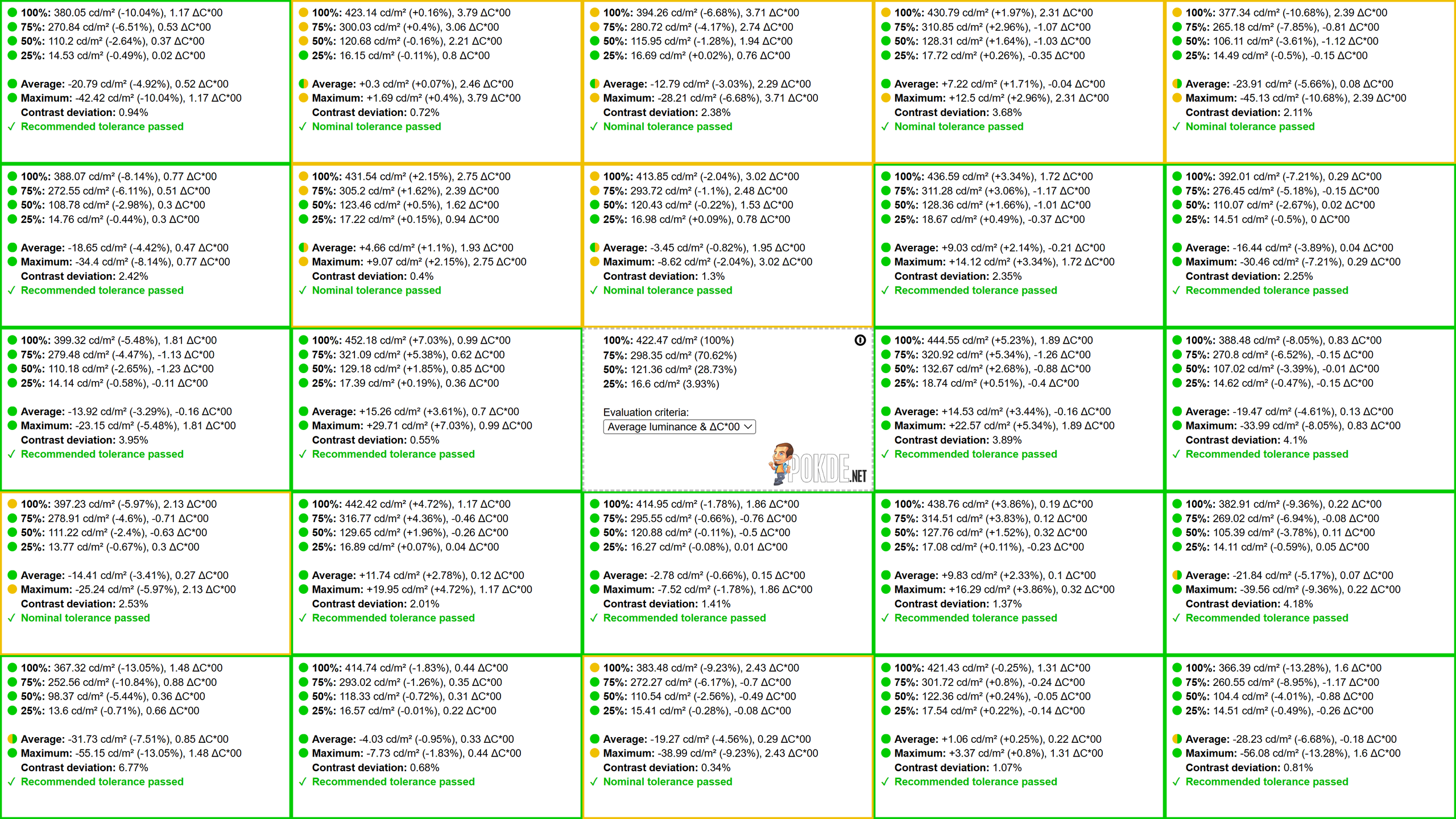
Finally, here’s the report card for the TV’s brightness measurements – while PRISM+ only advertises 320 nits in its spec sheet, our data shows the panel can achieve 400 nits on average. Given that this is a QLED panel, there is no APL values to be accounted for, so this is the true indication of the panel’s native brightness. In short, the PRISM+ Q65 Ultra 2026 can sufficiently handle decently bright environments, such as rooms with good amount of natural lighting.
The Good
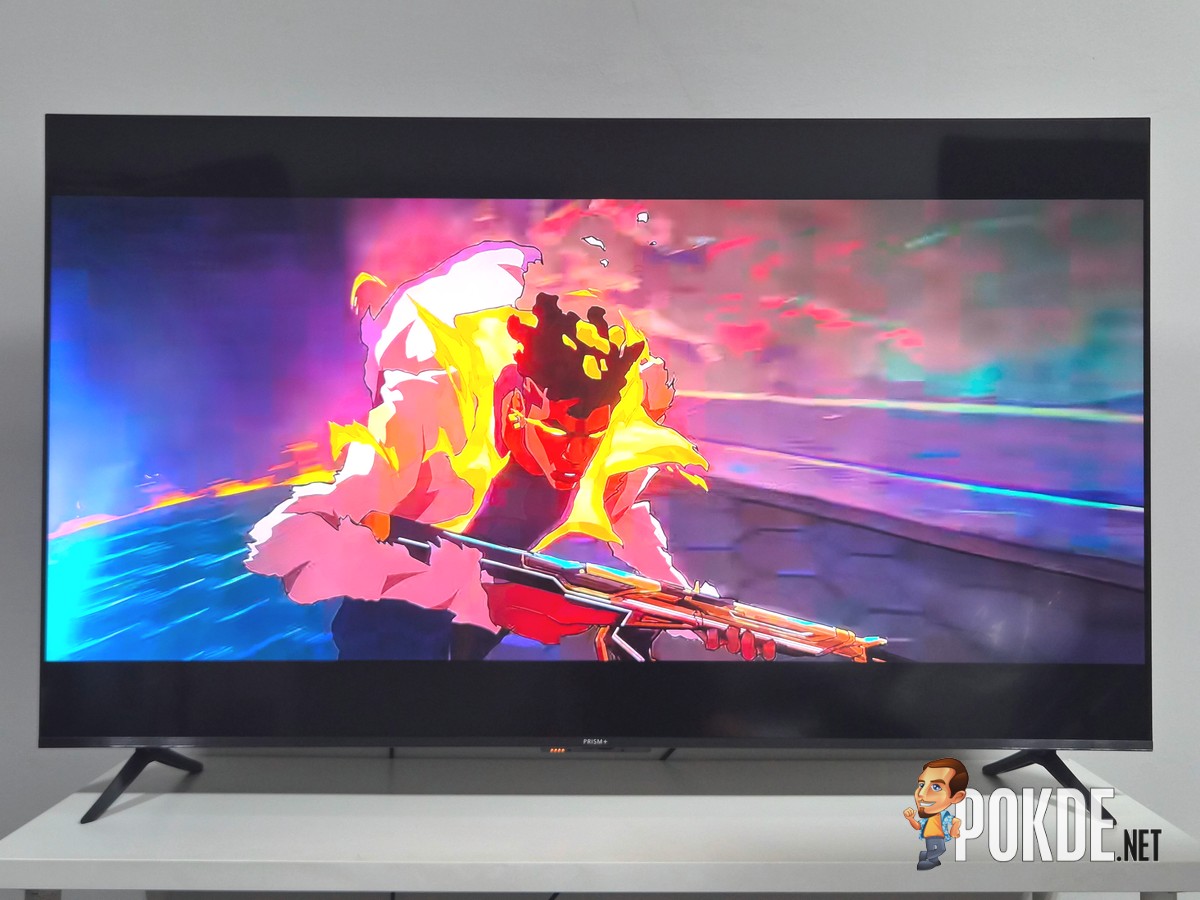
As far as the watching experience goes, the PRISM+ Q65 Ultra 2026 does it just about fine. The QLED panel offers solid colors, although there definitely are some levels of post-processing involved to further boost the colors – so depending on your taste, you may want to switch the relevant settings off as you see fit, or just switch to the Filmmaker mode if you want to keep things minimally processed. The noise reduction processing is certainly appreciated, as compression made videos especially susceptible to JPEG-like quality degradations (which is even more obvious in 1080p content).
The software side of things is plenty straightforward, too. Setting up doesn’t require plenty of steps provided you have a smartphone and a Google Account ready to go, and there’s none of the bloat to worry about as well; while the company did not specify which hardware the TV runs on, we’re confident to say that it is definitely sufficient in this case.
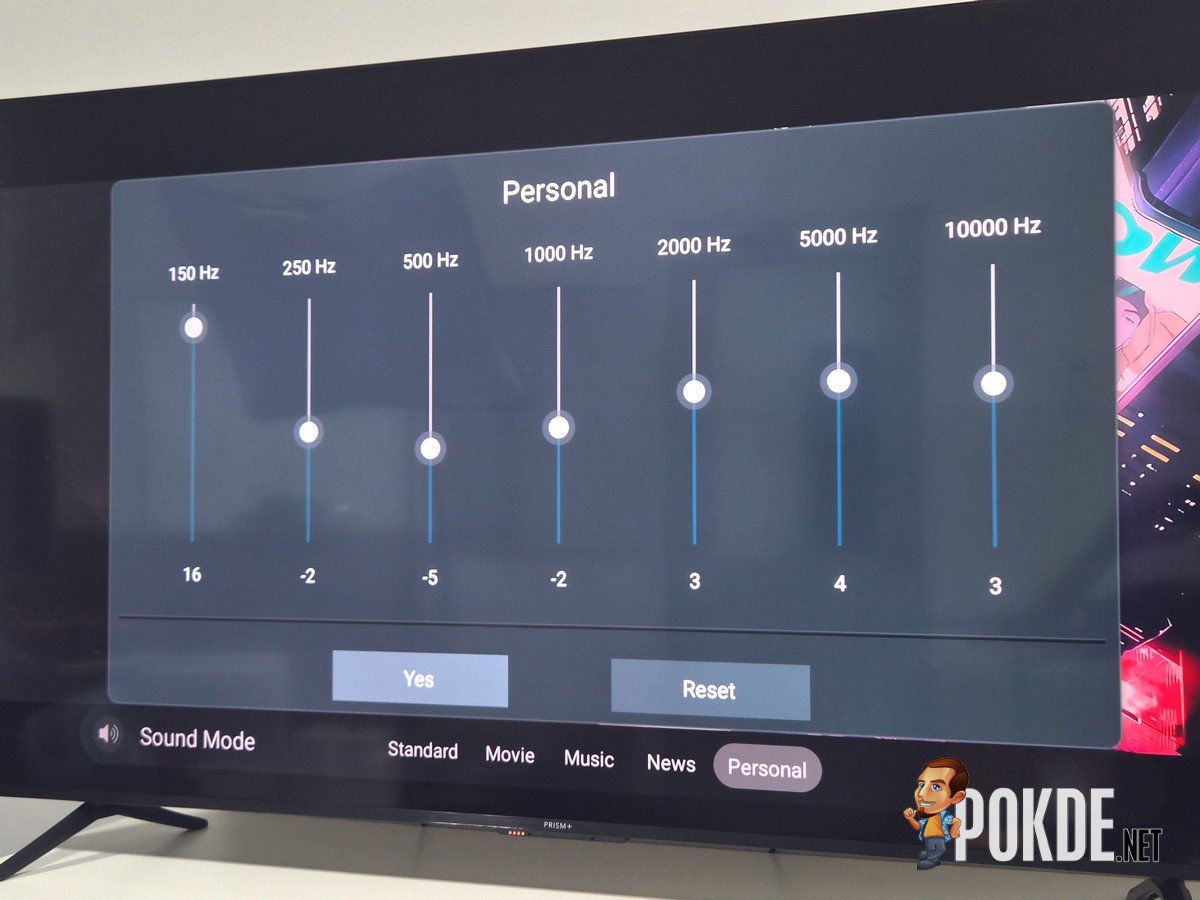
The Q65 Ultra also got a 60W set of stereo speakers, which we assume meant 30W per side – it gets loud, and it can work decently if you know how to tune the EQ. We settled with one that boosted the 150Hz band a lot, but even that wouldn’t work around a fundamental limitation of this TV’s sound system, the sub-bass frequencies. If you’re not especially picky, this pair of speakers should work in most situations, but we do recommend bundling a 2.1ch soundbar at least to make the most out of the TV itself (which does come with eARC after all).
The Bad
A budget-focused TV like the PRISM+ Q65 Ultra 2026 does come with some drawbacks. While the TV is advertised with 120Hz support, this one comes with an asterisk in the form of DLG, or Dual Line Gate. This is essentially a trick feature that alternates pixel refresh between alternate lines of pixels to create 120Hz effective refresh rate, similar to how projectors reproduce high-refresh rate outputs. That comes with a tradeoff that effectively limits the vertical resolution to 1080p only, so sharpness may be an issue if you game on this TV in high-refresh mode.
Another small detail: we’ve come to expect computer mice to pre-load a standard battery as soon as you unbox them, so we’d like to see the same for TV controllers. That being said, it’s at best an annoyance and not necessarily a deal breaker, as Google TV allows you to use your smartphone as a virtual remote that can largely act as a stopgap solution while your family members scramble to buy a new set of AAA batteries.
Verdict
The PRISM+ Q65 Ultra 2026 can be had for RM2,699, though promotions often drops the price further below this figure; you don’t really find many QLED options with a price bracket this low, so value-wise, this one is pretty hard to beat (though Chinese brands do come plenty close). Get a 2.1-channel soundbar alongside, and you’re pretty much set for everything, short for the most demanding of console gamers.

Special thanks to PRISM+ Malaysia for providing the Q65 Ultra (2026) Google TV for this review.