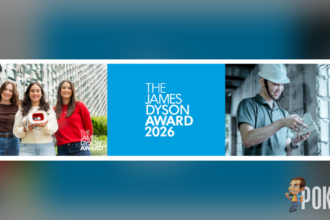

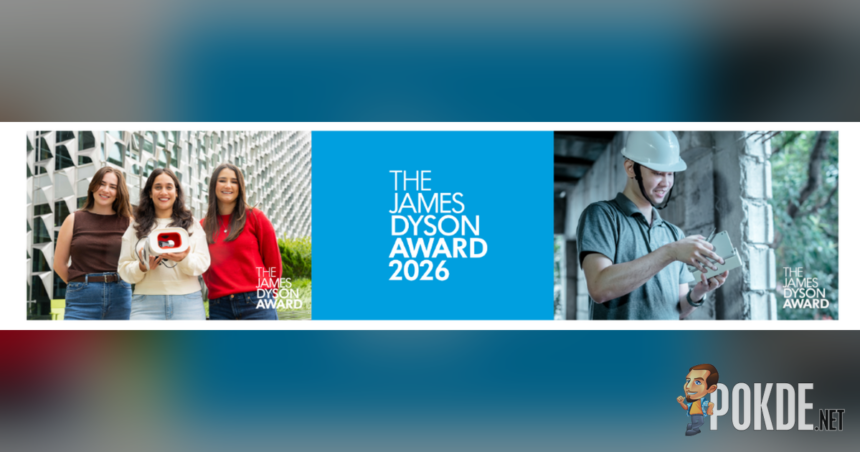
The James Dyson Award 2026 has named its two global winners: Sentinel, a structural damage sensor for earthquake-affected buildings, and Rumble Rims, an infrared eye-tracking headset for sideline concussion screening. Both inventions were selected by James Dyson himself from an international shortlist, with each team receiving a prize of RM162,999 (£30,000) to advance their work.
This year’s competition received 2,294 entries from students across 28 countries and regions, the highest number of entries in the award’s 21-year history. Since its founding in 2005, the James Dyson Award has supported more than 400 student inventions with over £1.5 million in total prize money.
James Dyson Award 2026 Sustainability Winner: Sentinel
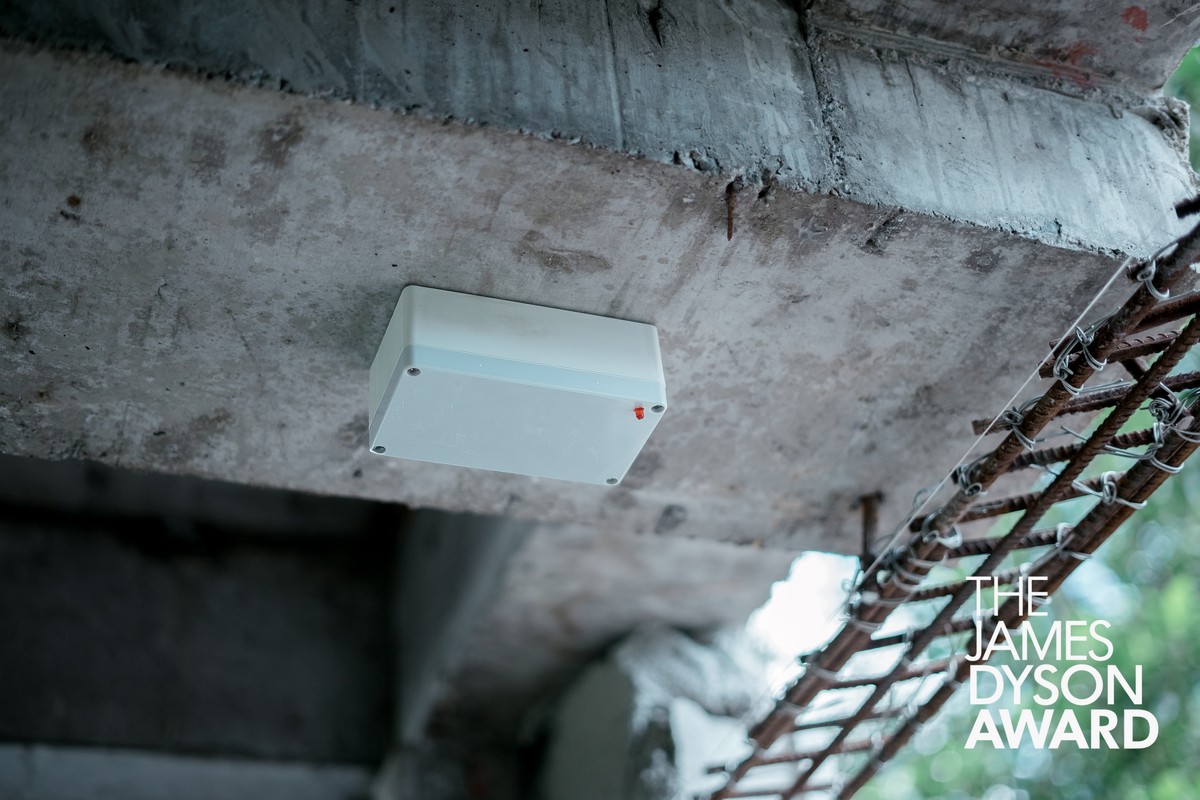
Sentinel was invented by Aldrei Ong, a structural engineer and graduate of De La Salle University in the Philippines. The device addresses a persistent problem in post-earthquake building assessment: internal structural damage to concrete structures is often invisible from the outside, making it difficult and slow to determine whether a building is safe to occupy.
Sentinel works by converting a standard concrete spacer block, a component already used in reinforced concrete construction to hold steel in position, into a low-cost sensor. The block is made from self-sensing concrete containing conductive materials. When the concrete cracks or sustains damage, its electrical resistance changes. Embedded electrodes connect each block to an electronic module that monitors these changes against a baseline reading and transmits data wirelessly to an online dashboard for remote monitoring.
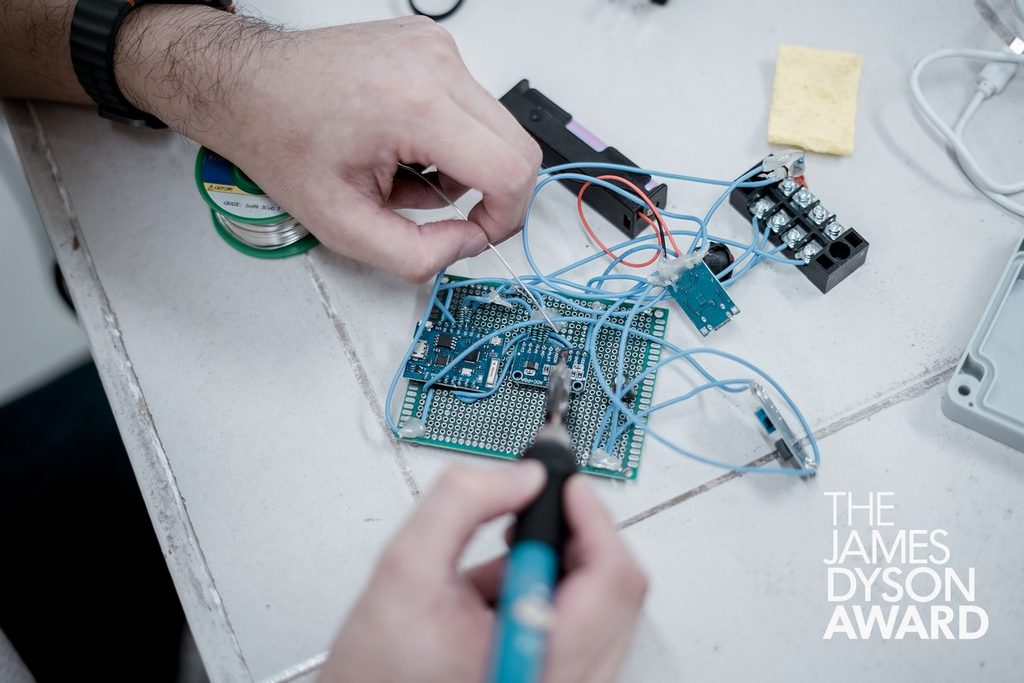
Because Sentinel repurposes an existing construction component, it can be integrated into buildings during construction without adding a separate structural element. Aldrei tested more than 125 concrete samples over the course of his master’s research before arriving at the final material formulation. Sentinel sensors have already been embedded in a real building in the Philippines for live monitoring.
Following the award, Aldrei plans to replace hand-soldered electronics with a custom printed circuit board, continue real-world validation, and develop versions that can be retrofitted to existing structures.
James Dyson Award 2026 Medical Winner: Rumble Rims
Rumble Rims was developed by Harvard University students Cleo Pontone, Radhika Saran and Sophia DeVito. The device targets a gap in sports medicine: concussion symptoms can take up to 72 hours to fully appear, and objective screening tools are typically expensive, clinic-based, and unavailable at the point of play where decisions about athlete safety must be made quickly.


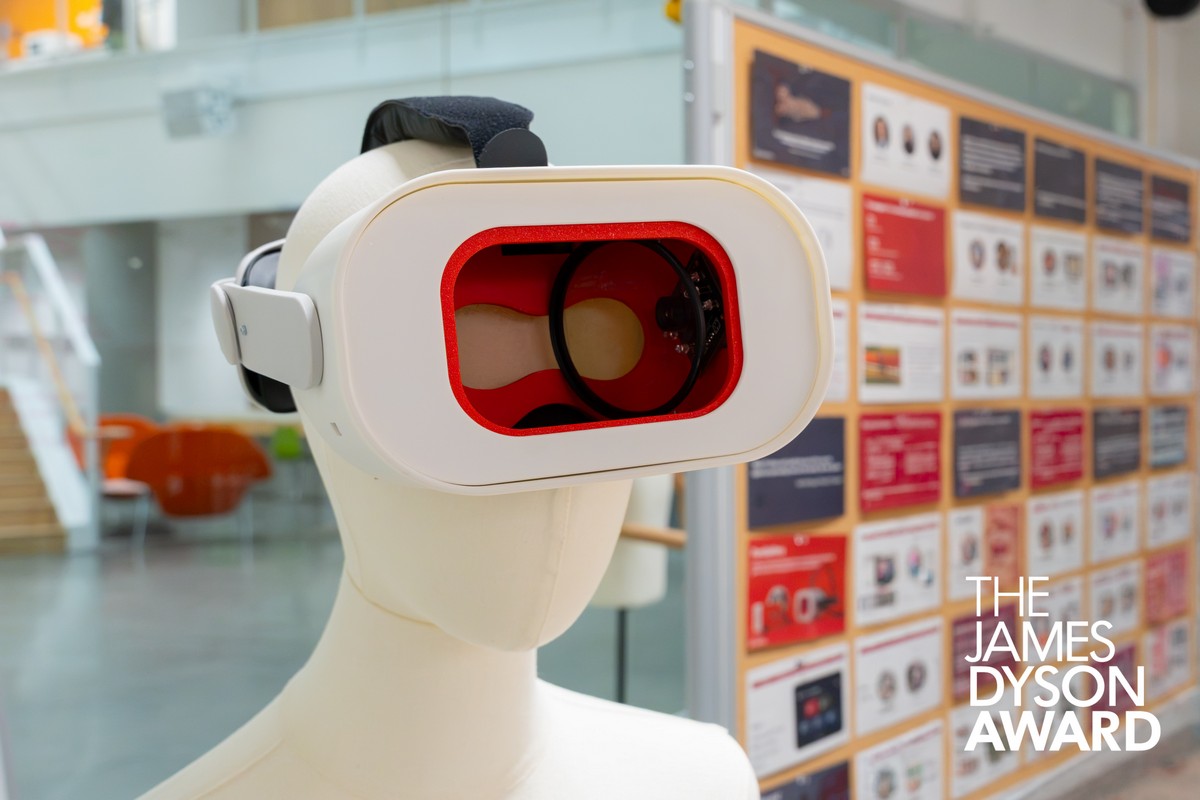
The Rumble Rims headset uses side-mounted infrared cameras and 45-degree dichroic mirrors to measure how an athlete’s eyes follow and fixate on stimuli during a 2 to 3 minute test. These eye movement patterns can indicate neurological impairment. Results are displayed in real time on a mobile device, providing guidance on whether an athlete should be removed from play and referred for professional assessment.
A recovery dashboard built into the system allows for repeat testing over time, creating a longitudinal record that athletes, families and clinicians can reference when making return-to-play decisions. The team is clear that Rumble Rims is a screening tool, not a diagnostic one, and that final decisions remain with qualified healthcare professionals.
The team plans to build a higher-fidelity prototype, refine the eye-movement test protocol, and validate the device with athletes, coaches and medical advisers. Longer-term goals include piloting with schools and youth sports programs and pursuing formal medical device validation.
Pokdepinion: Two student teams just out-engineered every sports league and construction firm that has been sitting on these problems for decades.