
MicroLED is widely regarded as the holy grail of all display technologies, with all the benefits of what OLED offers in color accuracy and excellent contract, all without the tradeoffs such as burn-in and degradation issues. Naturally, you’d expect such panels to appear in cinemas, or public spaces like billboards.
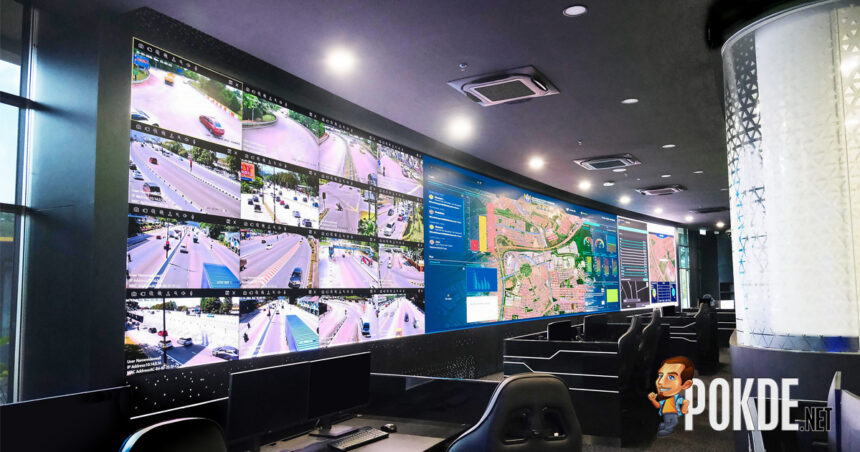
As the makers behind the famed “The Wall”, Samsung’s latest installation of its flagship MicroLED panel is a rather quirky one, to say the least, for reasons none other than the use case being a command and control center for Iskandar Puteri City Council (MBIP) located in the southern part of Johor.
MicroLED For City Monitoring?
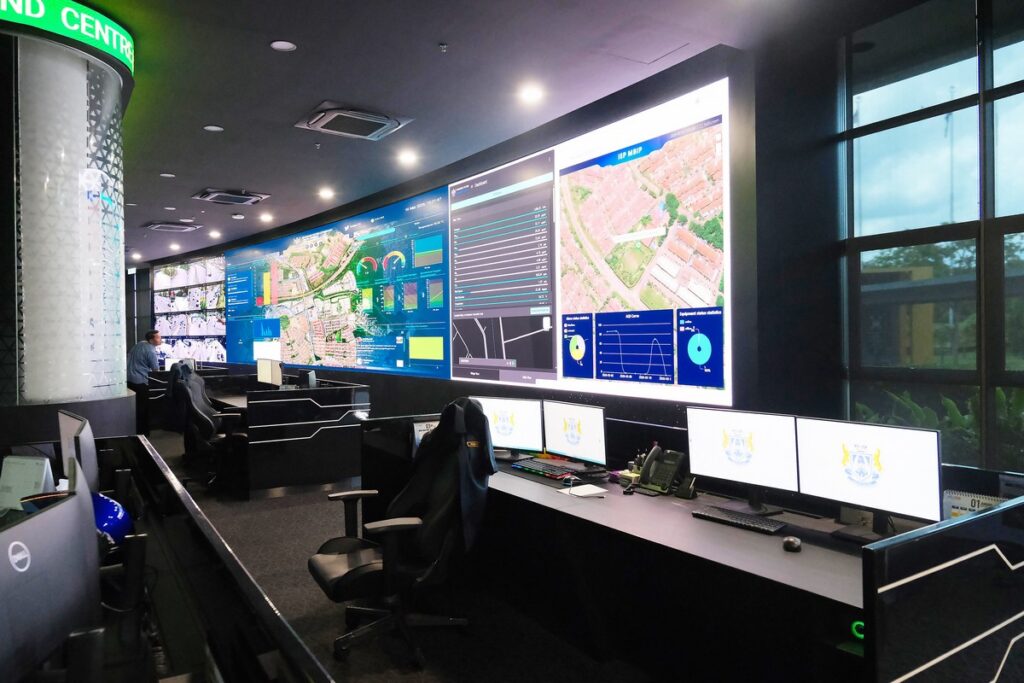
Suffice to say this hardware upgrade is likely on a quality-of-life basis, as another benefit of MicroLED is its modularity thanks to its bezel-less nature which allows each MicroLED module join seamlessly, forming a single giant display. We know the display is commercially available up to 292 inches, although technically there is no hard limit on how big it can be thanks to its aforementioned properties.
In this case, the installation in Iskandar Puteri Command and Control Centre (IPCCC) involves a 19.35 x 2.7m screen area that amounts to a whopping 769 inches of screen real estate. Unsurprisingly, this massive display also takes the title of Malaysia’s longest The Wall installation. Samsung said it “was recommended for the IPCCC project” following its LED installation at Perbadanan Putrajaya back in 2018.
The company further stated that this installation allowed IPCCC personnel to “monitor multiple real-time data sources across security, traffic, and environmental conditions simultaneously, improving situational awareness, reducing response times and visual fatigue.” It’s certainly better than having a bunch of bezels getting in the way if they opted to put several regular TV-sized displays, at least.
While we could argue that MicroLED technology is perhaps overkill in such use case, it is nonetheless an opportunity for Samsung to flex its MicroLED muscles over the likes of LG and Sony, both of which have their own MicroLED-based solutions as well (in the form of MAGNIT and Crystal LED, respectively).
Pokdepinion: That is truly a flex.