



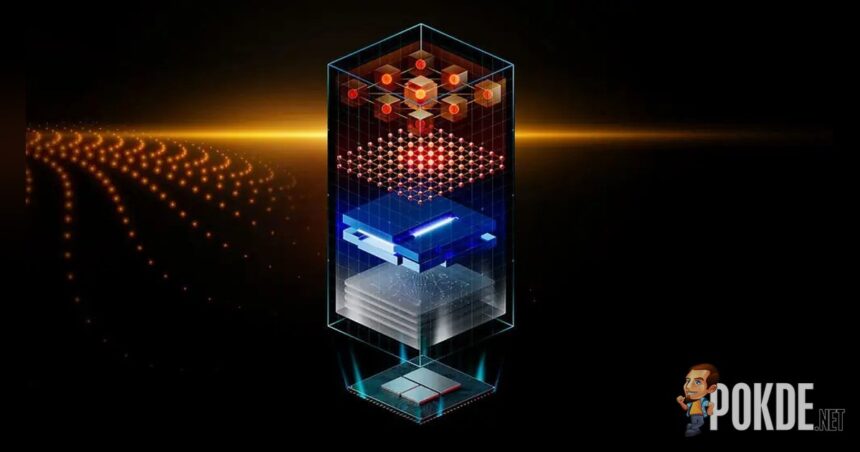
Cadence has announced the Cadence Maestro AI Model Portfolio, a domain-specialized suite of AI models designed to power its AI Super Agents across semiconductor and system design workflows. It integrates reinforcement learning loops with Cadence’s established electronic design automation (EDA) and system design automation (SDA) tools, forming an agentic engineering platform capable of recursive self-improvement.
Cadence Maestro AI Model Portfolio
The portfolio spans multiple model sizes and architectures, combining domain-specialized post-trained large language models, trained decision models, and self-improving agent skills. It works in conjunction with Cadence’s existing AI Super Agents, including AuraStack, ChipStack, InnoStack, and ViraStack, to bring specialized intelligence to complex engineering workflows through a blend of frontier, open-weight, and domain-specialized models across cloud and on-premises environments.
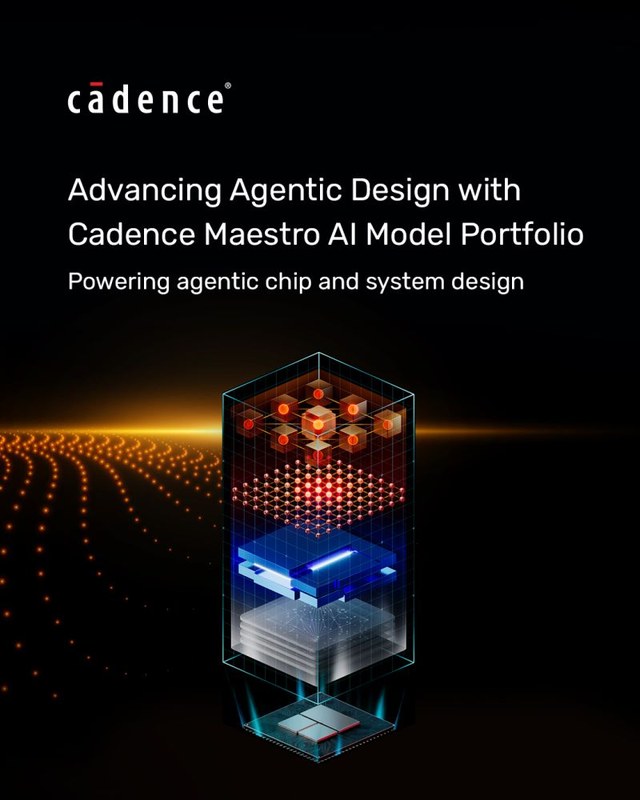
Early results indicate up to 30% improvement in quality of results and up to 5X greater token efficiency compared to general-purpose foundation models. These gains stem from a vertically integrated learning environment that combines Cadence domain knowledge, curated engineering datasets, AI Super Agents, EDA and SDA tools, and evaluation harnesses.
Cadence’s principled algorithms and deterministic solvers evaluate outputs against engineering objectives, constraints, and ground truth, creating closed and verified feedback loops for reinforcement learning and recursive improvement. Given a high-level objective, Cadence AI Super Agents interpret design intent, decompose tasks, orchestrate the Maestro portfolio alongside other frontier and open-weight models, and drive Cadence EDA and SDA tools through the process.
The combined solution interprets specifications, generates design content, analyses results, evaluates tradeoffs, and guides decisions based on engineering requirements, cost, and security. By balancing EDA and SDA tool calls with large language model invocations, the system significantly reduces token usage while maintaining execution efficiency.
Cadence and NVIDIA are collaborating on the integration, with NVIDIA contributing its Nemotron and OpenShell models alongside deep engineering expertise to Maestro’s domain-specialized model layer. The two companies are also working together on agent security through integration with the NVIDIA OpenShell Reference Architecture. The Maestro portfolio, including NVIDIA Nemotron models, can be further post-trained on a customer’s proprietary data, designs, and workflows.
The complete Cadence agentic environment, including AI Super Agents, the Maestro AI Model Portfolio, and EDA tools, can run on Cadence’s secure cloud platform, secure public clouds, or in a customer-controlled on-premises environment to meet data privacy, security, and deployment requirements. The first Maestro models are available to select early access customers in the fourth quarter of 2026.



Pokdepinion: Model collapse is a thing when it comes to recursive learning, so here’s hoping these models won’t do that.