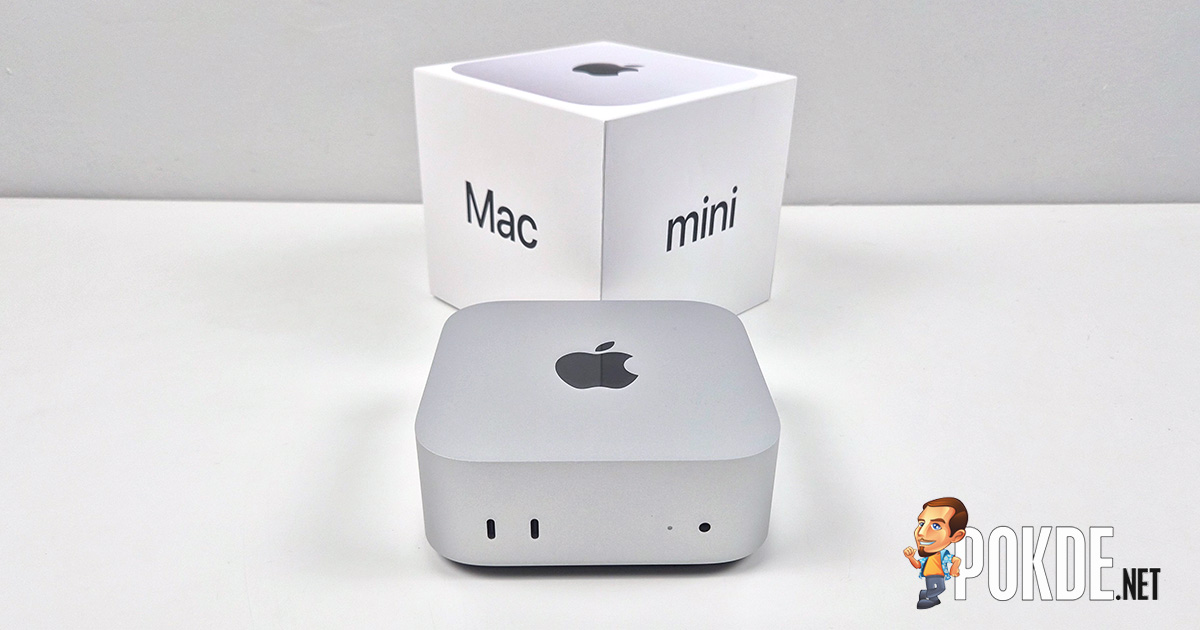

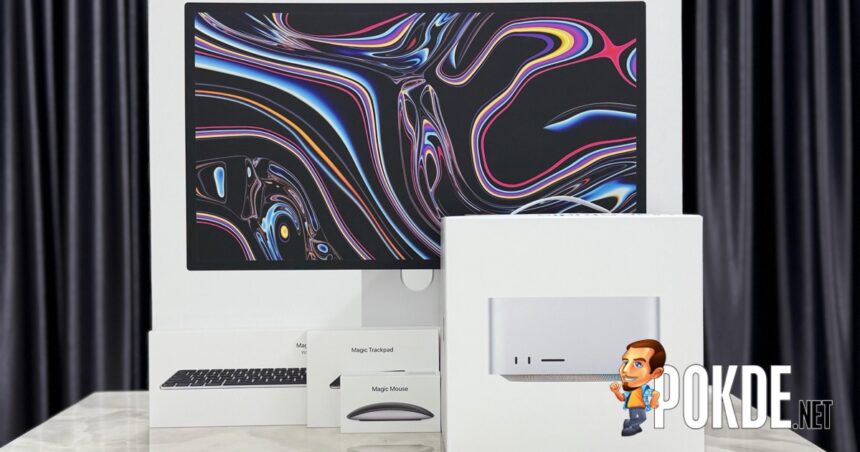
Apple’s new Mac Studio and Mac mini are officially available in Malaysia starting today, 22 September 2026. I’ve got both units in hand right now, and while I’m saving the benchmarks and the deep dive for a proper review later, I wanted to share my first impressions after going through the spec sheets closely and spending some time with the machines themselves.
Mac Studio – the real story isn’t the core count
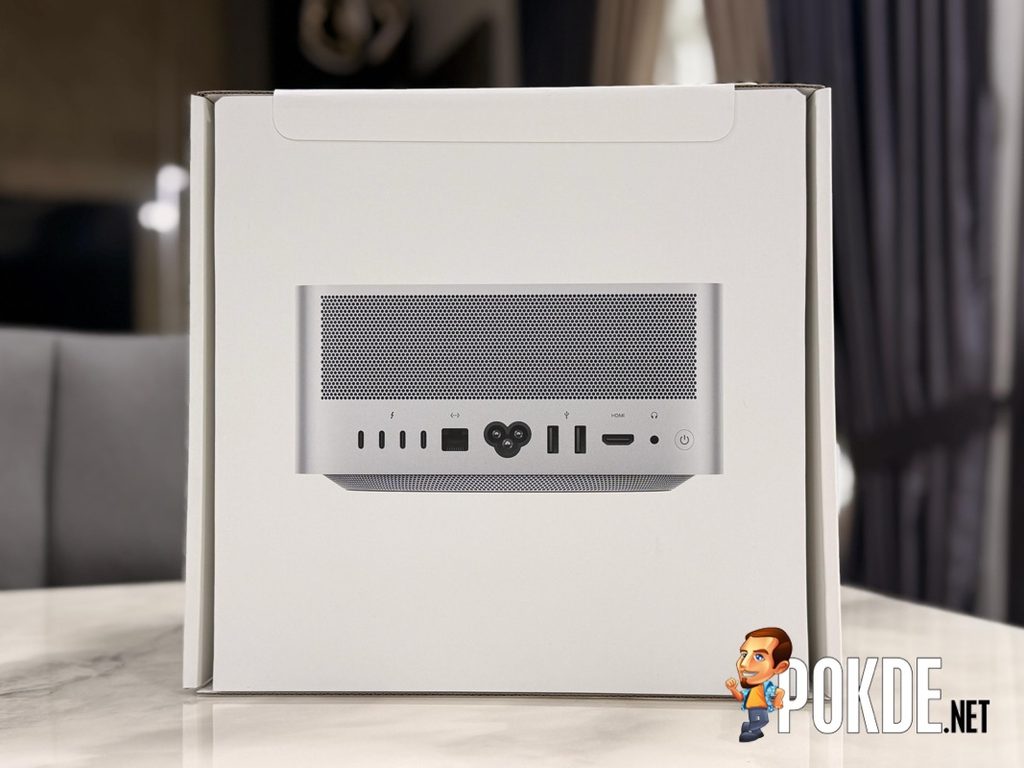
The new Mac Studio ships with either M5 Max or the all new M5 Ultra. On paper, the core counts look like a modest bump. M5 Max still tops out at a 40 core GPU, the same ceiling as last year’s M4 Max, and M5 Ultra keeps the 80 core GPU ceiling that M3 Ultra had. The CPU gains are real but not dramatic either, an 18 core CPU on Max compared to 16 before, and 36 cores on Ultra compared to 32.
The real change here is the GPU architecture itself. Every GPU core across both chips now has Neural Accelerators built in, and for M5 Ultra, that’s the first time an Ultra chip has had them at all. It not the clockspeed or core count doing the heavy lifting, but rather a fundamentally different way of handling matrix multiplication at the silicon level, the math local LLM inference depends on.
Memory bandwidth is also where I think the real upgrade for AI workloads sits. M5 Ultra moves to a whopping 1.2TB/s, up from roughly 800GB/s on M3 Ultra, and that 50 percent jump deserves applause. Once you’re running large models locally, especially ones you’re offloading in pieces, bandwidth tends to be the actual bottleneck, not raw compute or even memory capacity. Paired with up to 512GB of unified memory, that’s a genuinely different class of machine for anyone doing local AI work seriously. Note that the 512GB unified memory is only going to be available in late October so the unit at my hands is a 256GB one.
Thunderbolt 5 also opens up clustering multiple Mac Studio units together over RDMA, which lets you pool memory across systems to run models too large for a single machine. Apple’s claiming up to 3x faster inference across a four unit cluster. I haven’t tested that myself yet, but the architecture behind it, shared memory pools over Thunderbolt 5, makes sense on paper.
Wi-Fi 7 and Bluetooth 6 are new to Mac Studio entirely, which is overdue but welcome. Storage is up to twice as fast with the next gen SSD architecture, and display support scales up to eight displays, or four Studio Display XDR units running full 5K at 120Hz which is really remarkable.
On pricing. Last year’s Mac Studio with M4 Max launched in Malaysia at RM8,999. This year’s M5 Max Studio starts at RM10,999, about 18 percent more for a chip that’s keeping the same GPU core ceiling. M5 Ultra starts at RM24,999.



The 512GB unified memory configuration of Mac Studio isn’t shipping today at all. Apple’s holding it back to late October, weeks after the rest of the lineup. That’s not something Apple has explained, so I’m speculating here, but it lines up with something that’s been widely reported across the industry for a while now, DRAM and NAND supply has been genuinely tight through 2025 and into 2026, largely because AI datacenter demand has been eating up fab capacity that used to go toward consumer memory. Apple isn’t the only company dealing with this. If the highest memory configuration is the one getting delayed, and prices across the board are up more than a routine refresh would suggest, a supply squeeze on memory chips is a reasonable explanation, even if Apple isn’t the type of company to say so directly.
Mac mini – the mini finally gets Neural Accelerators, but it costs more to get them
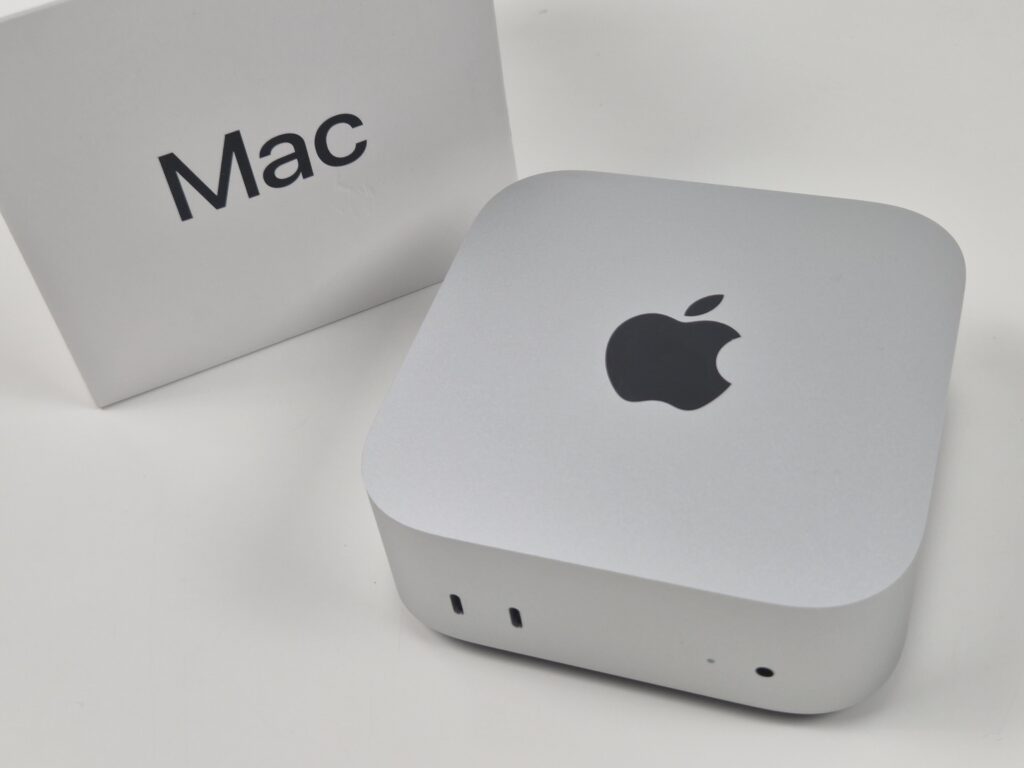
The Mac mini now comes in M6 or M5 Pro, and Apple’s leaning hard into “agentic computing” language here, meaning a small always on machine that can sit quietly and run AI workloads in the background. Looking at the actual silicon, the base M6 mini picks up a 12 core CPU and 12 core GPU, each two cores more than the outgoing M4, and for the first time on a mini, every GPU core has Neural Accelerators built in.
The M5 Pro mini is where I see the more substantial hardware move. Its CPU jumps from a 14 core ceiling on M4 Pro to 18 cores, a four core increase in a chassis this size is not a small thing. GPU tops out at 20 cores either way, but again, the Neural Accelerators are the real architectural shift, not the count.
Amid all the AI framing, people are forgetting the Ethernet bump. The base mini moves from Gigabit Ethernet standard to 2.5Gb standard, with a 10Gb option available on both configurations. If you’re running this as an always on box on a home network or a small studio setup, that’s a genuinely useful, unglamorous improvement.
Now for the number that actually surprised me. The base M4 mini launched in Malaysia at RM2,499, and that was two years ago, there was no mini refresh last year. This year’s base M6 mini starts at RM3,799, which works out to roughly 52 percent more for the entry point across that two year gap. The M4 Pro to M5 Pro jump is smaller proportionally, RM5,999 to RM7,499, about 25 percent, over the same two years. Spread across two generations, the increase reads a little less alarming, but it’s still a meaningfully bigger jump than the mini has typically seen, and the Mac mini has always been Apple’s relatively affordable desktop entry point.
Both mini configurations get Wi-Fi 7 and Bluetooth 6, and the port layout carries over largely as expected: three Thunderbolt 4 on the M6 version, three Thunderbolt 5 on the M5 Pro version. Thunderbolt 5 again unlocks clustering multiple mini units for distributed AI workloads, the same trick as on Mac Studio, just in a smaller box.
What both machines share
macOS 27 ties the whole lineup together, with Siri AI and the next wave of Apple Intelligence features arriving alongside refinements to Liquid Glass across the system. Both Siri AI and Apple Intelligence are still in public beta at the moment, rolling out more broadly with macOS 27, so part of what Apple’s selling here is software that hasn’t fully landed yet.
Both machines are available at Apple Store locations and Apple Authorised Resellers starting today, with the 512GB Mac Studio configuration arriving a little later, in late October.
My honest first take after looking at both machines closely and handling them myself is that the Neural Accelerator rollout across the whole lineup is the real story of this generation, not the core count bumps. Whether that’s worth the price increase, especially on the Mac mini, is going to depend heavily on how much local AI work you’re actually doing, and that’s exactly what I want to put to the test. We’ve got both units in for review at Pokde.net, so stay tuned for the full hands-on breakdown with actual benchmarks once we’ve put them through their paces properly.
Pokdepinion: Now how do I get my hands on another Mac Studio (36C CPU / 80C GPU / 256GB RAM) so I can test out the RDMA