


Only 53% of organizations in Malaysia are very confident in their ability to detect and respond to a compromised AI agent, according to Cisco Relentless Defense Report, a global survey of 8,000 security professionals across 30 markets conducted in April and May 2026.
The findings paint a concerning picture of cyber resilience in Malaysia, where 83% of organizations experienced a material, business-disrupting cyber incident in the past 12 months, with nearly one in three involving an AI-enhanced attack. It draws on a double-blind survey methodology, with independent analysis carried out by Satori Experience.
Cisco Relentless Defense Report Highlights
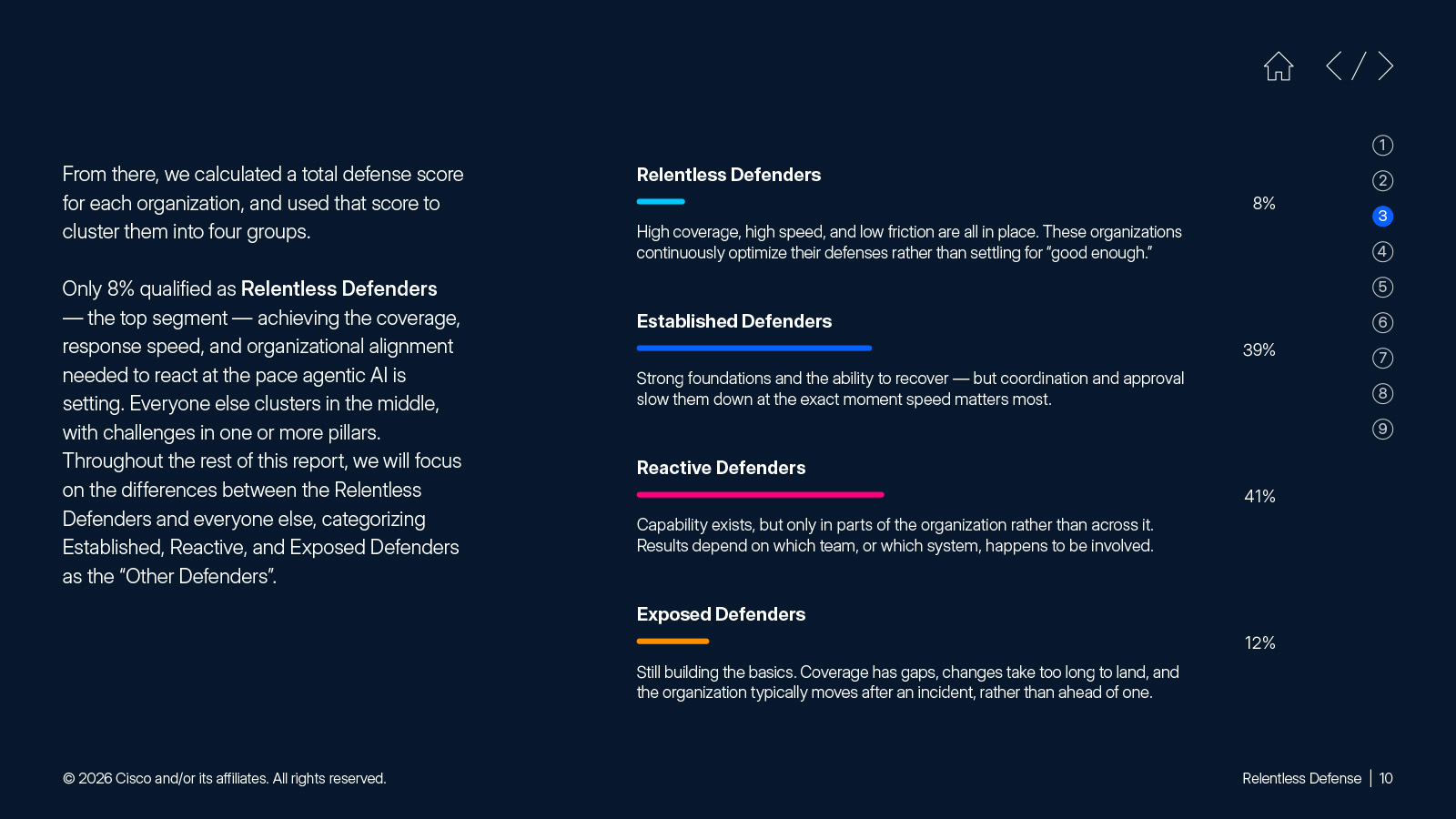
The report scores organizations across three dimensions: coverage (how completely they can protect their environment), speed (how quickly they can detect, respond, and remediate threats), and friction (what slows them down). The global average score in Malaysia is 65 out of 100. Only 8% of organizations globally and in Malaysia qualify as what Cisco calls “Relentless Defenders”, the top-performing group in the study.
Organizational friction, rather than technology gaps, are identified as the primary obstacle to stronger cyber defense in the report. Only 43% of organizations in Malaysia say their security, networking, and IT teams operate as a single unit with shared visibility and tooling. This lack of coordination compounds when it comes to executive decision-making: 43% struggle to translate business metrics into information that influences leadership, while 34% have no consistent way to measure security performance at all.
Data access is another significant friction point. Nearly half of Malaysian organisations (49%) spend more time collecting and correlating data across systems than addressing the actual threat. A further 40% say critical insights are missed because data sits out of reach.
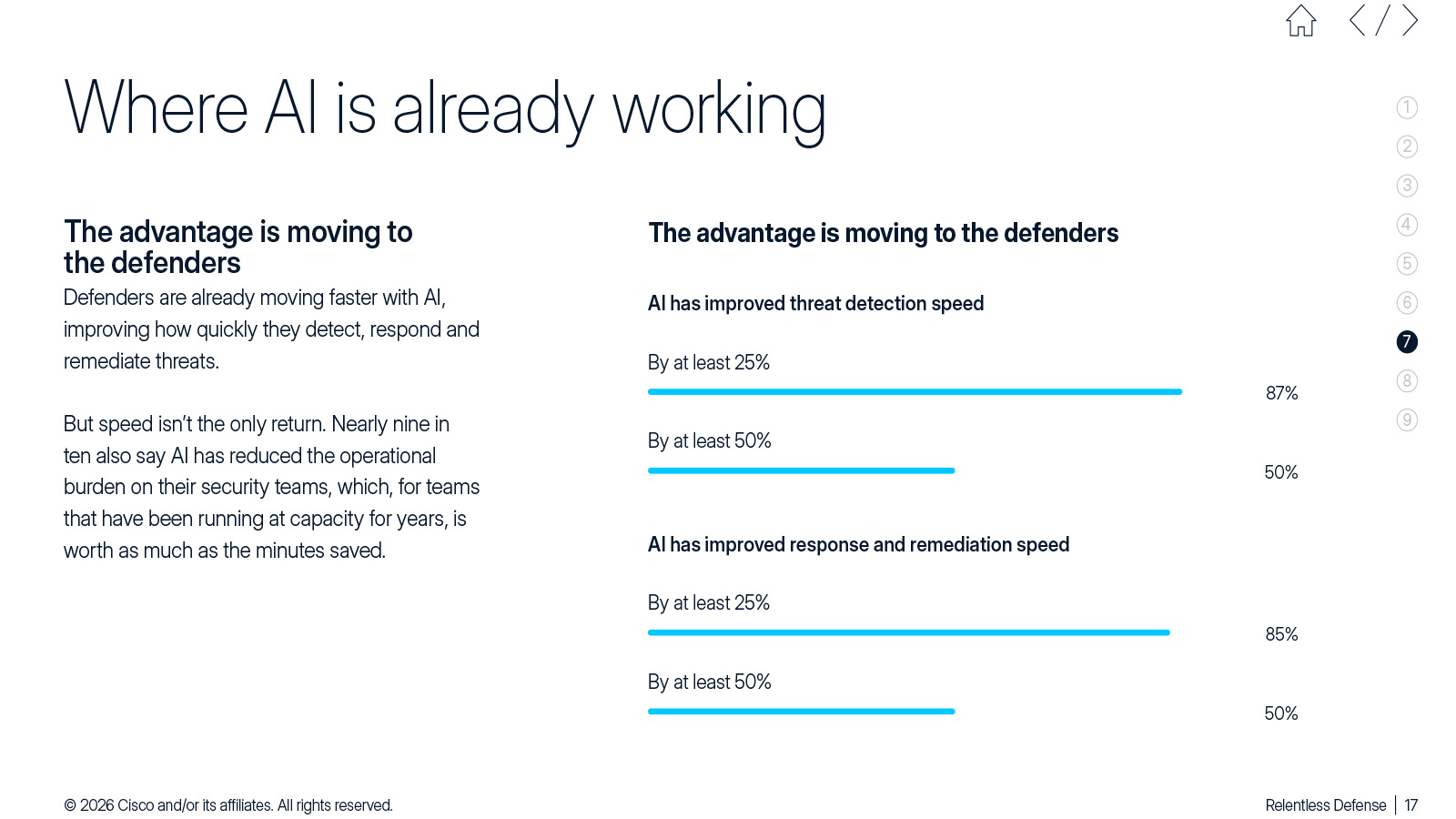
AI is delivering measurable gains for security teams: more than eight in ten practitioners report detection and response improvements of at least 25%, and more than one in three say AI is significantly reducing their operational burden. However, fewer than half of organizations have extensively deployed AI-powered security capabilities, with adoption highest in network security and data privacy, and lowest in identity and access management.
Concerns over data exposure, compromised systems, and third-party handling are slowing broader AI deployment in security operations. The low confidence figure around detecting compromised AI agents (53%) underlines how much ground organisations still need to cover.


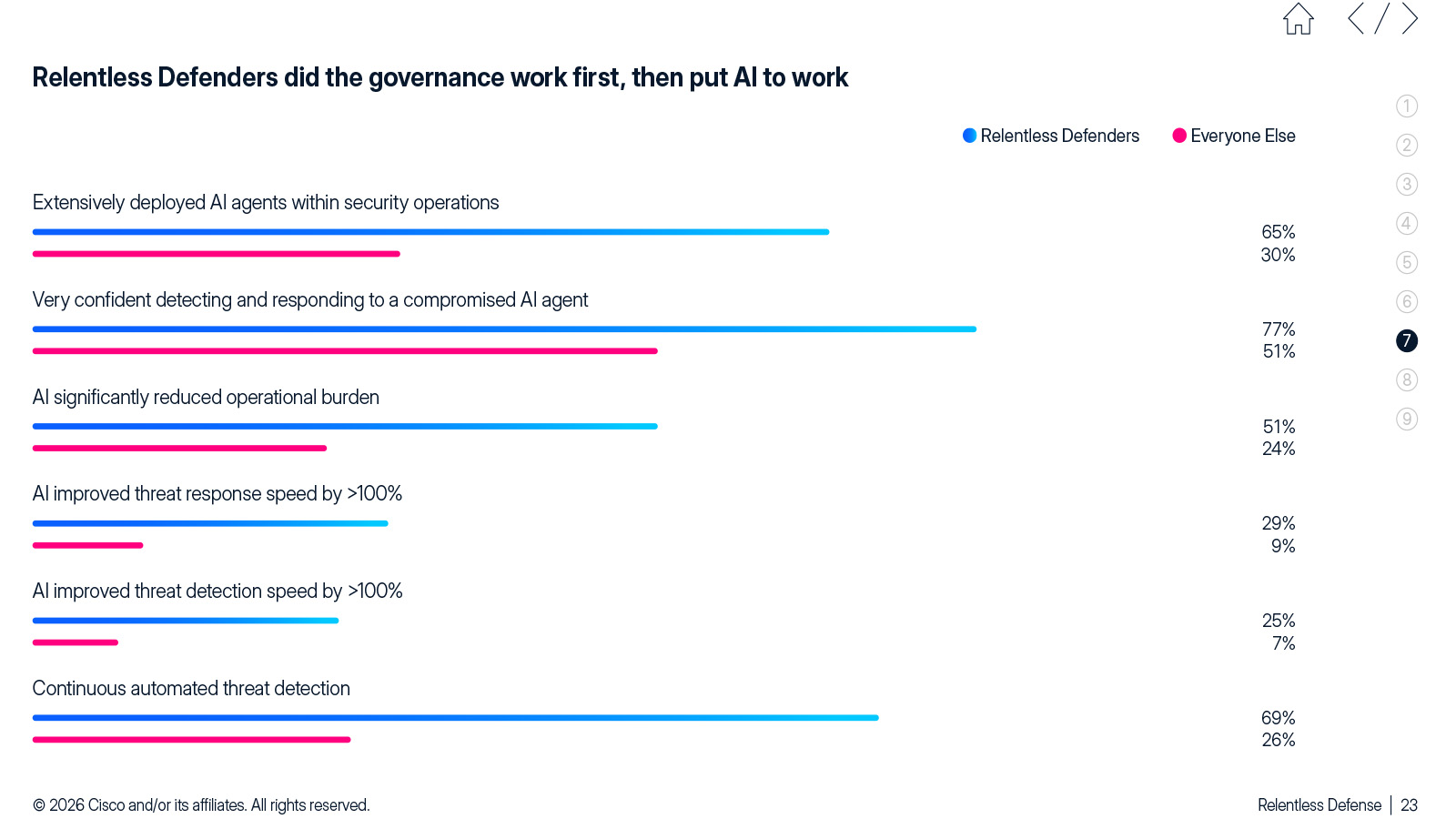
Relentless Defenders, the top 8% globally, stand apart in several measurable ways. Among this group, 83% operate as a single coordinated security team with shared visibility across security, network, and infrastructure, compared to just 37% of all other defenders. They are also far more likely to apply consistent controls to AI agents and non-human identities (86% versus 37%), and 77% are very confident they could detect and respond to a compromised AI agent, compared to 51% of others.
Among organizations that increased security spending, Relentless Defenders were nearly twice as likely to see incidents fall (71% versus 39%). And 25% of Relentless Defenders report that AI helped improve threat-detection speed by more than 100%, compared to just 7% among all other defenders.
Pokdepinion: The cat and mouse game of security goes on.
![[Updated: Pricing] Nothing Headphone (1) Pro Is Officially The Brand's New Flagship Headphones - 26](https://cdn.pokde.net/wp-content/uploads/2026/09/30224032/nothingheadphone1procover.jpg "[Updated: Pricing] Nothing Headphone (1) Pro Is Officially The Brand's New Flagship Headphones - 27")