


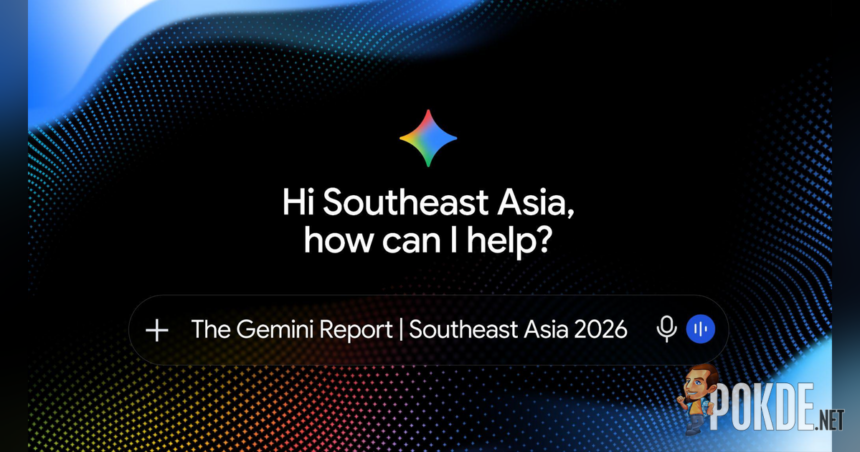
The Google Gemini app in Southeast Asia has more than doubled its active user base over the past year, according to Google’s first-ever Gemini Report: Southeast Asia 2026. The report, covering six markets including Indonesia, Malaysia, the Philippines, Singapore, Thailand, and Vietnam, reveals that the region is adopting Gemini faster than any other Google application. Malaysia stands out as one of the fastest-growing markets, with the number of Gemini users doubling in just a few months.
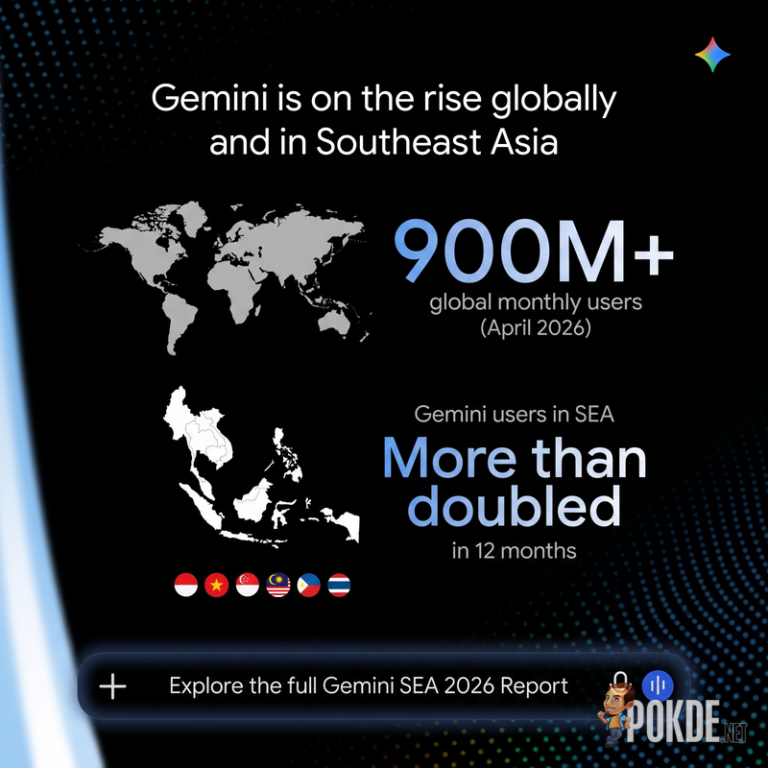
The rapid growth builds on Gemini’s global base of 900 million monthly active users. Google attributes the surge in Southeast Asia to a combination of factors: a young, tech-savvy population with nearly 40% under 25 years old, and Gemini’s strong performance in local languages across the region.
Google Gemini App in Southeast Asia: Key Usage Trends
The report identifies younger users as the most active segment. Digital natives in the region make more requests, hold longer conversations, and write significantly more detailed prompts than other age groups. This generation is shaping how AI assistants evolve in Southeast Asia.
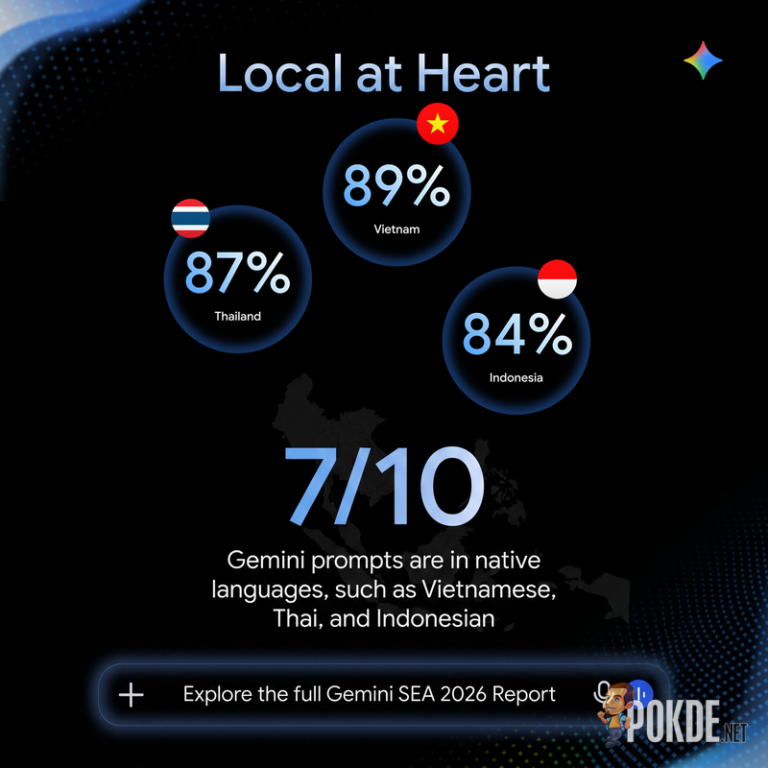
Language capability is a central driver of adoption. Nearly 70% of prompts submitted across the region are in native languages, with Vietnam leading at 89%, followed by Thailand at 87% and Indonesia at 84%. AI Singapore’s SEA-HELM evaluation benchmark, which assesses large language models on Southeast Asian languages, has ranked Gemini as the overall best-performing LLM in this category.
Mobile usage dominates the experience, with almost three in four Gemini requests across the region originating from mobile devices. Users are bypassing keyboards, relying on voice commands, photos, and video uploads for more than 40% of their prompts. Features like Gemini Live allow users to translate street signs, troubleshoot home repairs, or analyse documents on the go.
Creative output is another major use case. Around 40% of queries ask Gemini to generate entirely new content, ranging from images and music to video and written documents. Users across Southeast Asia have generated 5 billion images using Nano Banana, Google’s image generation model, over the past year. Nearly 1 million songs have also been generated via Lyria 3, Gemini’s music generation model, since its introduction in the region.
Beyond creative tasks, users frequently rely on Gemini as a research assistant for summarising dense documents and structuring data. It also serves as a thought partner for advice on topics such as birthday gift ideas, travel destinations, and step-by-step troubleshooting.



Malaysia Leads Southeast Asia in AI Image Generation
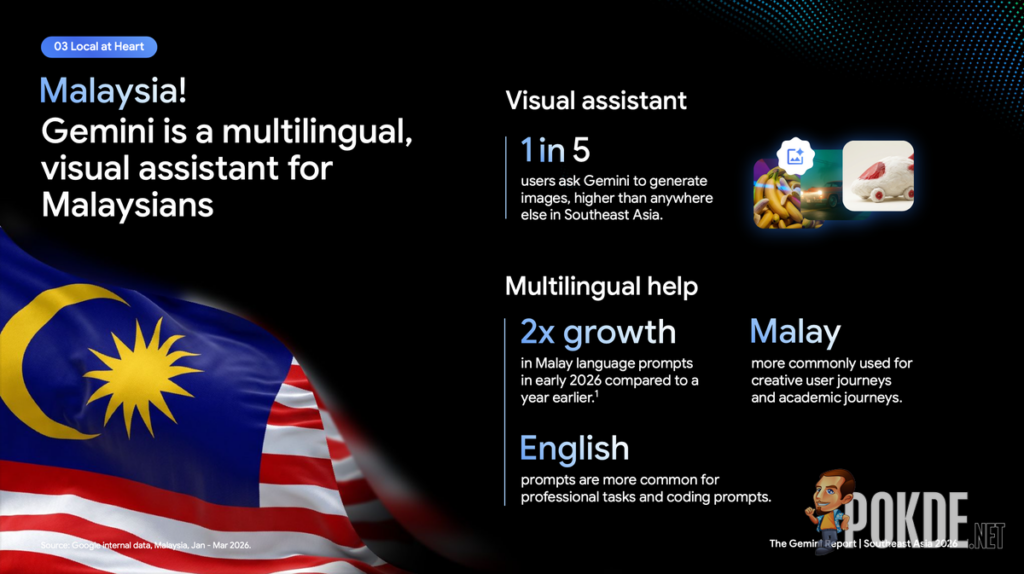
Malaysia’s Gemini usage shows a distinctly visual and bilingual character. One in five Malaysians has asked Gemini to generate images, representing the highest proportion in Southeast Asia. Since the launch of Nano Banana image generation in August 2025, visual creation has become one of the country’s most popular AI use cases.
Language switching is equally notable. While English remains the preferred language for professional and productivity tasks, requests in Malay more than doubled in early 2026 compared to the year prior. Malaysians naturally alternate between English for work and Malay for creative expression, reflecting how the Gemini app fits into the country’s multilingual culture.
Google is also rolling out Gemini Spark, a 24/7 personal AI agent designed to proactively manage tasks and help users navigate their digital lives. Unlike a standard assistant, Spark acts as an active partner that completes real work on a user’s behalf. It is deeply integrated with Workspace tools including Gmail, Docs, and Slides, operating in the background even when a device is locked or powered down.
Gemini Spark is currently available in English for Google AI Ultra subscribers. A rollout to all local Southeast Asian languages for Ultra subscribers is set to begin this week, extending its reach across the region’s linguistically diverse population.
Pokdepinion: Gemini doubling its user base in Malaysia in just a few months is genuinely impressive, though one has to wonder how many of those users are just generating AI images of their cats in traditional baju raya.