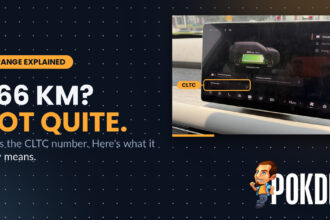
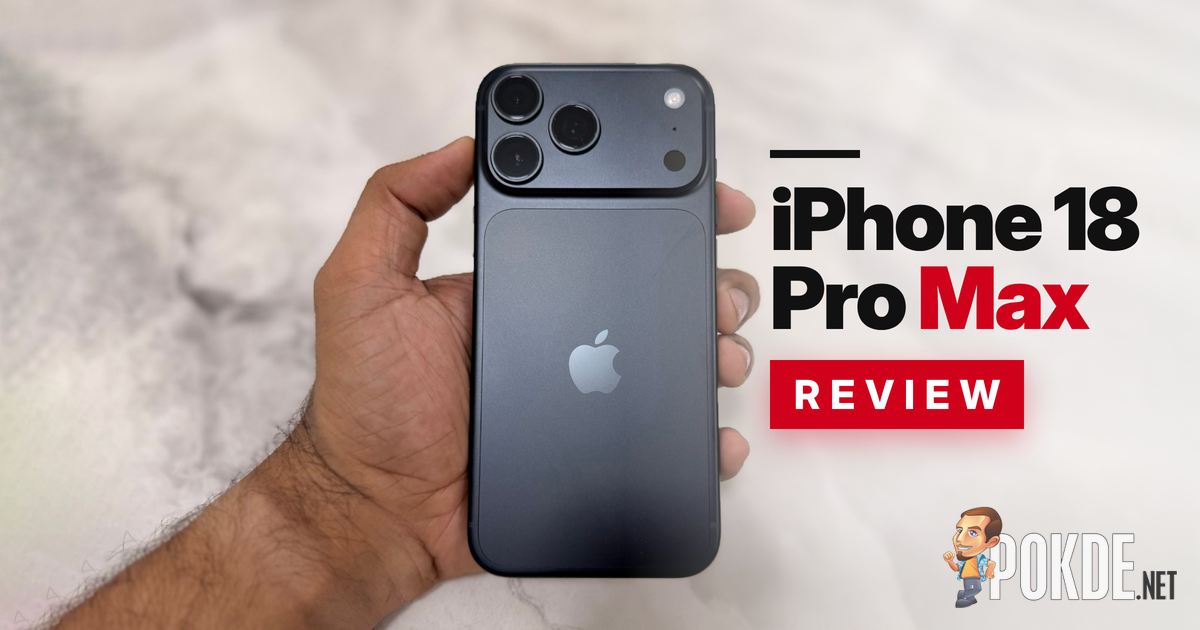


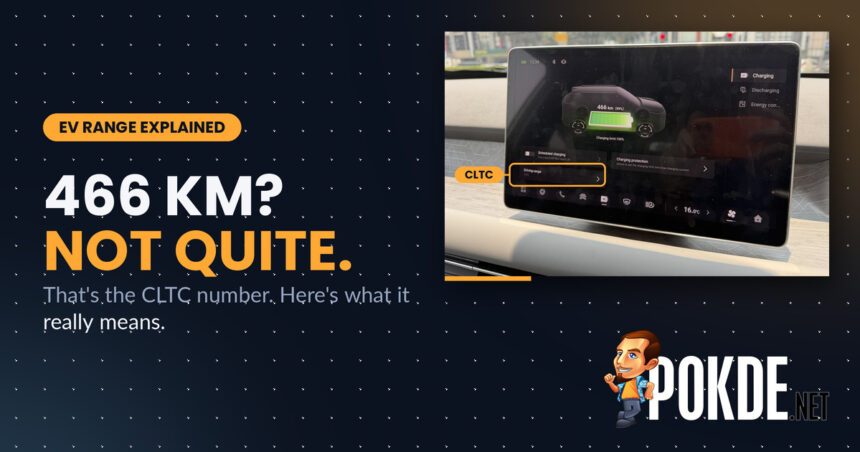
When we had the Dongfeng Vigo, its screen showed 466 km of range at 99% battery. That sounds great, until you notice the small print under the Driving range setting: CLTC. Range figures in Malaysia are quoted under different tests, and the number you see depends heavily on which one is used.
Same Car, Different Setting
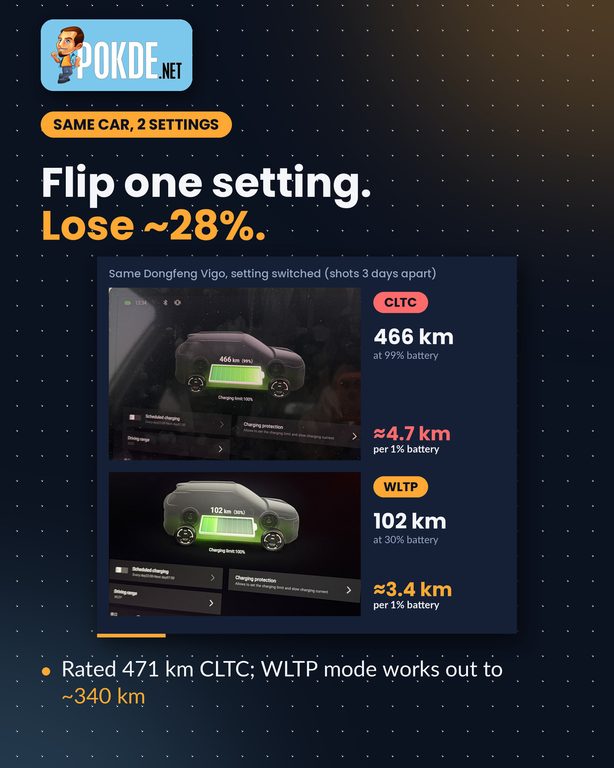
The Vigo lets you choose which standard its range estimate is based on. In CLTC mode, 466 km at 99% works out to about 4.7 km for every 1% of battery, in line with its official 471 km CLTC rating. A few days later in WLTP mode, the screen showed 102 km at 30%, or about 3.4 km per 1%, which points to roughly 340 km on a full charge. That’s around 28% less, from the same car.
They’re All Lab Tests, Just Driven Differently
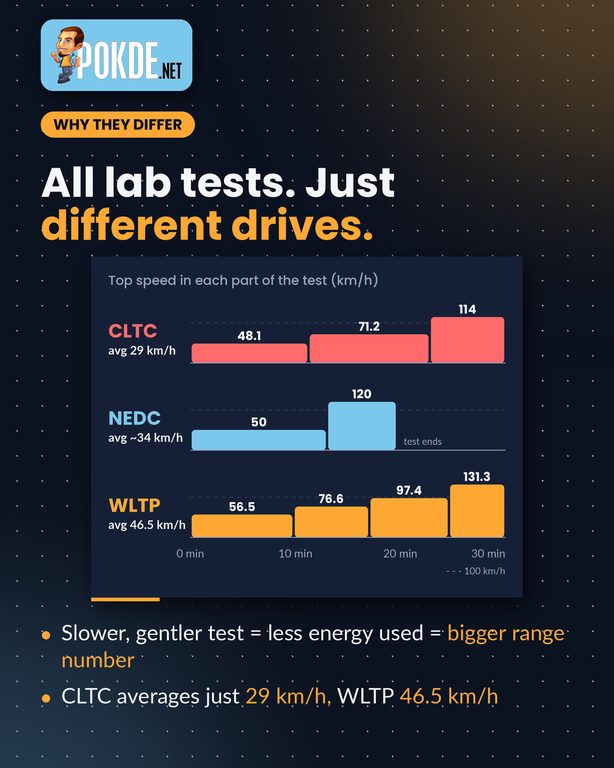
CLTC, NEDC and WLTP are all carried out in a lab on a rolling road, following a fixed speed pattern. The gentler and slower that pattern, the less energy the car uses, and the bigger the range figure. CLTC averages just 29 km/h, NEDC around 34 km/h, and WLTP 46.5 km/h.
NEDC: The Old European Test
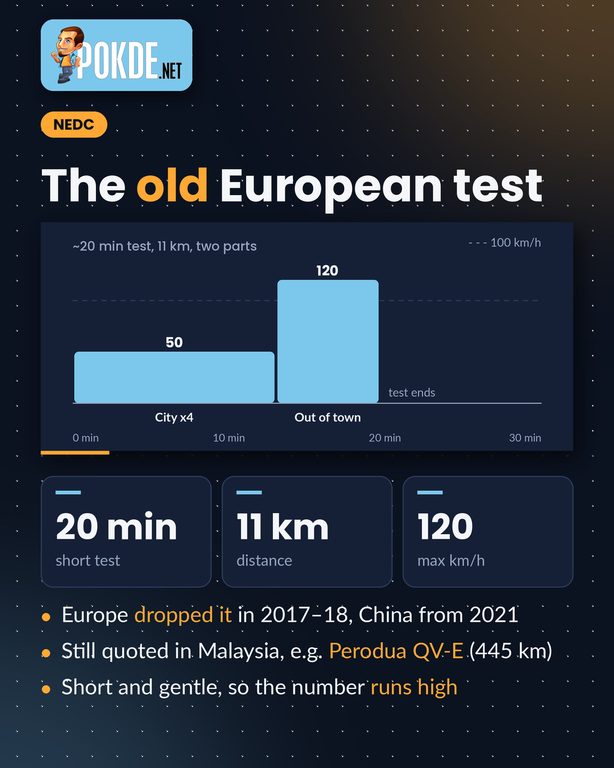
The New European Driving Cycle runs for about 20 minutes and covers roughly 11 km, made up of four repeated city loops capped at 50 km/h, followed by an out-of-town section that peaks at 120 km/h. Europe replaced it with WLTP for new car models from September 2017 and for all new cars from September 2018, and China moved its EV range ratings to CLTC from 2021. Even so, NEDC figures still appear in Malaysia. The Perodua QV-E, for example, is quoted at 445 km NEDC.
CLTC: China’s Own Test
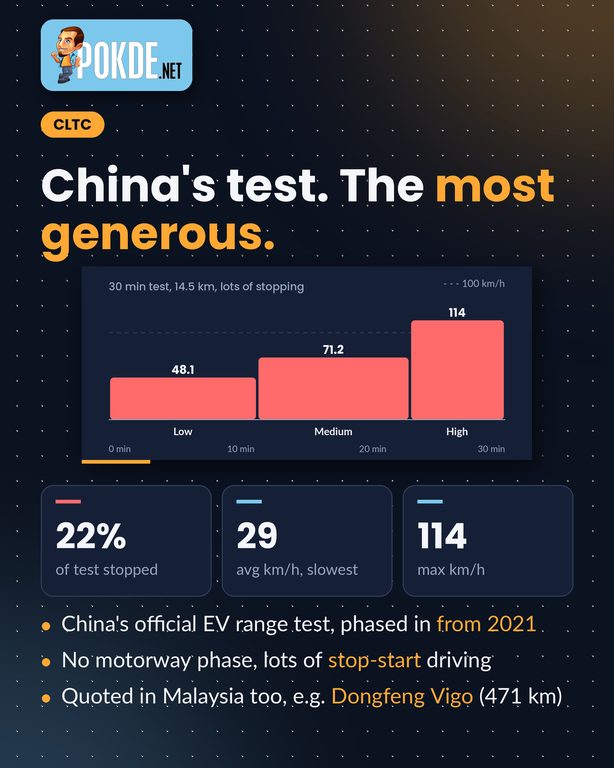
The China Light-duty Vehicle Test Cycle (CLTC-P for passenger cars, defined in GB/T 38146.1-2019) runs for 30 minutes but covers only 14.48 km. About 22% of the test is spent stopped, there’s no motorway phase, and the top speed is 114 km/h. That stop-start, low-speed profile suits EVs, which is why CLTC figures are usually the highest of the three. Some brands quote it in Malaysia too. The Dongfeng Vigo launched here with a 471 km CLTC rating.
WLTP: The Strictest of the Three
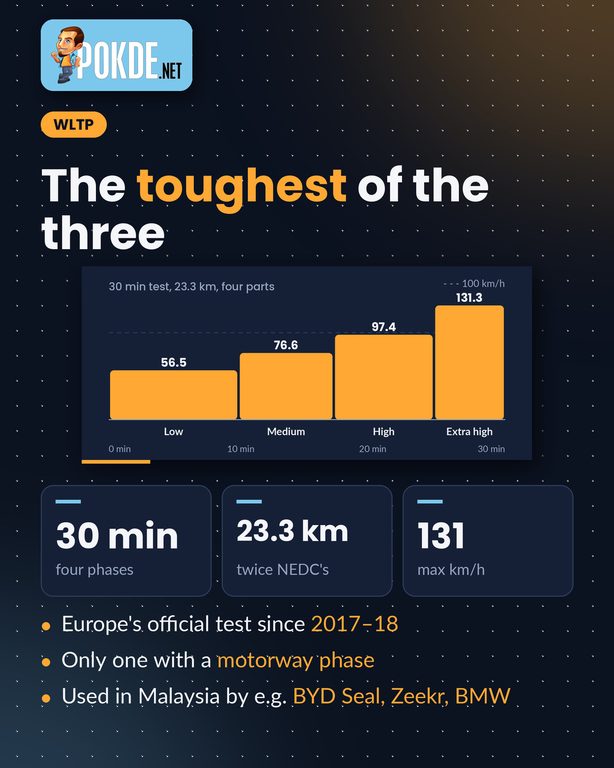
The Worldwide Harmonised Light Vehicles Test Procedure also runs for 30 minutes, but covers about 23.3 km across four phases: low, medium, high and extra high. That last phase reaches 131 km/h and is the closest any of these tests get to motorway driving. WLTP is Europe’s official standard, and brands such as BYD (for the Seal), Zeekr and BMW quote it in Malaysia.
Even WLTP Is Optimistic
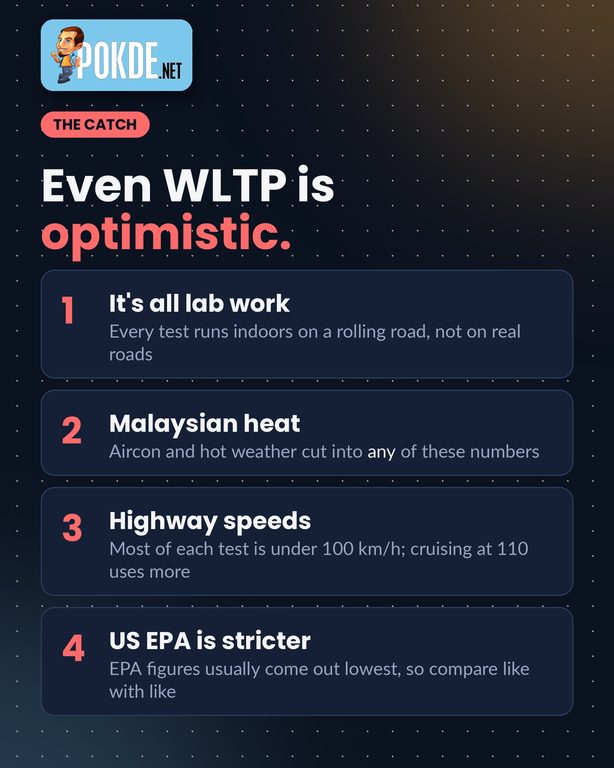
None of these tests is real-world driving. Hot weather and constant aircon use, both normal in Malaysia, cut into any of these figures. Most of each test is also spent under 100 km/h, so long highway runs at 110 km/h will use more energy. US EPA ratings tend to come out lower still, so only compare figures from the same test.



Quick Maths for Comparing EVs
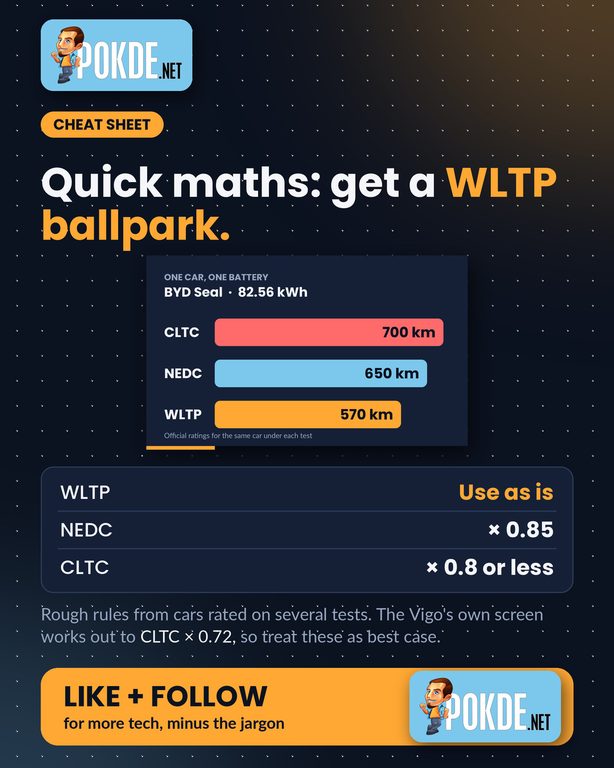
The BYD Seal with its 82.56 kWh battery is officially rated at 700 km on CLTC, 650 km on NEDC and 570 km on WLTP. Cars like that give us two rough rules of thumb for getting a WLTP ballpark: multiply NEDC by 0.85, or CLTC by 0.8. The Perodua QV-E’s 445 km NEDC works out to about 380 km. Treat these as best case, though. The Vigo’s own screen works out closer to CLTC × 0.72, so use an official WLTP figure whenever one exists.