

The factory floor looks different today than it did a decade ago. So does the warehouse, the logistics hub, and the retail back office. Across Asia-Pacific, industrial operations are undergoing a fundamental shift towards the convergence of AI, edge computing, and increasingly interconnected systems. This shift is especially visible in markets such as Malaysia, where manufacturing ecosystems, logistics infrastructure, and digital transformation initiatives are accelerating the adoption of smarter, more distributed industrial environments.
At the center of this transformation is a class of industrial computing systems that rarely makes headlines but increasingly determines whether these environments succeed or fail: the Industrial PC (IPC).
The Rising Stakes of Industrial Computing
Industrial PCs have long served as the backbone of operational technology, controlling machinery, processing sensor data, managing inventory, and running the software that keeps physical operations in motion. But their role is expanding: as AI moves out of the cloud and into real-world environments, IPCs are becoming the platforms through which machine intelligence is applied at the edge, in real time, in conditions that consumer-grade hardware was never designed to handle.
Across Asia-Pacific and especially in Malaysia, this evolution is playing out at scale. Advanced manufacturing facilities are deploying AI-assisted quality control and predictive maintenance. Smart logistics networks are processing high volumes of data locally to reduce latency. Surveillance and security infrastructure is shifting toward intelligent, on-device analytics. In each of these environments, the IPC is the critical node, and its performance directly affects operational outcomes.
What makes this market distinct from the broader PC industry is its structure. IPC and embedded deployments are project-based and highly customized, spanning verticals as varied as industrial automation, transportation, networking, retail, and digital infrastructure. Deployment cycles are long, replacement windows are narrow, and the cost of unplanned downtime or component failure can be significant.
As IPCs become more intelligent and increasingly central to industrial operations, expectations of the hardware inside them are evolving. Memory and storage are no longer evaluated solely through the lens of performance but also by their ability to deliver long-term consistency, durability, and reliability throughout extended deployment lifecycles. In industrial environments, where systems often run continuously for years, these components have become fundamental to maintaining uptime, protecting data integrity, and ensuring uninterrupted operations
Where Component Reliability Becomes a Business Problem
This growing dependence on IPCs also raises the stakes for every component inside them. What might be a minor hardware issue in a consumer device can have significant operational consequences in an industrial environment. In a consumer laptop or desktop, memory or storage failure is an inconvenience. In an industrial system running an automated production line, a logistics sorting facility, or a point-of-sale network, it can mean operational disruption, data loss, or cascading system failures across an entire site.



This raises a set of specific, practical challenges that industrial system designers and OEMs must navigate. First, there is the question of component consistency. Industrial systems are designed for long-term operation, often without a full hardware refresh. If a memory or storage component is discontinued, modified, or quietly revised mid-lifecycle, it can force costly re-qualification processes and disrupt supply chains.
Second, there is the challenge of the operating environment. Industrial deployments routinely expose hardware to challenging operating environments, including vibration, dust, continuous operation, and varying environmental conditions, all of which accelerate wear and increase the risk of failure in components not specifically engineered for these conditions.
Third, there is the supply chain dimension. For OEMs managing large or distributed deployments, inconsistent component availability can delay production, stall projects, and undermine customer commitments. These are not abstract concerns; they are recurring operational realities for the engineers, procurement managers, and system integrators responsible for keeping industrial infrastructure running reliably over time. These challenges are not confined to a single industry—they extend across diverse sectors where IPCs have become the foundation of mission-critical operations.
Applications Across Industrial Verticals
From manufacturing to healthcare, the importance of reliable memory and storage becomes even clearer across the industries where IPCs now play a central role. While each sector has different operational requirements, they all share the same challenge: ensuring uninterrupted performance while handling increasingly data-intensive workloads.
In manufacturing, IPCs support machine control, AI-powered inspection, and predictive maintenance. In logistics and transportation, they enable warehouse automation, fleet coordination, and real-time routing. Retail and hospitality rely on IPCs for POS systems and self-service kiosks that require continuous uptime, while networking and surveillance infrastructure depends on always-on systems for data capture and analytics. In healthcare, IPCs power applications such as medical imaging, laboratory automation, and patient monitoring, where system stability and data integrity are essential.
As these deployments grow in scale and lifespan, OEMs and system integrators are evaluating not only component performance but also supplier capabilities. Long product lifecycles, supply continuity, consistent component quality, and responsive technical support have become just as important as performance, making supplier selection a strategic decision rather than simply a component purchase.
How Purpose-Built Solutions Address These Challenges

These evolving requirements have reshaped what OEMs expect from industrial memory and storage providers. It is against this backdrop that Kingston has developed its portfolio of Design-In memory and Industrial SSD solutions. With over a decade of engagement in the IPC and embedded market spanning industrial PCs, networking equipment, POS systems, kiosk platforms, and more, Kingston has structured its industrial offerings around the specific challenges of long-term, mission-critical deployments.
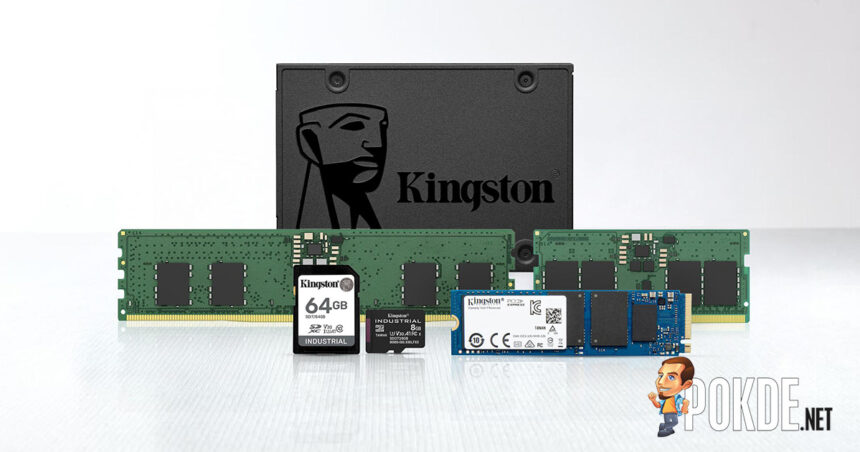
On the memory side, Kingston’s Design-In DRAM modules are built to JEDEC industry specifications and supported by product change notification (PCN) support. In practice, this means that system integrators receive advance notice of any component changes and have the documentation necessary to manage re-qualification efficiently, directly addressing the product life management challenges that affect long-running industrial deployments.

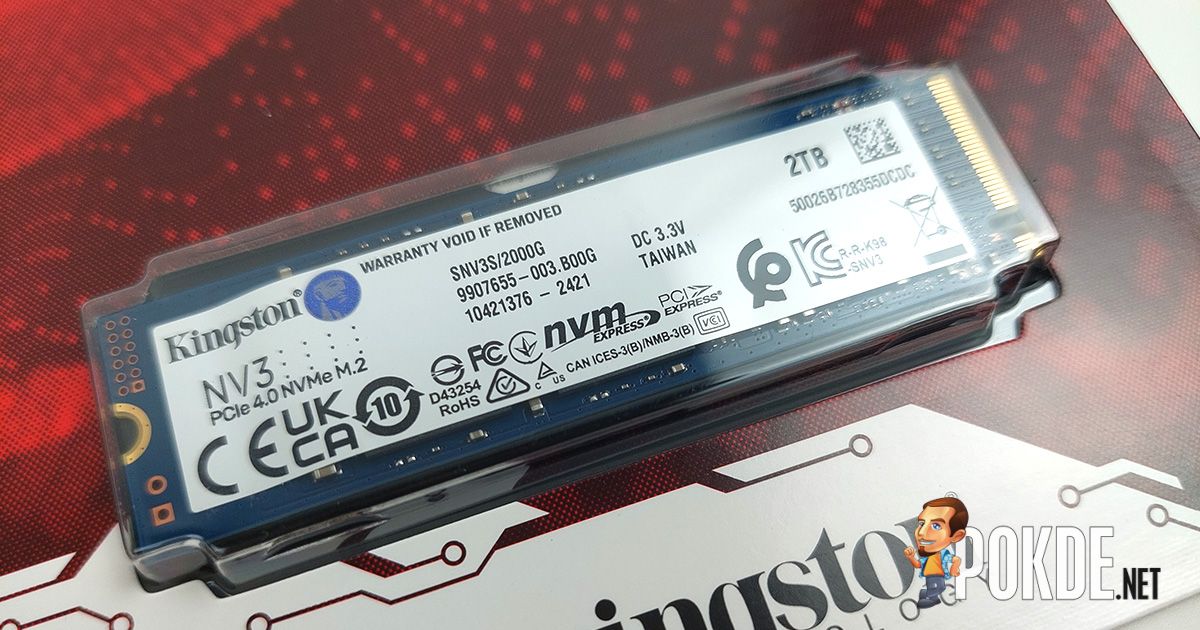
For storage, Kingston’s Industrial SSD lineup spans both SATA and NVMe interfaces across multiple form factors, with support for both commercial and industrial operating temperature ranges. The drives incorporate advanced controllers, wear-leveling algorithms, garbage collection, and 3D NAND technologies – features that directly extend drive endurance and maintain performance integrity under sustained, heavy-use conditions.
Beyond technical performance, long-term deployment success also depends on supply continuity. As OEMs and system integrators navigate increasingly complex supply chains, consistent component availability has become an important part of system planning. Backed by nearly four decades of industry expertise, a resilient global supply network, and long-standing technology partnerships, Kingston helps customers maintain deployment schedules and reduce operational uncertainty throughout the product lifecycle.
Complementing this is Kingston’s “Built on Commitment” philosophy, which extends beyond component performance to include product lifecycle management, global technical support, and long-term supply planning—helping OEMs and system integrators from development through deployment and ongoing operations. Delivering this level of long-term support also requires a strong regional presence close to where industrial transformation is taking place.
A Regional Footprint Built for Where Growth Is Happening

Kingston’s industrial business mirrors IPC growth across Asia-Pacific, with an established presence in mature markets such as Taiwan and Japan while expanding across high-growth economies including Vietnam, India, and Indonesia, where manufacturing investment and industrial digitization are accelerating demand for industrial computing components.
In Malaysia specifically, the convergence of advanced manufacturing, logistics modernization, semiconductor growth, and regional supply chain integration is making edge-enabled industrial systems an increasingly important driver of industrial transformation. This dual focus of sustaining depth in established markets while building presence in emerging ones positions Kingston to support partners through both the current wave of IPC adoption and the longer-term expansion of edge and AI-driven industrial systems across the region.
This expanding regional footprint reflects a broader industry shift in the industry. Substantiating this shift, Adam Tsai, Sales, and Marketing, Vice President, APAC, said, “As AI, edge computing, and industrial automation continue to reshape manufacturing and critical infrastructure across Malaysia and the wider Asia-Pacific region, OEMs are looking beyond performance alone. They need memory and storage solutions that provide consistency, product life management, and the reliability required for long-term industrial operation. At Kingston, our ‘Built on Commitment’ philosophy—grounded in performance, quality, reliability, and service—reflects our commitment to helping customers build resilient industrial systems that are ready not just for today’s demands, but for the next generation of industrial innovation.”
What OEMs Must Now Factor Into Industrial Design?
As Malaysia continues to strengthen its position as a regional manufacturing and digital innovation hub, investments in smart factories, AI-driven automation, and edge-enabled infrastructure are expected to accelerate. This continued momentum will place even greater emphasis on the reliability, consistency, and longevity of the computing systems that power these environments.
For OEMs and system integrators, selecting memory and storage is no longer just about meeting performance specifications. It also means evaluating lifecycle management, supply continuity, and technical support to ensure systems remain reliable throughout years of deployment.
As industrial systems become more intelligent and interconnected, the resilience of the underlying hardware will increasingly determine their long-term success. Bridging that gap is no longer a differentiator – it is a fundamental requirement for the future of industrial computing in Malaysia and across Asia-Pacific. This is the philosophy behind Kingston’s ‘Built on Commitment’ approach – supporting OEMs and system integrators as they build and lead the next generation of industrial infrastructure with confidence-today and for the future.