
- Walkaround
- Specifications
- The Good
- Nearly Every Meaningful Upgrade For Just RM3,600 More
- A Cabin That Still Makes Sense For Real Life
- Toyota Safety Sense Without The Price Gatekeeping
- Composed, Unbothered Ride Quality
- Backed By A Genuine 5-Year Unlimited Mileage Warranty
- The Bad
- 14.5 Seconds To 100 km/h Is Not Going To Win Arguments
- The 360-Degree Camera Still Feels Dated
- It Is Still Riding On An Ageing Platform
- 2026 Toyota Yaris 1.5G Verdict
-
Appearance - 7.8/107.8/10
-
Efficiency - 7/107/10
-
Features - 7.5/107.5/10
-
Materials - 7/107/10
-
Performance - 7.8/107.8/10
-
User Experience (UX) - 7.5/107.5/10
-
Value - 7/107/10
Overall
7.4/10Pros
+ Nearly Every Meaningful Upgrade For Just RM3,600 More
+ A Cabin That Still Makes Sense For Real Life
+ Toyota Safety Sense Without The Price Gatekeeping
+ Composed, Unbothered Ride Quality
+ Backed By A Genuine 5-Year Unlimited Mileage Warranty The Bad
Cons
– 14.5 Seconds To 100 km/h Is Not Going To Win Arguments
– The 360-Degree Camera Still Feels Dated
– It Is Still Riding On An Ageing Platform
Walkaround
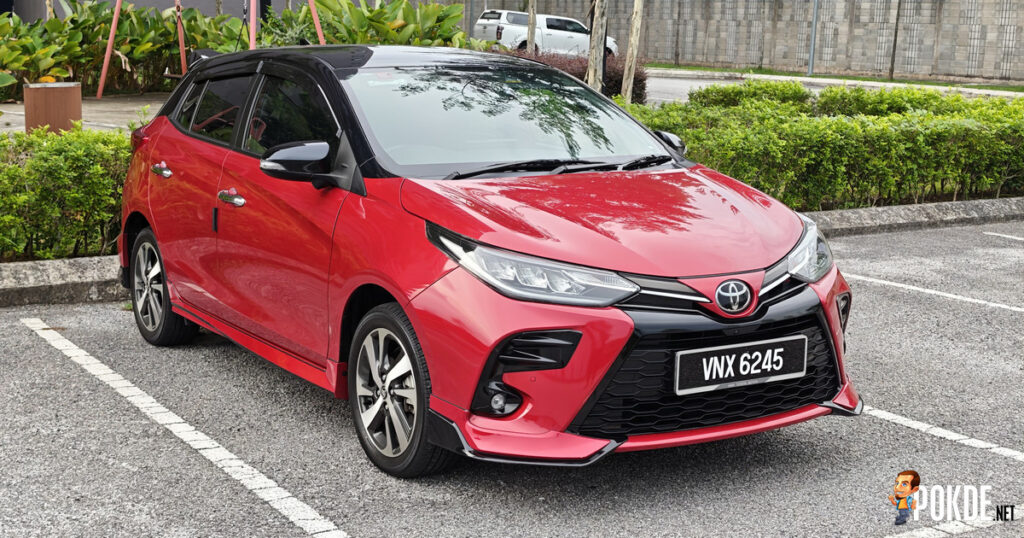
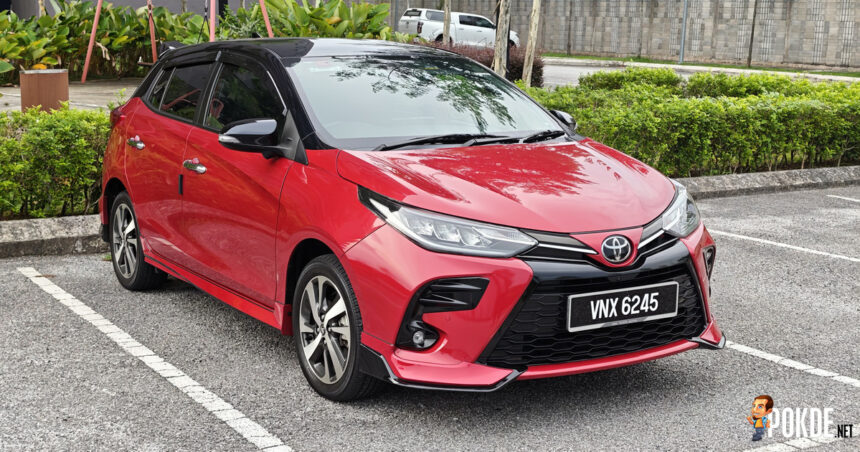
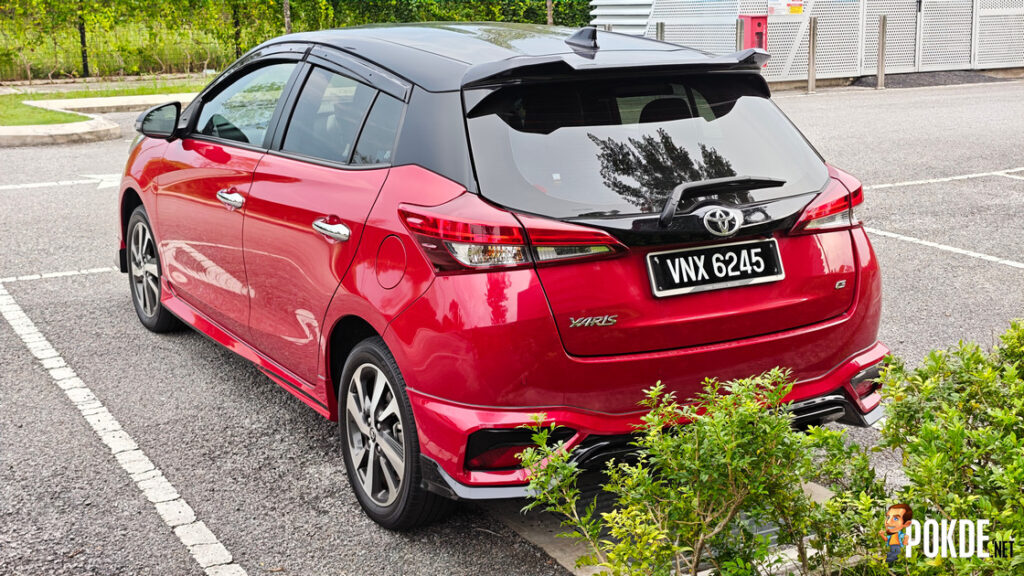
The Yaris does not need a facelift to still look the part. Its bodylines flow with a coherence that has aged well, with the rear end in particular handling its hatchback proportions cleanly, the spoiler and tail lamp graphics tying everything together without feeling forced. The front grille’s mesh pattern is the one area that feels a touch busier than it needs to be against the cleaner surfacing everywhere else, but it is a minor observation on a hatchback that still presents itself with confidence.
Our test unit arrived in Red Mica Metallic, and it is a colour that suits the Yaris’s compact, slightly aggressive nose well. At 4,140mm long and 1,475mm tall, this is not a car built to dominate a parking lot, but the 16-inch alloy wheels with their stepped spoke design and the LED lighting signature front and rear give it enough visual presence that it does not disappear into the background either.
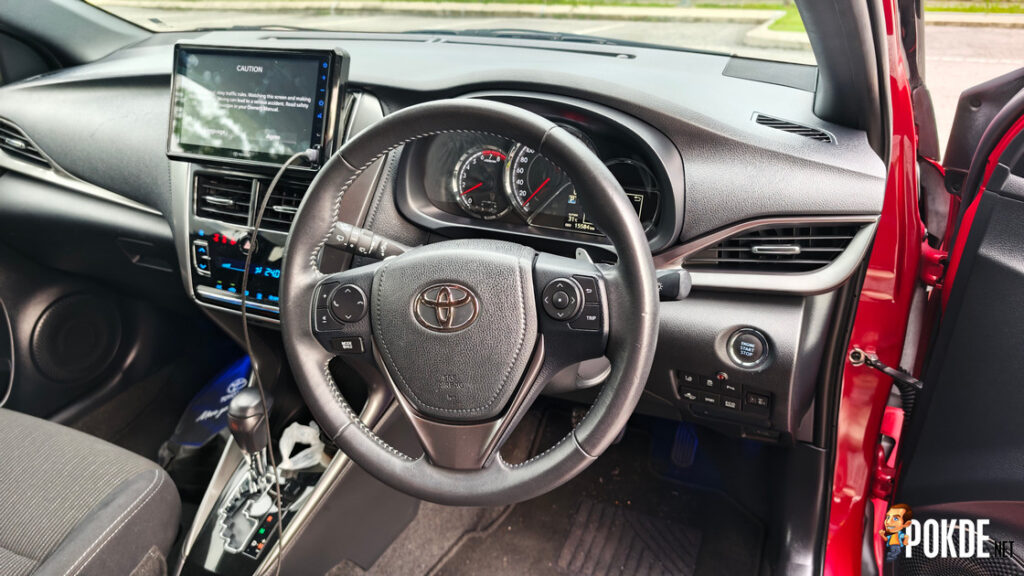
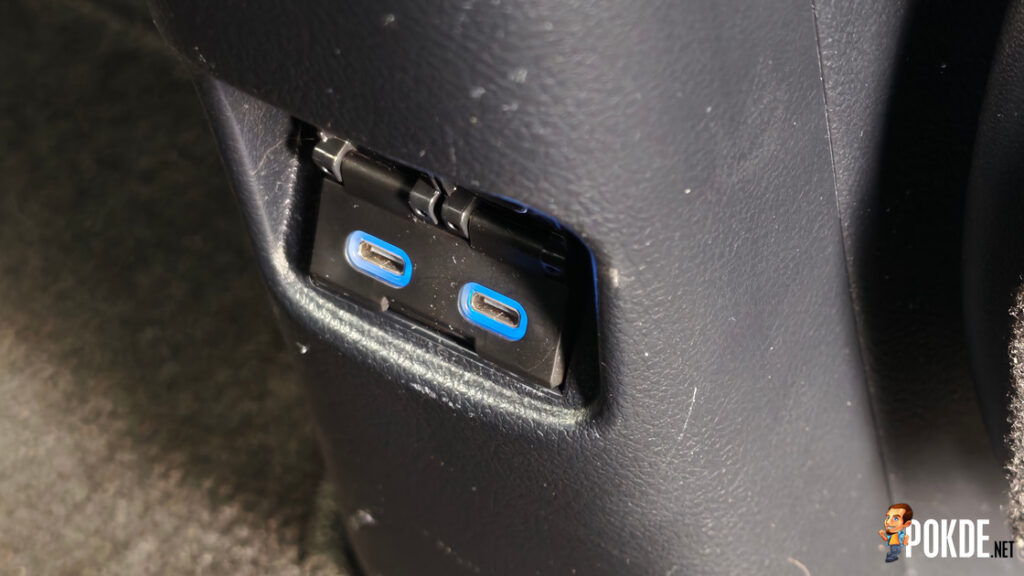
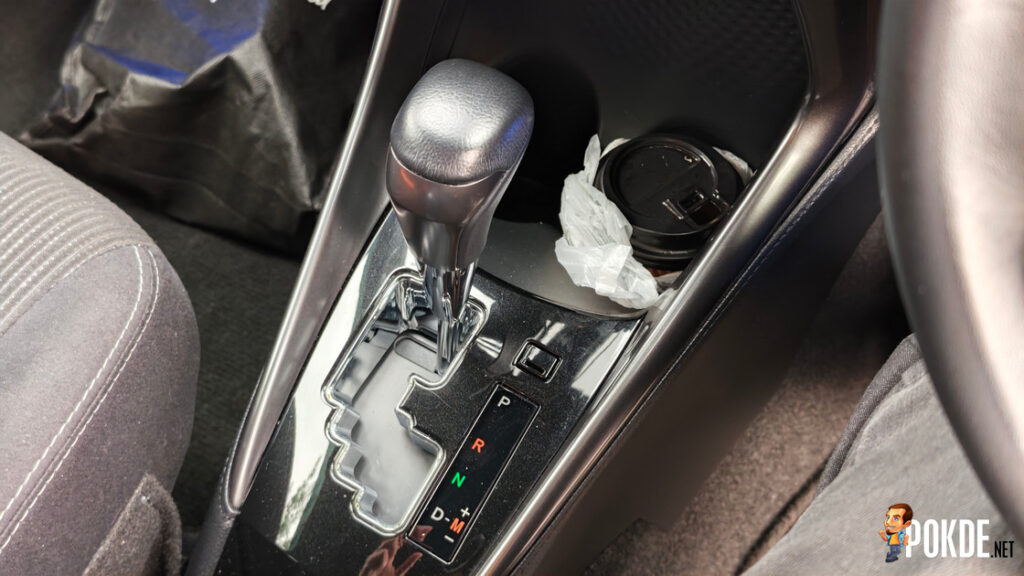
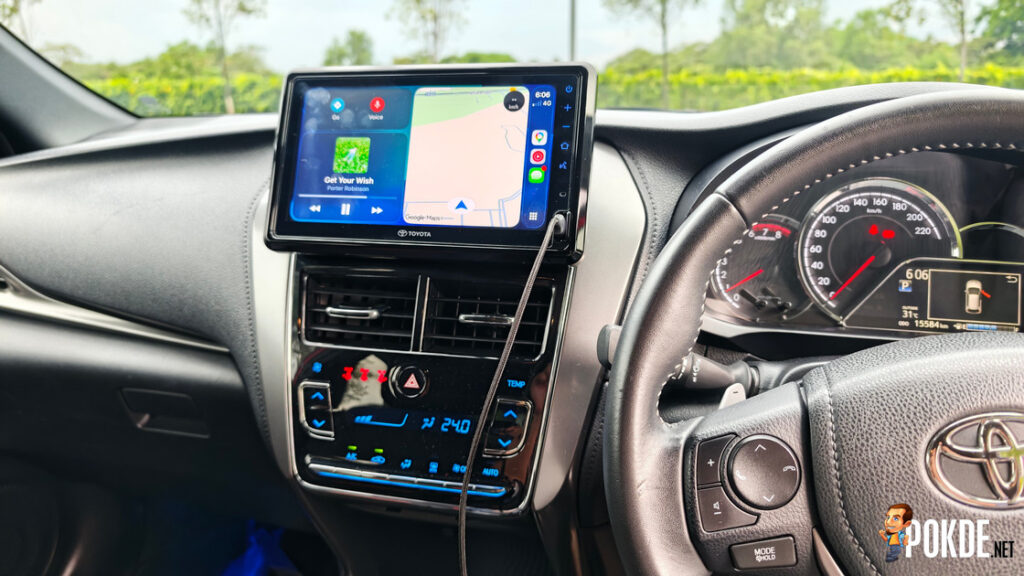
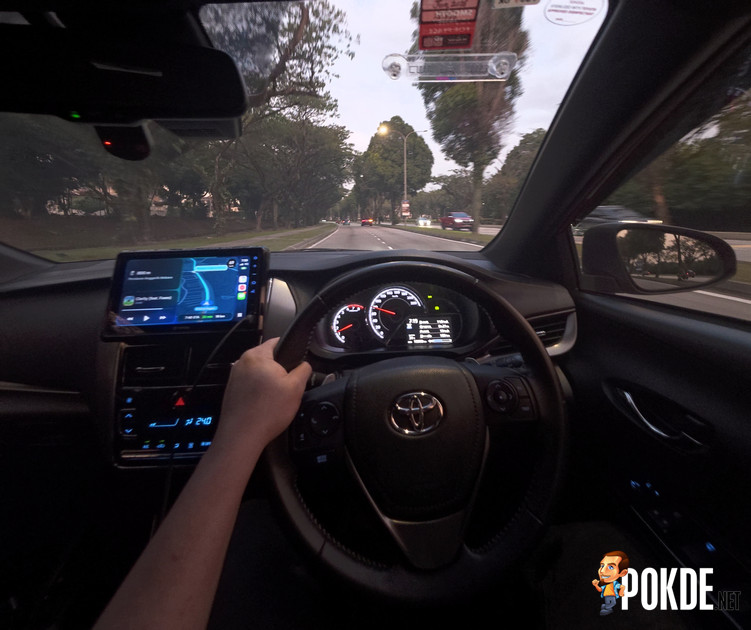
Inside, the 1.5G’s cabin is practicality-oriented rather than driver-obsessed, and that is the right call for what this car is. The 3-spoke steering wheel is wrapped in soft leather and is tilt adjustable, the 9-inch display audio with wireless Apple CarPlay and Android Auto handles infotainment cleanly, and the 4.2-inch Optitron multi-information display keeps the essentials in front of the driver without clutter. Automatic air-conditioning and a wireless charger round out a cabin that feels considered rather than stripped back.
The rear seats are not an afterthought here, which is worth noting plainly. The flat rear floor and 60:40 split folding bench mean three adults can sit back there without anyone drawing the short straw on legroom, and the floor itself is something the Yaris’s own sedan sibling lost when it moved to a newer platform. For a B-segment hatchback, this is genuinely usable space, not just seats that exist to satisfy a brochure spec sheet.
Build quality is consistent throughout, with panel gaps and material choices that feel appropriate for the price rather than cut to hit a number. Nothing about the 1.5G feels like it was assembled to a budget, even if the budget itself is modest by class standards.
Specifications
| Specification | Details |
|---|---|
| Engine | 1,496cc 2NR-FE 4-cylinder, In-line, 16-valve, DOHC with Dual VVT-i |
| Power | 107 PS @ 6,000 rpm |
| Torque | 140 Nm @ 4,200 rpm |
| Transmission | CVT with 7-speed Sport Sequential Shiftmatic |
| Drivetrain | Front-wheel drive |
| 0-100 km/h | 14.5 seconds (as tested) |
| Top Speed | Not disclosed by Toyota for this market |
| Suspension (Front) | MacPherson Strut with Stabiliser |
| Suspension (Rear) | Torsion Beam with Stabiliser |
| Brakes (Front) | Ventilated Disc |
| Brakes (Rear) | Solid Disc |
| Tyres & Rims | 195/50R16, Alloy |
| Kerb Weight | 1,140 kg |
| Dimensions | 4,140 x 1,730 x 1,475mm |
| Wheelbase | 2,550mm |
| Fuel Tank | 42 litres |
| Fuel Consumption | Approx. 6.1 L/100 km (as tested) |
| Infotainment | 9-inch Display Audio, Wireless Apple CarPlay & Android Auto |
| Instrument Display | 4.2-inch Optitron Multi-information Display (Colour) |
| Speakers | 6 speakers |
| Safety | Pre-Collision System, Lane Departure Alert, Blind Spot Monitor with RCTA, 3D Panoramic View Monitor, ABS with EBD & BA, Vehicle Stability Control & Traction Control, Hill-start Assist Control, 7 SRS Airbags |
| Additional Features | Front DVR with smartphone connectivity, Rear DVR (optional), Smart Entry and Push Start, Auto Air-conditioning, Vehicle Telematics System, Wireless Charger, RFID Tag |
| Warranty | 5 years unlimited mileage |
| Price | RM 91,600 |
The Good
Nearly Every Meaningful Upgrade For Just RM3,600 More
Step up from the base 1.5E and Toyota only asks for another RM3,600, yet that small jump buys a surprising amount of substance. The steering wheel moves from urethane to soft leather, the air-conditioning goes from manual to automatic, the rearview mirror becomes electrochromic, the rear brakes swap from drums to a proper solid disc setup, and you gain paddle shifters along with front parking sensors to go with the rear ones the 1.5E already has. None of this is cosmetic. It is the kind of upgrade list that actually changes how the car feels to live with day to day.
A Cabin That Still Makes Sense For Real Life
The flat rear floor, 60:40 split folding seats, rear USB Type-C charging ports and a wireless charger up front all point to a cabin designed around how people actually use a hatchback. Nothing here is trying to impress on a spec sheet. It is just consistently useful, and it’s especially the case for a car this compact.

Toyota Safety Sense Without The Price Gatekeeping
Both the 1.5E and 1.5G share the same Toyota Safety Sense suite, the same Blind Spot Monitor with Rear Cross Traffic Alert, the same 3D Panoramic View Monitor and the same 7 SRS airbags. The Yaris carries a 5-star ASEAN NCAP rating across the range, so choosing the cheaper variant does not mean choosing a less safe one.
Composed, Unbothered Ride Quality
The MacPherson strut front and torsion beam rear setup keeps the ride supple over the kind of broken tarmac and speed bumps that make up most daily driving. It is not a car that invites you to find a corner, but it is comfortable and predictable in the situations it will actually be used for, and the drive mode switch and paddle shifters offer a small amount of engagement when you do want it.
Backed By A Genuine 5-Year Unlimited Mileage Warranty
With no mileage cap attached, the ownership proposition here removes one of the more common sources of anxiety for daily drivers who rack up distance quickly.
The Bad
14.5 Seconds To 100 km/h Is Not Going To Win Arguments
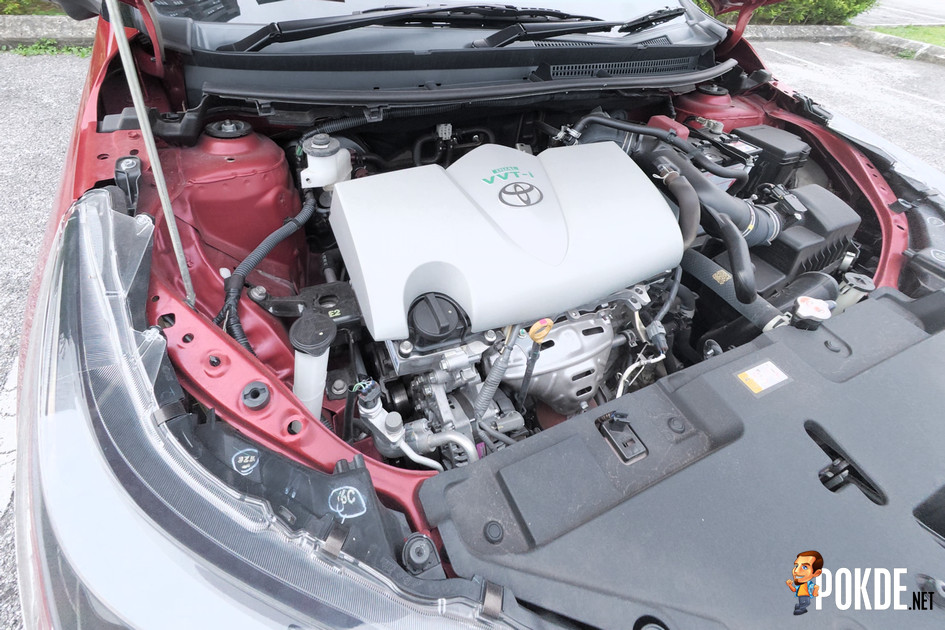
The 2NR-FE engine and CVT pairing is tuned for smoothness rather than urgency, and the CVT itself starts to drone once you ask for everything it has under hard acceleration. This is a car to be driven calmly, and it makes that clear quickly. Some may find an issue with the engine being outdated, especially since it was introduced as far back as 2010 but this shouldn’t surprise you as Toyota has been known to use (and refine) for long periods of time. To me, it’s part of the reason why their cars are generally very reliable, so I wouldn’t worry much about this.
The 360-Degree Camera Still Feels Dated
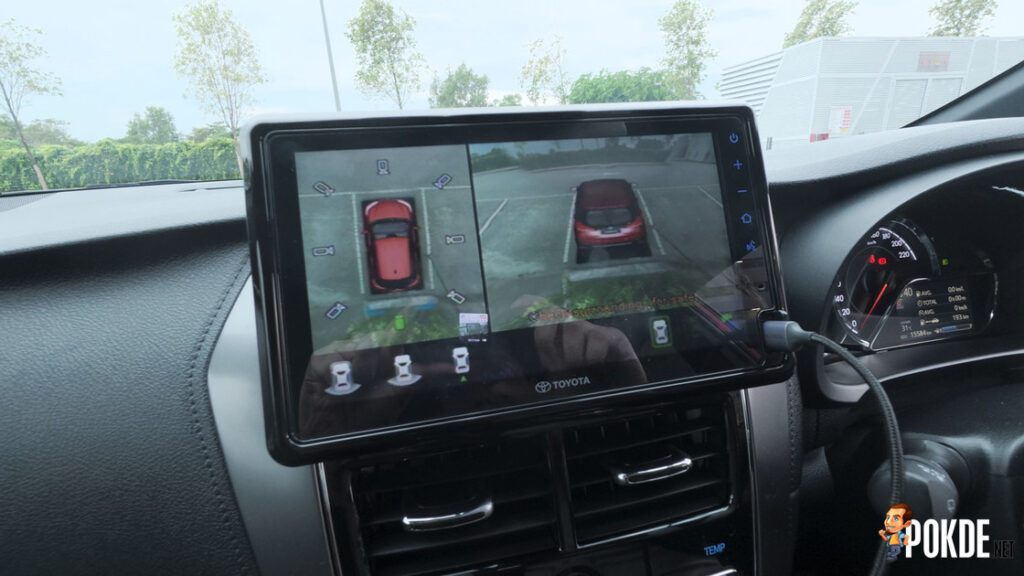
The 3D Panoramic View Monitor’s resolution has not kept pace with what newer rivals are offering, and it shows, particularly in low light parking situations where clarity matters most. To be clear, it still works well with no odd accuracy issues as far as mapping the car out properly, but if you’re very particular about having something more hi-def, you may want to consider upgrading the camera or opting for a newer generation car.
It Is Still Riding On An Ageing Platform
The Yaris has stayed largely the same for a few years now while its sedan sibling, the Vios, moved on to Toyota’s newer DNGA platform. This shouldn’t be confused with the TNGA platform, which is typically reserved for their more premium offerings like the Camry, Corolla, and Corolla Cross. The Toyota Yaris 1.5G solidly nails down the fundamentals, but buyers looking around for cars from other brands or even Toyota’s own lineup will notice the difference in some of the finer details.
2026 Toyota Yaris 1.5G Verdict
The Toyota Yaris 1.5G is not trying to be the most exciting car in its segment, and it does not need to be. What it offers instead is nearly every meaningful upgrade over the base 1.5E for a modest RM3,600 premium, a genuinely usable cabin, a full safety suite shared across the range, and a 5-year unlimited mileage warranty that takes the guesswork out of ownership. It will not impress anyone chasing a 0-100 time, and a few details like the ageing camera resolution and platform underpinnings show their age, but as a sensible daily hatchback that does not feel like it is missing anything important, the 1.5G makes its case clearly.
The Toyota Yaris 1.5G earns ours Pokdeward Silver, and it is a comfortable one to give. It’s only held back from Gold only by an ageing platform and a handful of features that no longer feel cutting-edge for the price. If you’re the kind of person who wants to make the most out of money spent, I wouldn’t go for this car as a brand new purchase and instead lean more towards the Vios but as a used car however, it’s definitely worth considering.

Big thanks to Toyota Malaysia for letting us use this car for the purpose of this review.