
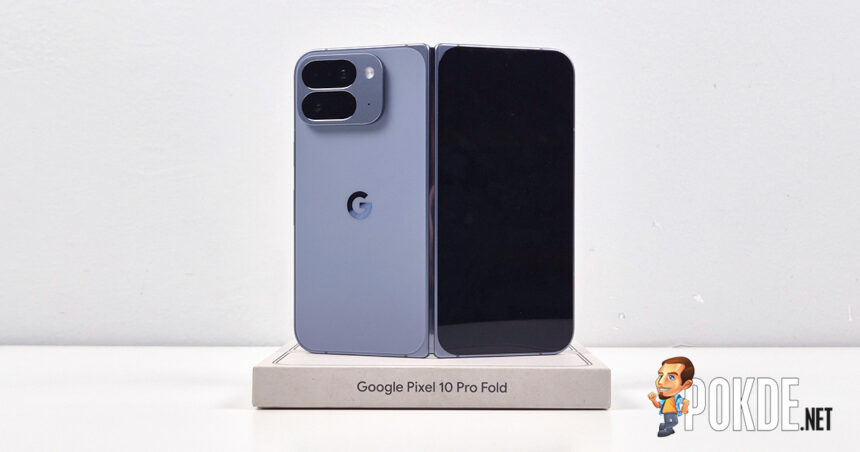
- Unboxing the Google Pixel 10 Pro Fold
- Walkaround
- Specifications
- Camera
- Performance
- The Good
- IP68 Sets It Apart in the Foldable Category
- Outer Display Is More Usable Than Before
- On-Device AI Features and UI Improvements Deliver Real Utility
- 7 Years of Software Support
- Pixelsnap Wireless Charging Is a Welcome Addition
- The Bad
- Weight and Thickness Remain the Elephant in the Room
- Multitasking Trails the Competition
- No Charger in the Box
- Inner Display Crease Is Still Present
- Camera Module Causes Wobble on Flat Surfaces
- Google Pixel 10 Pro Fold Verdict
Offer price: 7999
-
Appearance - 8/108/10
-
Efficiency - 8/108/10
-
Features - 7.5/107.5/10
-
Materials - 8/108/10
-
Performance - 6/106/10
-
Portability - 6.5/106.5/10
-
User Experience (UX) - 7/107/10
-
Value - 6.5/106.5/10
Summary
The Google Pixel 10 Pro Fold is a compelling and capable foldable that earns its position as one of the better options in the category.
Overall
7.2/10Pros
- The Best Camera System on a Folding Phone
- IP68 Sets It Apart in the Foldable Category
- Good Battery Life
- Outer Display Is More Usable Than Before
- On-Device AI Features and UI Improvements Deliver Real Utility
- 7 Years of Software Support
- Pixelsnap Wireless Charging Is a Welcome Addition
Cons
- Weight and Thickness Remain the Elephant in the Room
- Tensor G5 Lacks That Flagship “Oomph”
- Multitasking Trails the Competition
- No Charger in the Box
- Wired Charging Speed Is Conservative
- Inner Display Crease Is Still Present
- Camera Module Causes Wobble on Flat Surfaces
Unboxing the Google Pixel 10 Pro Fold
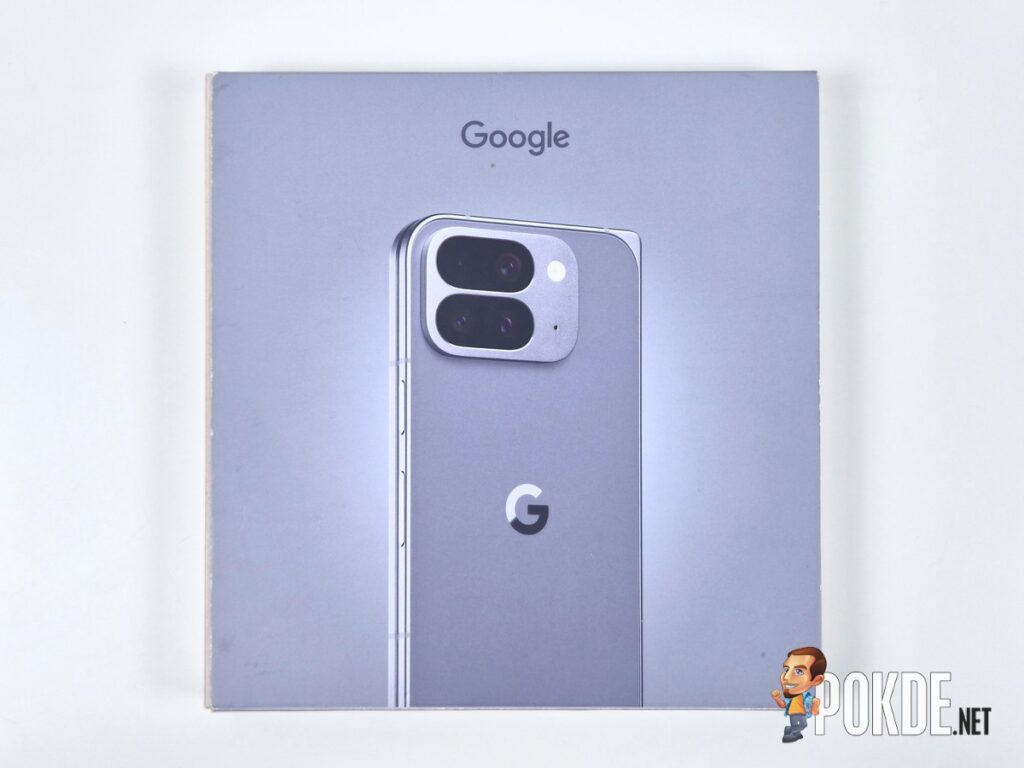
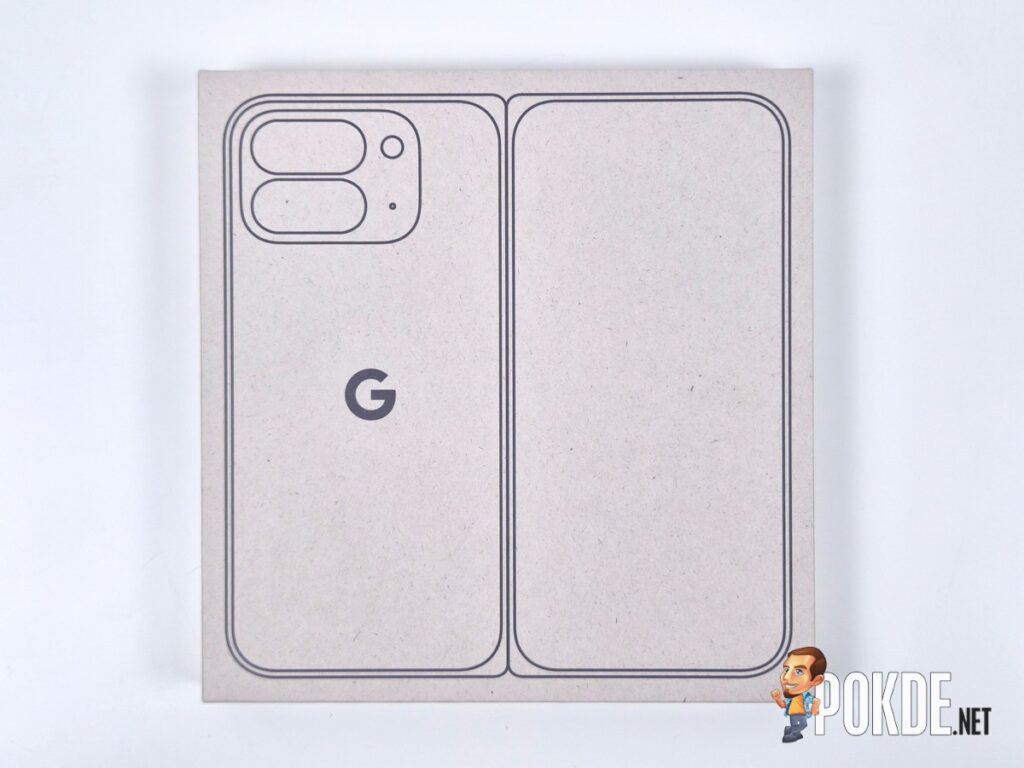
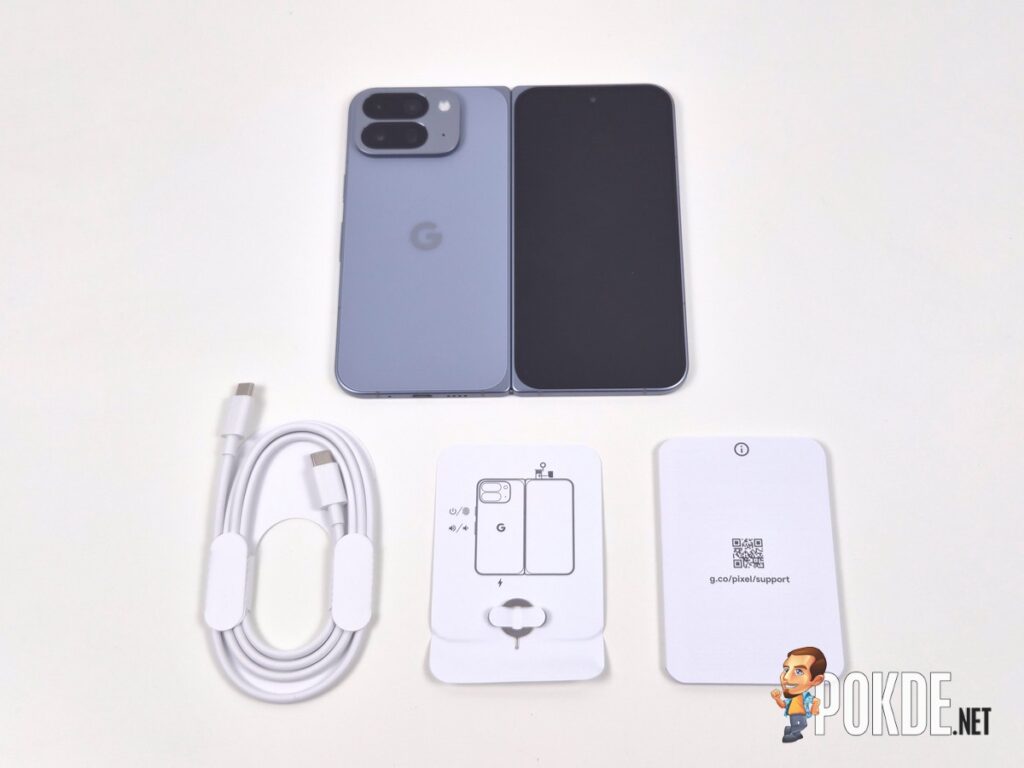
The Google Pixel 10 Pro Fold arrives in 100% plastic-free packaging, which is a small but consistent detail that Google has maintained across its recent flagship line. Inside the box you get the phone itself, a one-metre USB-C to USB-C cable, a SIM ejection tool, and the usual quick-start guide with safety and regulatory paperwork. There is no charger in the box. For a phone at this price point, the omission is a familiar but still slightly frustrating one.
Our review unit is in Moonstone, the grey colourway, which I prefer for its understated matte finish over the alternative Jade option.
Walkaround
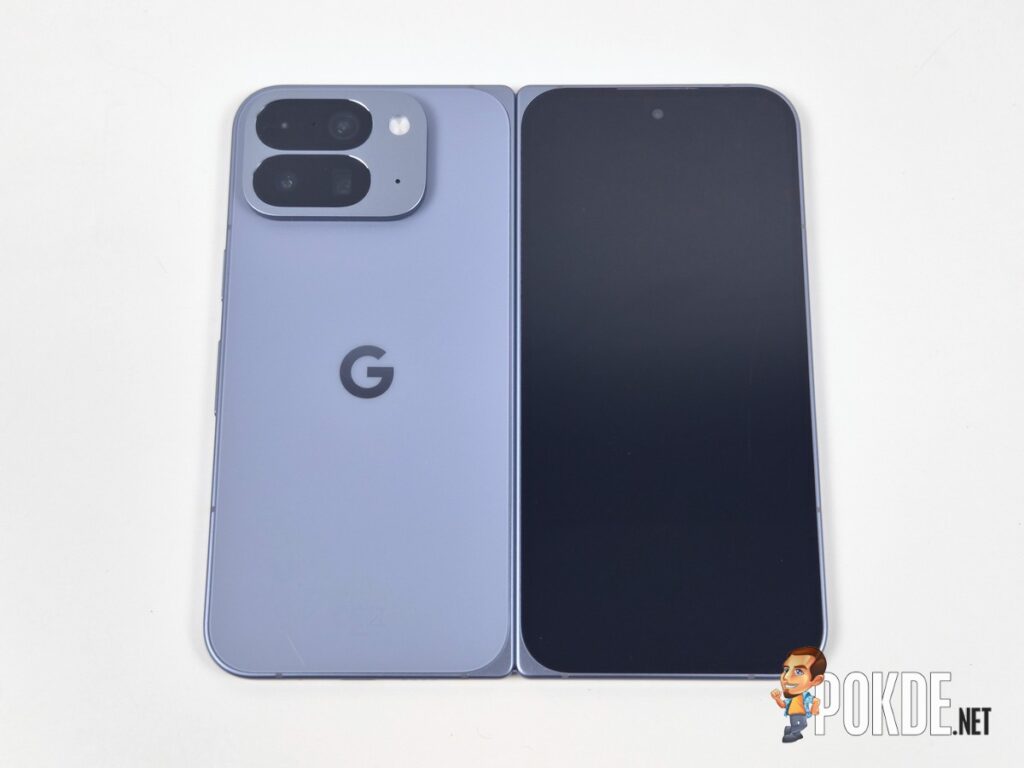
At first glance, the Pixel 10 Pro Fold is nearly indistinguishable from its predecessor. The proportions, shape, and overall silhouette are identical, and only close side-by-side inspection reveals any meaningful visual differences. Whether that is a problem depends entirely on how you feel about the design to begin with, and I think it holds up well. The matte finish on the Corning Gorilla Glass Victus 2 back panel, the satin-finish spacecraft-grade aluminium frame, and the stacked rear camera module give it a clean, considered look that feels premium without trying too hard.
That said, the Pixel 10 Pro Fold is a physically large and heavy phone. At 258 grams and folded dimensions of 155.2 x 76.3 x 10.8mm, it is noticeably heavier and thicker than competing foldables at this price point. When you hold it in one hand for extended periods, the weight makes itself known. It is not uncomfortable, but it is always present, and it is the most persistent physical reminder that this is a first-generation form factor that still has room to slim down.
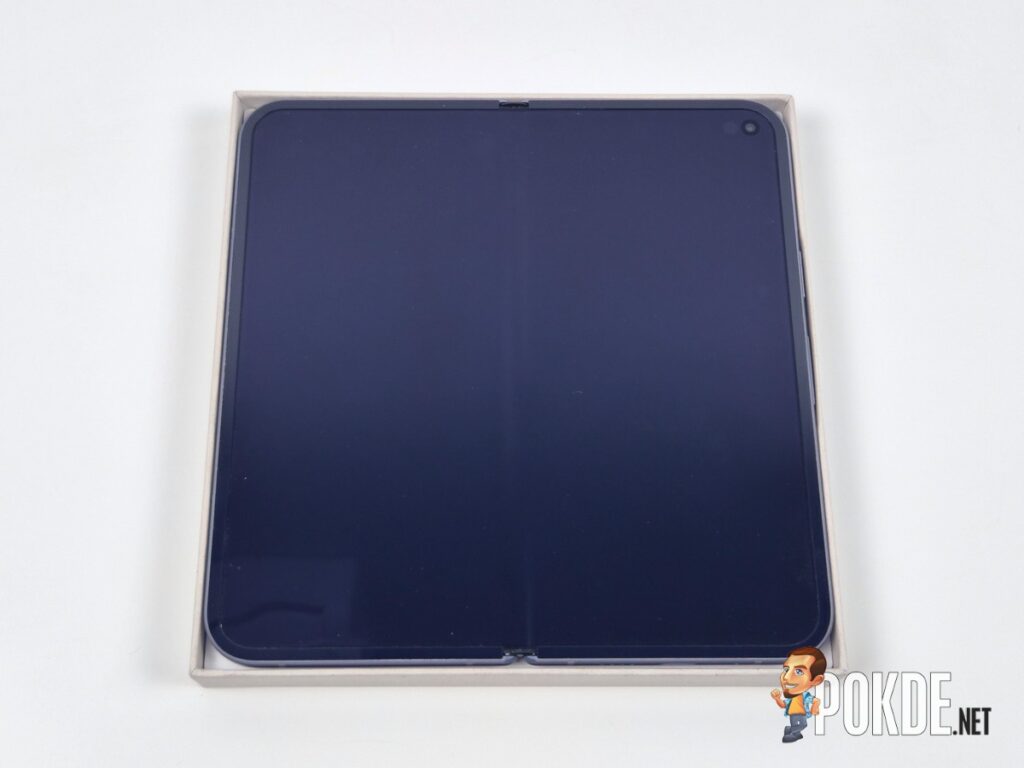
What has improved significantly is durability. Google has redesigned the hinge with fewer internal components, simplifying the mechanism and reducing potential failure points. The aluminium frame is a higher-strength alloy than the previous generation, and the phone now carries an IP68 dust and water resistance rating, which means full protection against both dust ingress and water submersion, a meaningful step beyond the water-only protection that competing foldables typically offer. The outer display is protected by Gorilla Glass Victus 2, while the inner folding display uses Ultra Thin Glass with additional anti-impact film layers compared to the previous generation.
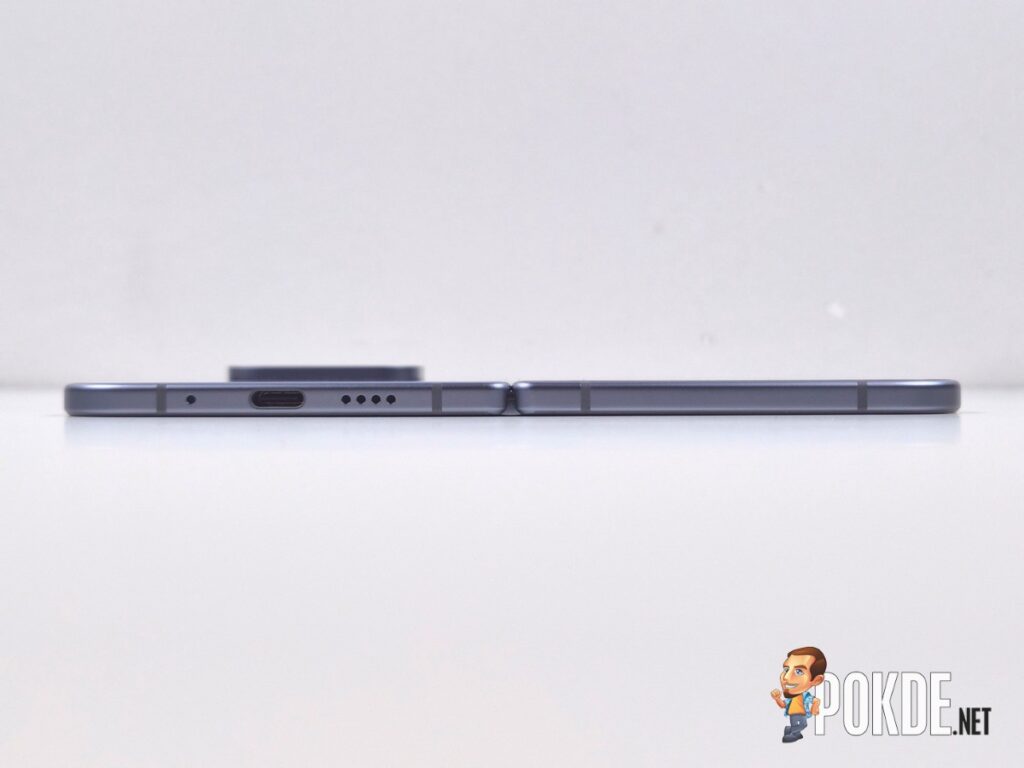
The rear camera module is prominent and gives the phone a distinctive stacked look from behind, though it does mean the phone wobbles slightly when placed flat on a surface. The combined power button and fingerprint reader on the right edge is responsive and well-positioned, face unlock is as secure as the fingerprint option and works with financial apps, and the volume buttons have a precise tactile feel. USB-C 3.2 on the bottom edge handles both charging and data, and the physical SIM card tray on the top edge is a practical inclusion alongside the eSIM support for dual SIM operation.
Specifications
| Specification | Details |
|---|---|
| Outer Display | 6.4-inch Actua OLED, 1080 x 2364, 408 PPI, 60-120Hz |
| Outer Display Brightness | Up to 2,000 nits HDR, 3,000 nits peak |
| Outer Display Protection | Corning Gorilla Glass Victus 2 |
| Inner Display | 8.0-inch Super Actua Flex OLED, 2076 x 2152, 373 PPI, 1-120Hz |
| Inner Display Brightness | Up to 1,800 nits HDR, 3,000 nits peak |
| Inner Display Protection | Ultra Thin Glass |
| Chipset | Google Tensor G5 |
| Security Chip | Titan M2 |
| RAM | 16GB LPDDR5X |
| Storage | 256GB / 512GB (Zoned UFS) / 1TB (Zoned UFS) |
| OS | Android 16 |
| Software Support | 7 years OS, security, and Pixel Drop updates |
| Main Camera | 48MP f/1.7, 82° FoV, 1/2-inch sensor, OIS |
| Ultra-Wide Camera | 10.5MP f/2.2, 127° FoV, autofocus, Macro Focus |
| Telephoto Camera | 10.8MP f/3.1, 23° FoV, 5x optical zoom, OIS |
| Super Res Zoom | Up to 20x |
| Outer Selfie Camera | 10MP f/2.2, 87° FoV |
| Inner Selfie Camera | 10MP f/2.2, 87° FoV |
| Video | 4K 24/30/60fps (rear), 4K 30/60fps (front), 8K via Video Boost, 240fps slow motion |
| Battery | 5,015mAh typical |
| Wired Charging | 30W PD3.0, PPS |
| Wireless Charging | 15W Pixelsnap (Qi2 certified) |
| Water and Dust Resistance | IP68 |
| Dimensions (Folded) | 155.2 x 76.3 x 10.8mm |
| Dimensions (Unfolded) | 155.2 x 150.4 x 5.2mm |
| Weight | 258g |
| Connectivity | Wi-Fi 7, Bluetooth 6.0, NFC, UWB, 5G Sub-6 and mmWave |
| SIM | Nano SIM + eSIM (Dual SIM) |
| Sensors | UWB, accelerometer, gyroscope, barometer, magnetometer, hall effect, proximity, ambient light |
| Authentication | Fingerprint, face unlock, PIN, pattern, password |
| In the Box | Phone, 1m USB-C cable, SIM tool, documentation |
| Price | RM7,999 retail |
Camera




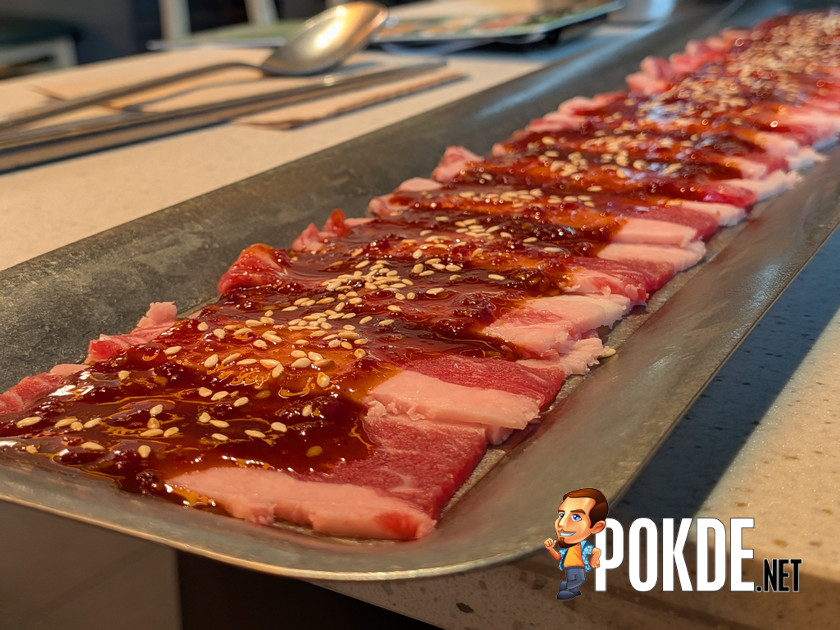



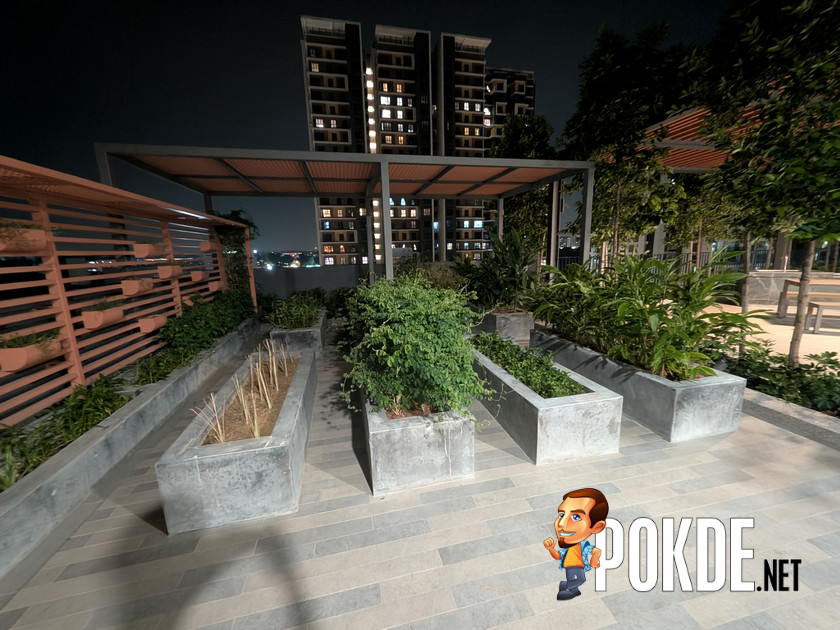
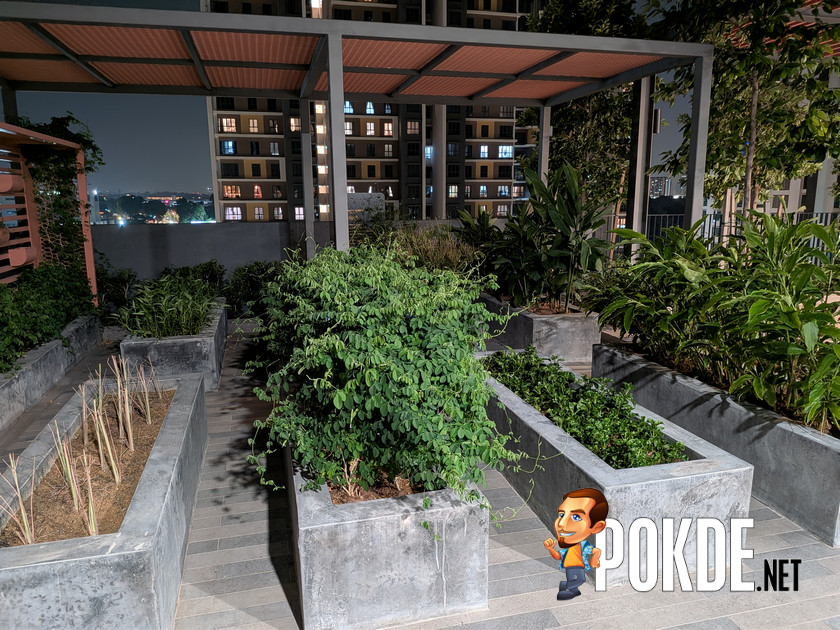
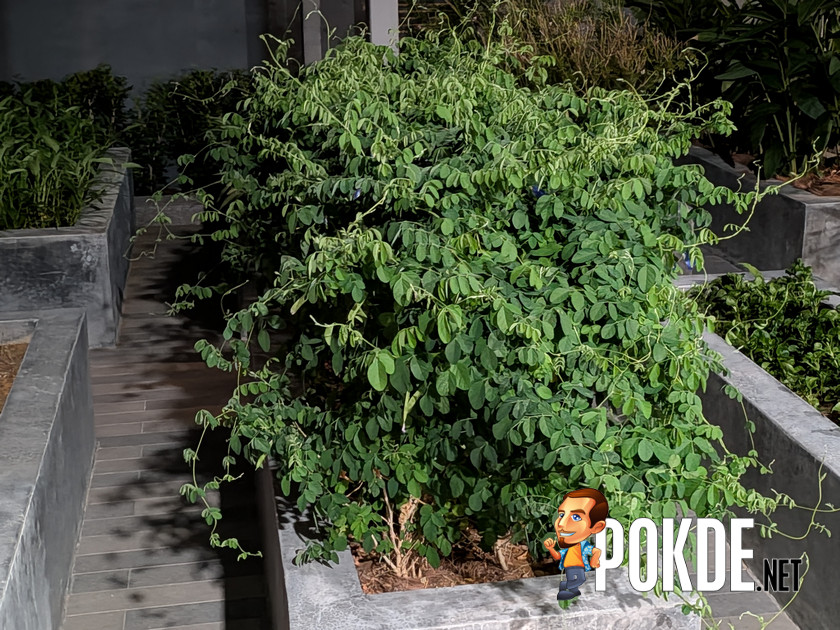


























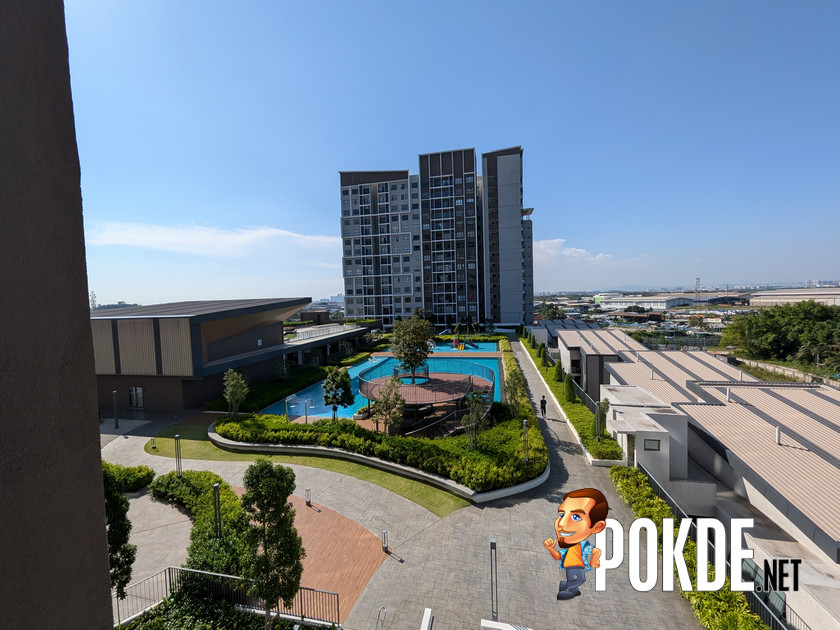
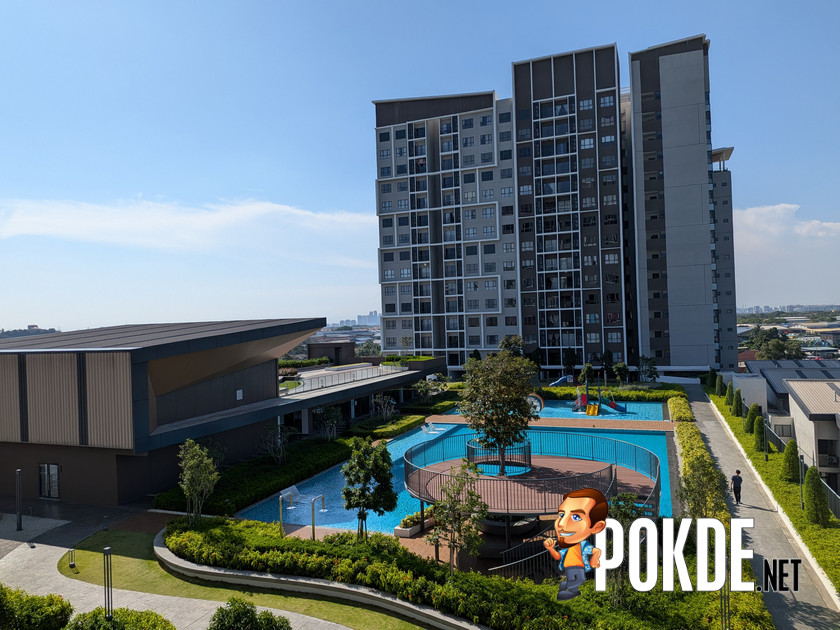
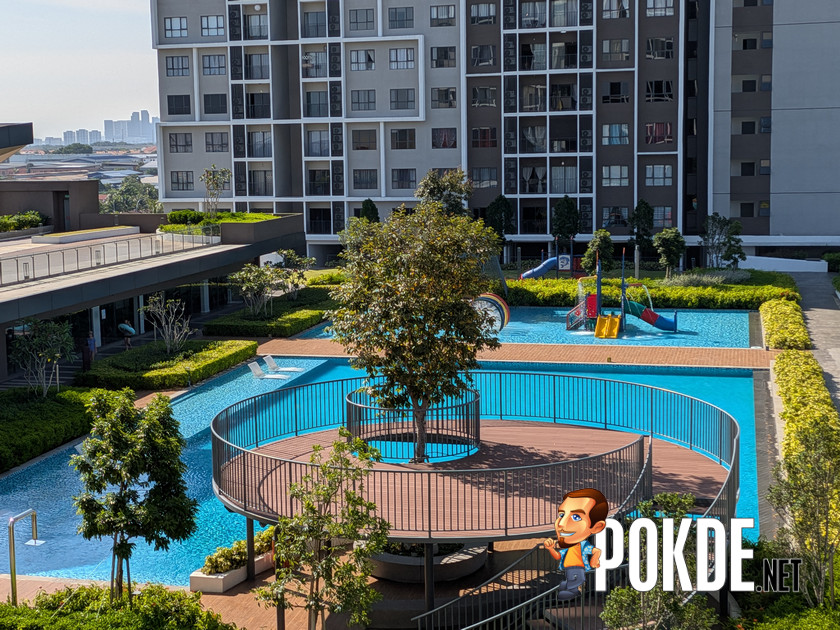








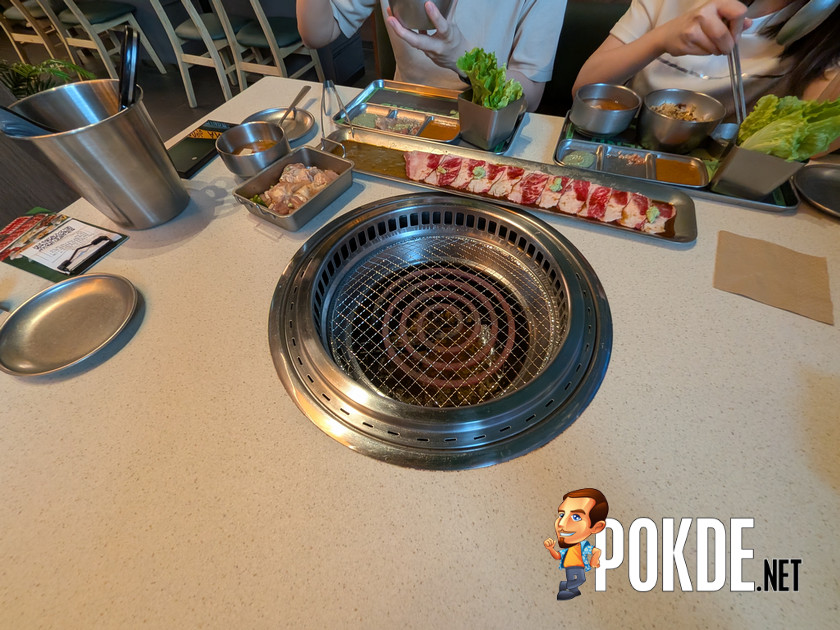
The triple rear camera system on the Pixel 10 Pro Fold produces the best still photography I have seen from a folding phone. The 48MP main sensor with an f/1.7 aperture captures exceptional detail and dynamic range, colours are accurate without being overdone, and noise control, particularly at night and in low light, is outstanding. The 5x optical telephoto with Super Res Zoom up to 20x delivers impressive sharpness well beyond its optical limits, and the ultra-wide with Macro Focus autofocus rounds out a versatile and well-balanced system. Google’s image signal processing and algorithms are doing serious work here, and the results show in every shooting scenario I tested.
Performance
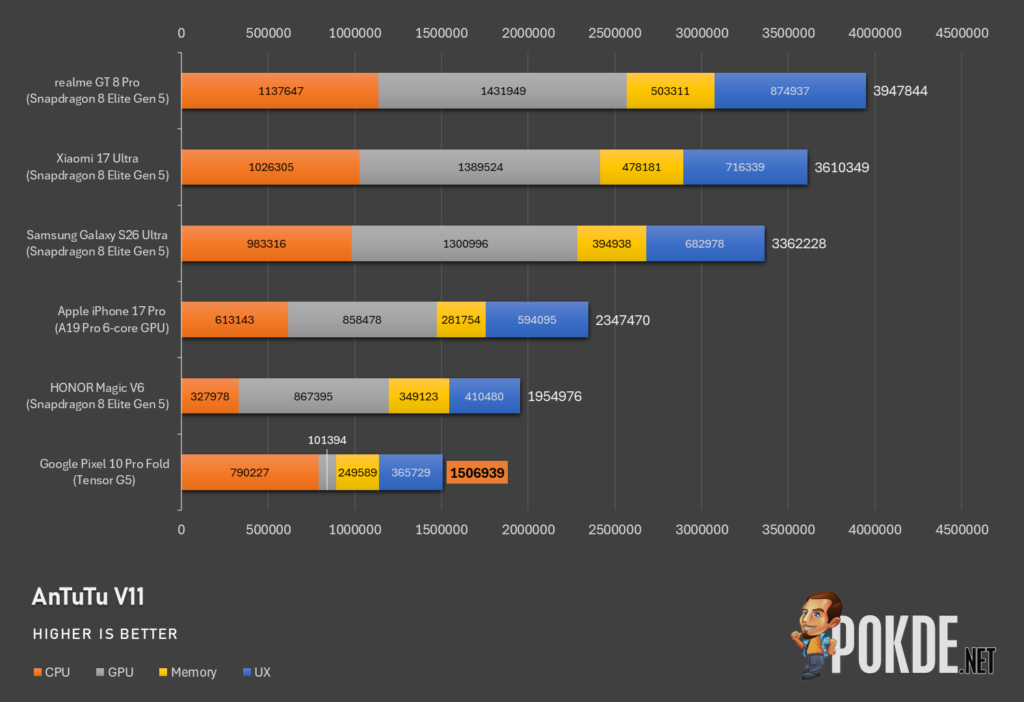
The Google Pixel 10 Pro Fold is heavily outclassed in AnTuTu v11 when compared to this year’s flagship devices. This shouldn’t be a surprise as it’s not the first Tensor G5 device we’ve review, and it’s a chip that’s severely lacking in raw performance. It’s not even about being thermal throttled so bad that performance suffers, it’s simply not capable of strong output compared to the competition as it sits around the standard midrange level.
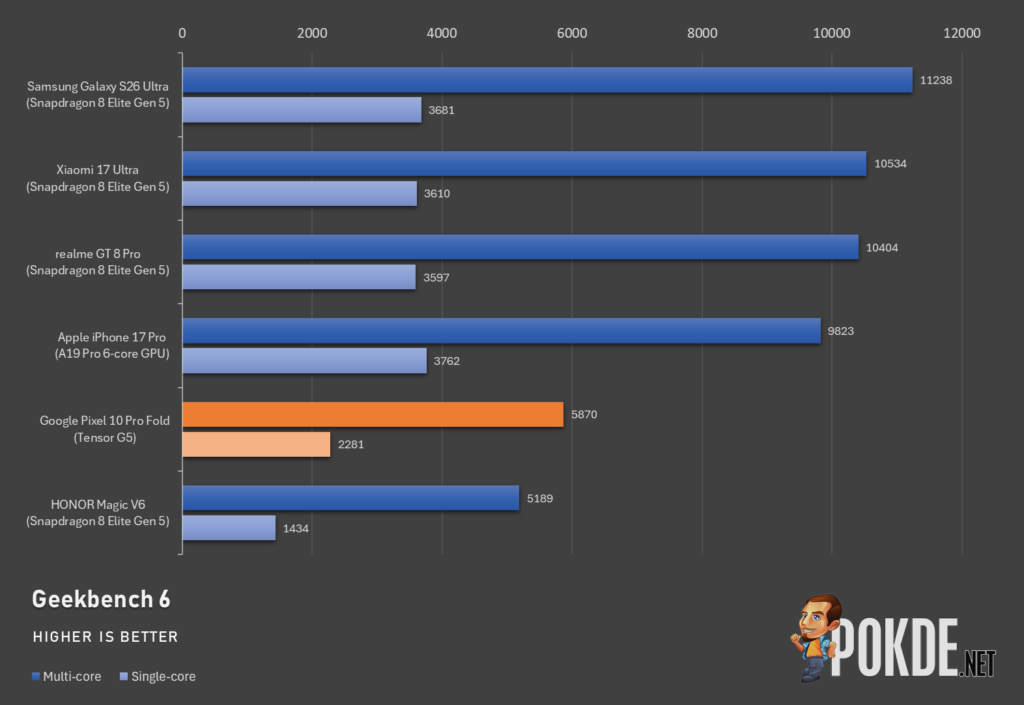
In Geekbench 6, we see a similar pattern yet again but this time, it surprisingly managed to beat the HONOR Magic V6 which runs the Snapdragon 8 Elite Gen 5. However, that might just be an issue with that particularly foldable since other devices running the same chip have no issues with performance and scored significantly better. in both single and multi core scenarios.
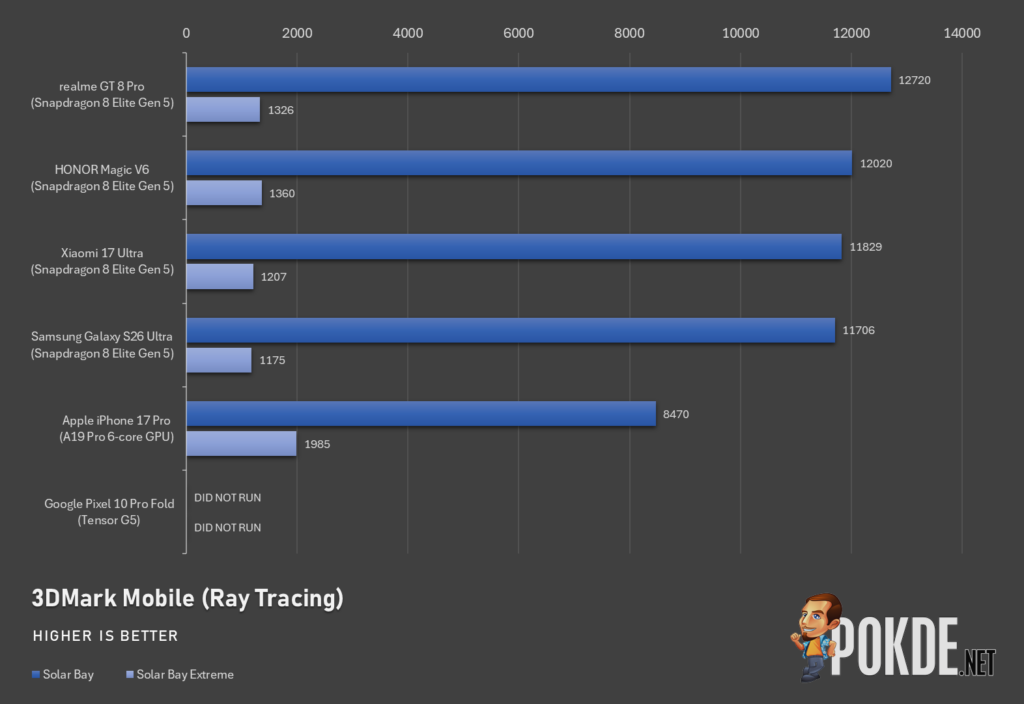
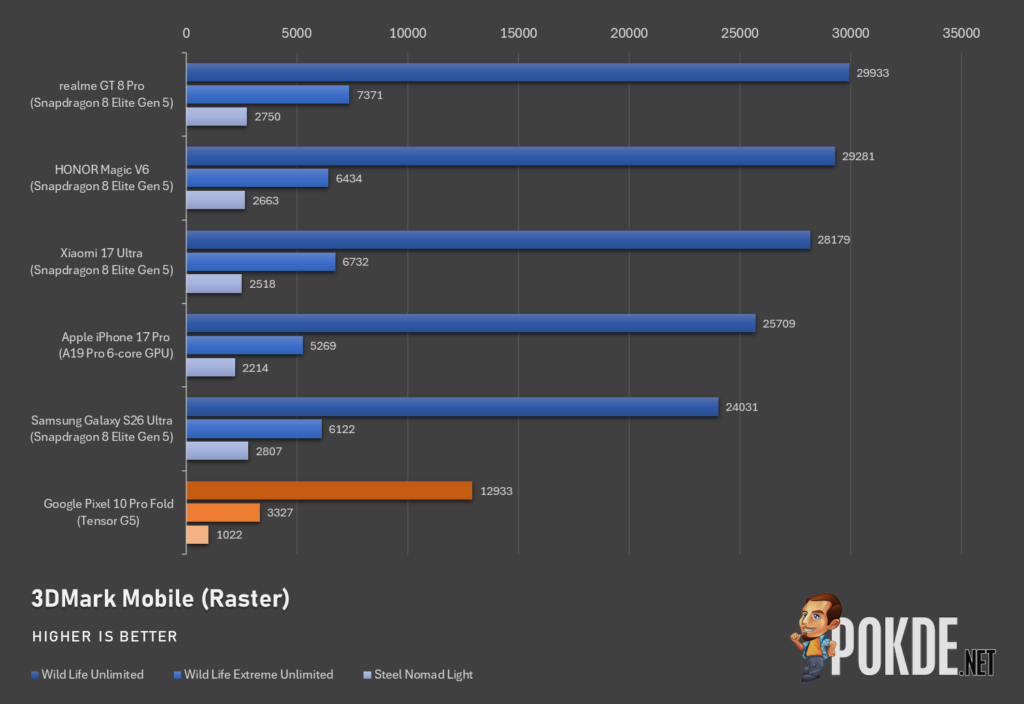
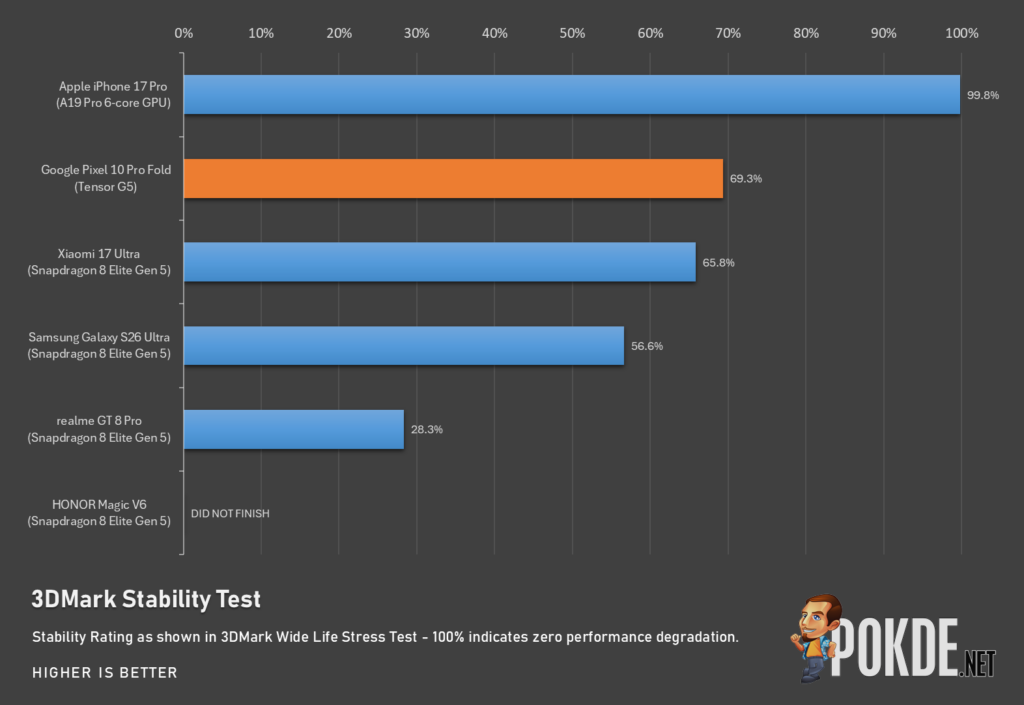
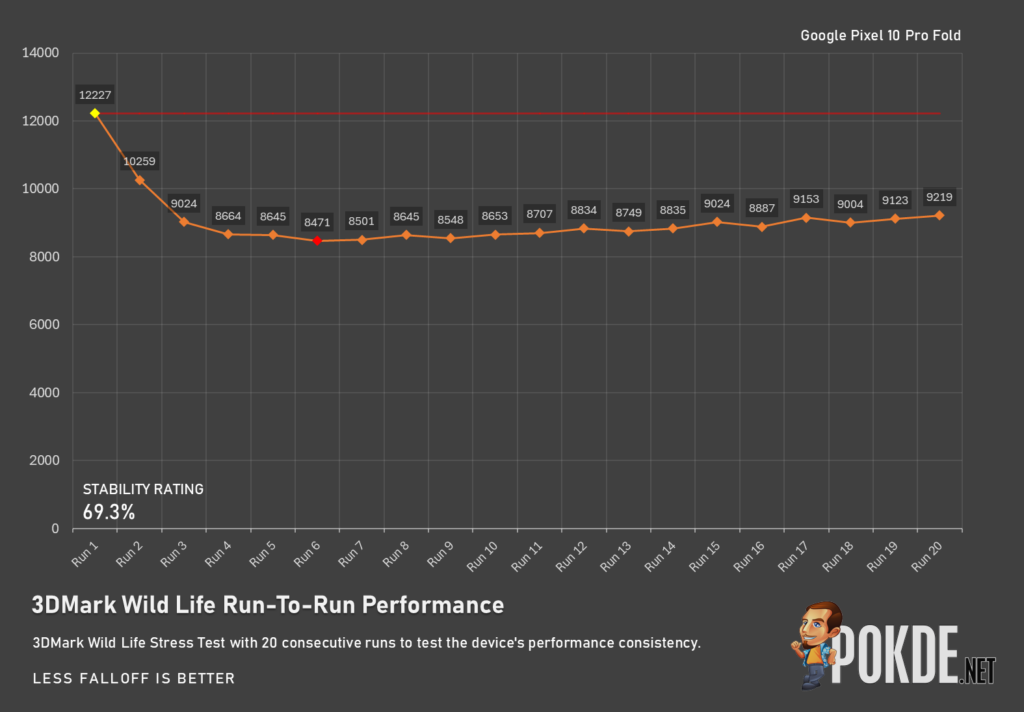
And the trend continues in 3DMark as the Google Pixel 10 Pro Fold is shown to be clearly struggling. In fact, it can’t even run the ray tracing portion of our benchmarking test. While the overall score is signficantly lower than the other flagships, it doesn’t mean that you can’t play games on it, just that you shouldn’t expect it to run graphically-intensive games smoothly. One area that it does win however is thermals as it has a stability rating of 69.3%. It’s better than any other Snapdragon 8 Elite Gen 5 device we’ve tested thus far in this area alone.
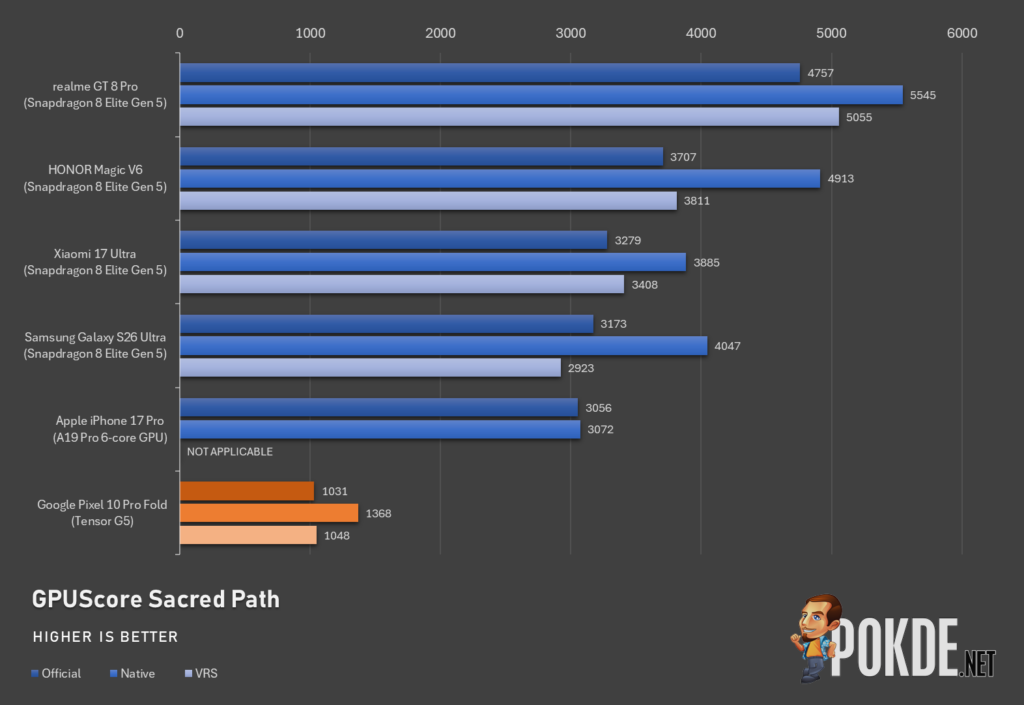
In case you thought that 3DMark was a fluke for the Google Pixel 10 Pro Fold, GPUScore Sacred Path follows the same trend of showing the inadequacy in 3D graphical performance for the Tensor G5 chip. Once again, you can still game on it but dial down the graphics settings for the games that have the option to do so.
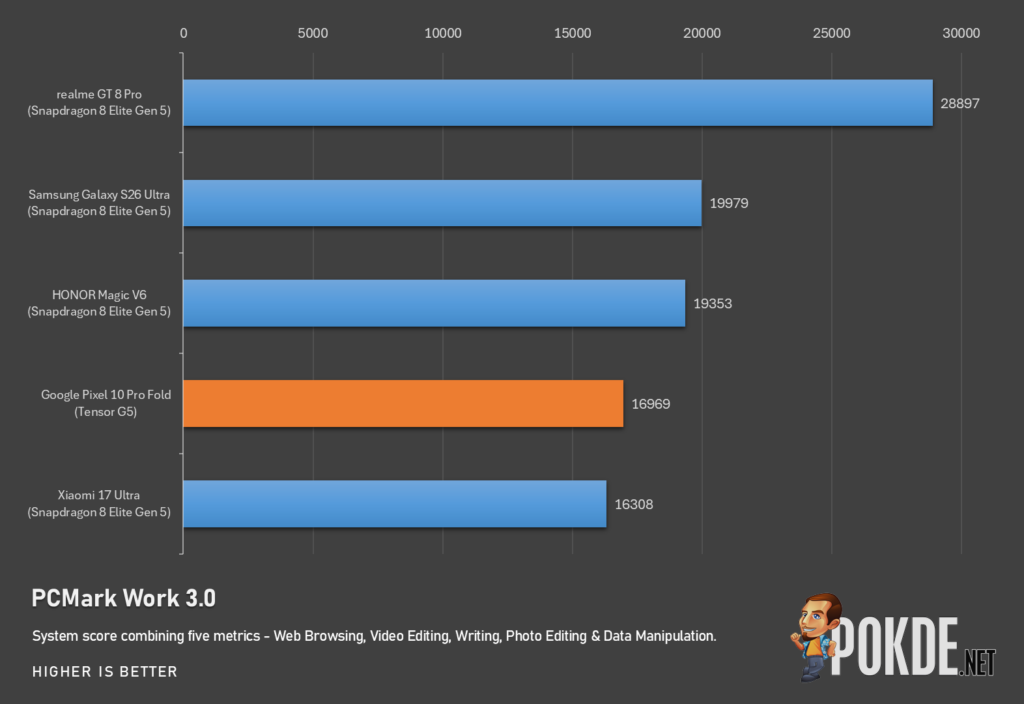
Lastly on PCMark in its Work 3.0 benchmark, the Google Pixel 10 Pro Fold performs admirably enough. The Snapdragon 8 Elite Gen 5 generally doesn’t outperform it by a significant margin (save for the realme GT 8 Pro, which is an outlier even among devices with the same chip) that would lead to any noticeable real world difference so it should work pretty well for day-to-day use.
In everyday use, the Tensor G5 handles everything thrown at it without hesitation. Switching between apps, running two windows side by side with a third floating above, streaming video, gaming, and pushing Google’s suite of on-device AI features all happen without a stutter or slowdown. The shift from Samsung’s Exynos-based manufacturing to TSMC’s 3nm process for the G5 brings meaningful efficiency gains, and the improvement is most tangible in how well the phone manages sustained workloads without generating uncomfortable heat.
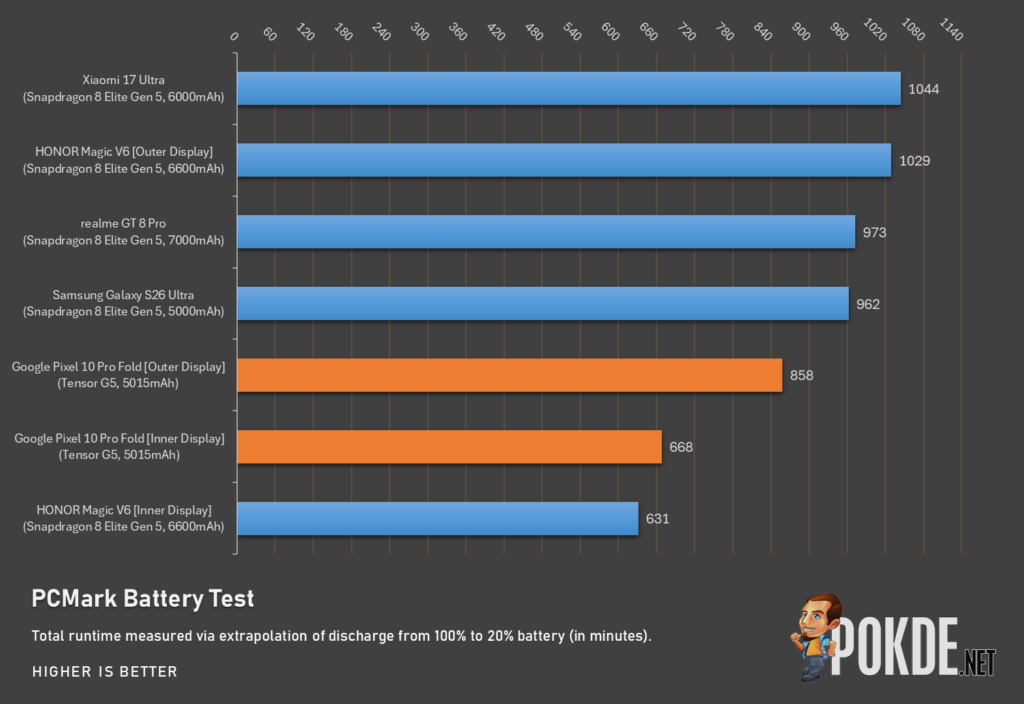
As for battery life, we managed to get 14 hours and 18 minutes when folded while unfolded sees a noticeable drop to 11 hours and 8 minutes. It’s a pretty good figure overall, especially for this type of foldable smartphone with its 5015 mAh battery capacity, and it’s natural for the battery life to be shorter when unfolded as a bigger screen would use up more energy. Personally for me, it’s in the realm of great but far from the best, and if you find yourself using the bigger screen often, best to keep a powerbank with you wherever you go.
For charging speed, here’s what we got using a 100W GaN charger starting from 2% battery life:
- 15 minutes = 30% battery
- 30 minutes = 52% battery
- Full charge = 1 hour and 32 minutes
The Good
IP68 Sets It Apart in the Foldable Category
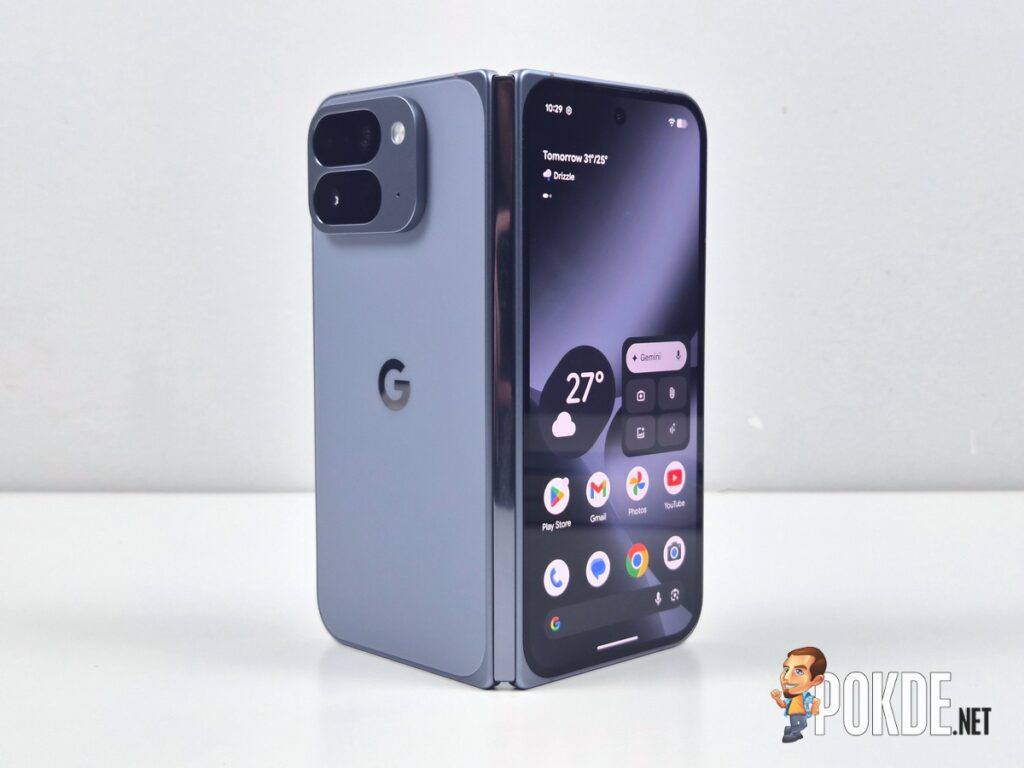
Full IP68 dust and water resistance is a genuinely meaningful differentiator in the foldable space. It is the kind of protection that removes a layer of daily anxiety around accidental exposure that competing foldables with water-only ratings cannot fully address. For a phone you are likely using in a wider range of orientations and scenarios than a standard bar-form device, that added durability confidence is worth real money.
Outer Display Is More Usable Than Before
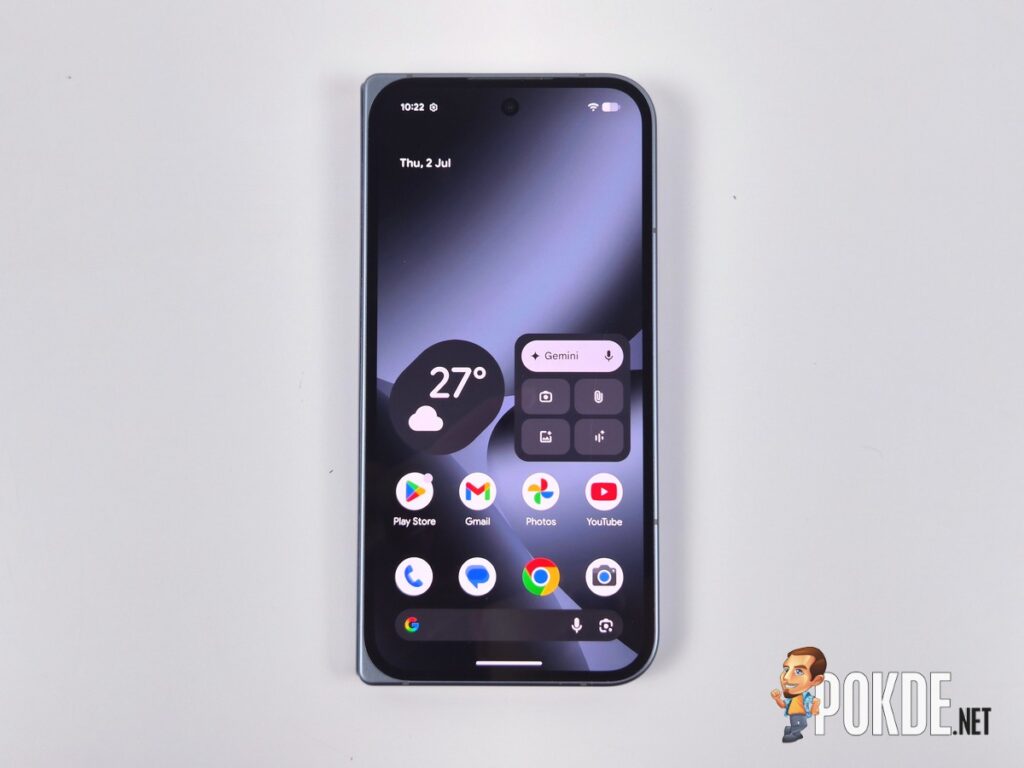
The 6.4-inch outer display with 3,000 nits peak brightness is a notable improvement in outdoor usability over the previous generation, and the slightly larger size with marginally thinner bezels makes one-handed use in the folded position feel more natural than it did before. For everyday tasks like messaging, calls, and quick app access, it is a genuinely capable screen that reduces the need to unfold as frequently.
On-Device AI Features and UI Improvements Deliver Real Utility
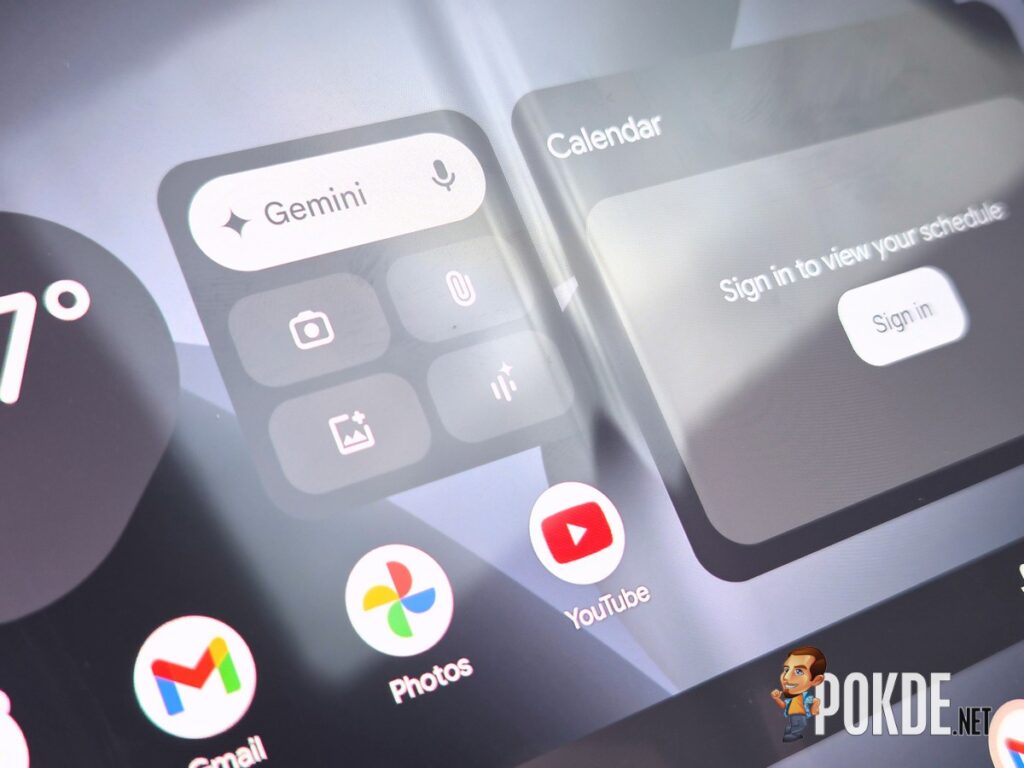
The Tensor G5’s expanded on-device AI capabilities make features like Magic Cue and Voice Translate feel genuinely useful rather than demonstrative. Voice Translate in particular, performing live real-time translation during phone calls while accurately imitating vocal intonation, is the kind of feature that has to be experienced to be fully appreciated. Running these calculations locally rather than in the cloud also means they are faster and more private, which matters for features that interact with personal communications.
The inner display’s drag and drop functionality between open apps is one of the most practically useful productivity features on the phone. Moving content between a browser, an email client, a social media app, or a document editor is fast and intuitive in a way that feels genuinely native rather than bolted on. For anyone who regularly works across multiple apps, this alone justifies the larger inner screen.
7 Years of Software Support
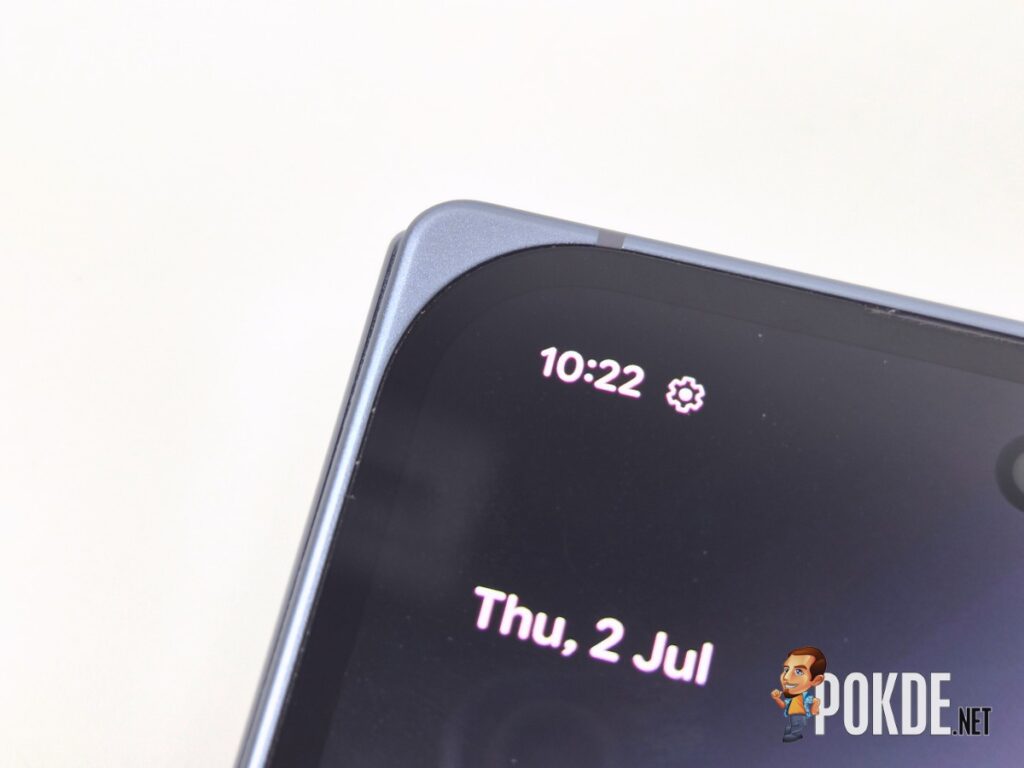
7 years of OS, security, and Pixel Drop updates is a strong long-term value commitment, particularly for a phone at this price point, and matches the support timeline offered by competing flagship foldables. Buying into this ecosystem means the phone remains current and secure for considerably longer than most Android devices.
Pixelsnap Wireless Charging Is a Welcome Addition
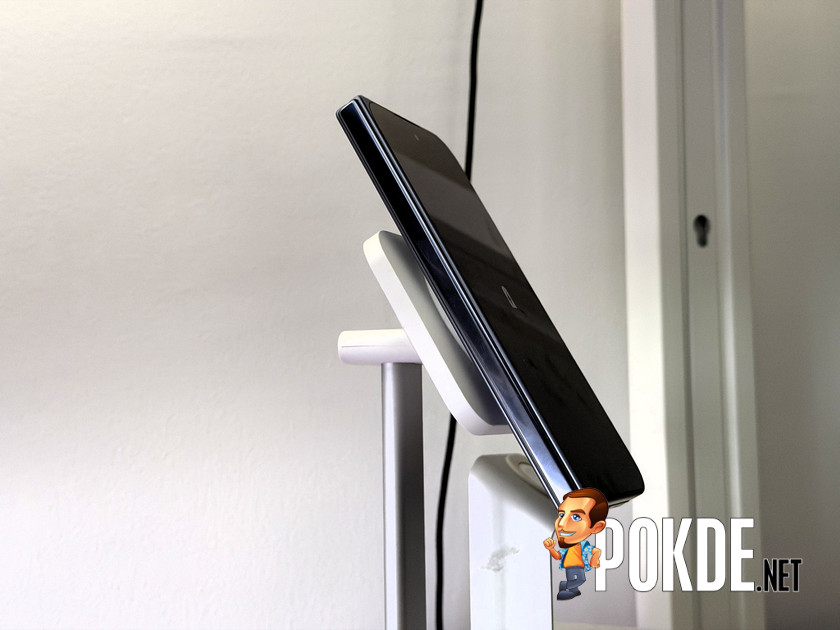
The MagSafe-like magnetic wireless charging ecosystem adds meaningful convenience for users who want a cable-free desk or nightstand charging solution. At 15W via Qi2, it is not the fastest wireless charging available, but the magnetic alignment removes the positioning guesswork that standard Qi charging sometimes requires.
The Bad
Weight and Thickness Remain the Elephant in the Room
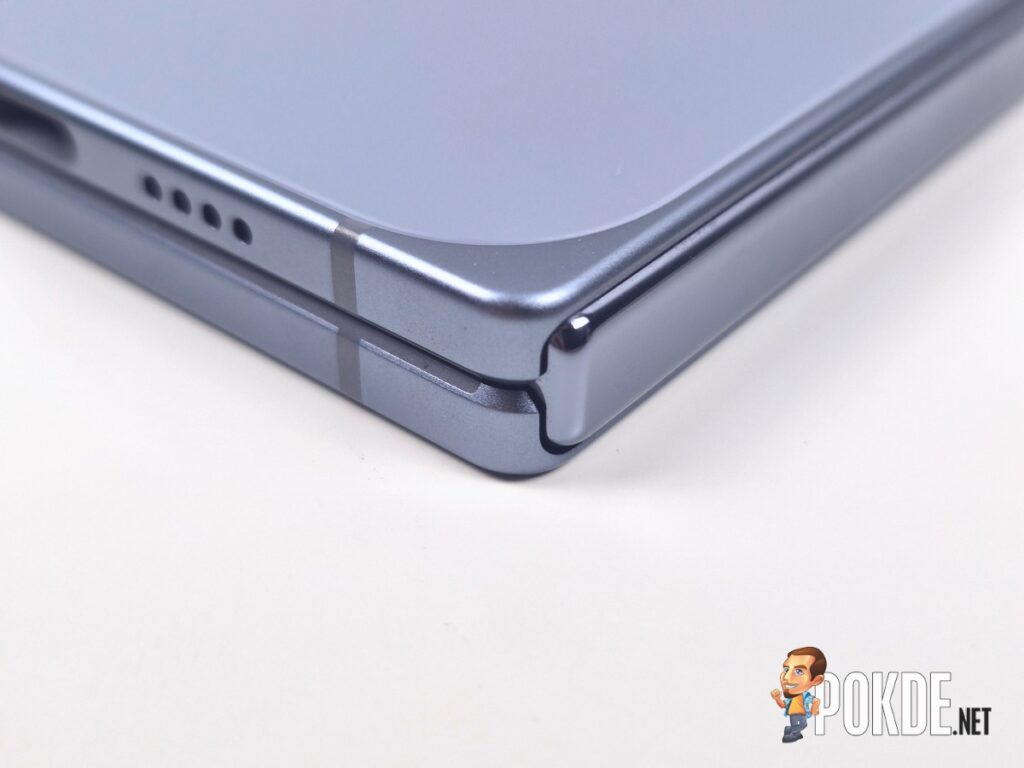
At 258 grams and 10.8mm thick when folded, the Pixel 10 Pro Fold is heavier and bulkier than competing foldables. The weight distributes reasonably well and the phone never feels unbalanced, but extended one-handed use makes the mass noticeable in a way that lighter rivals do not. Google did not slim this phone down with the new generation, and for buyers who handle competing foldables regularly, the difference is immediately apparent.
Multitasking Trails the Competition
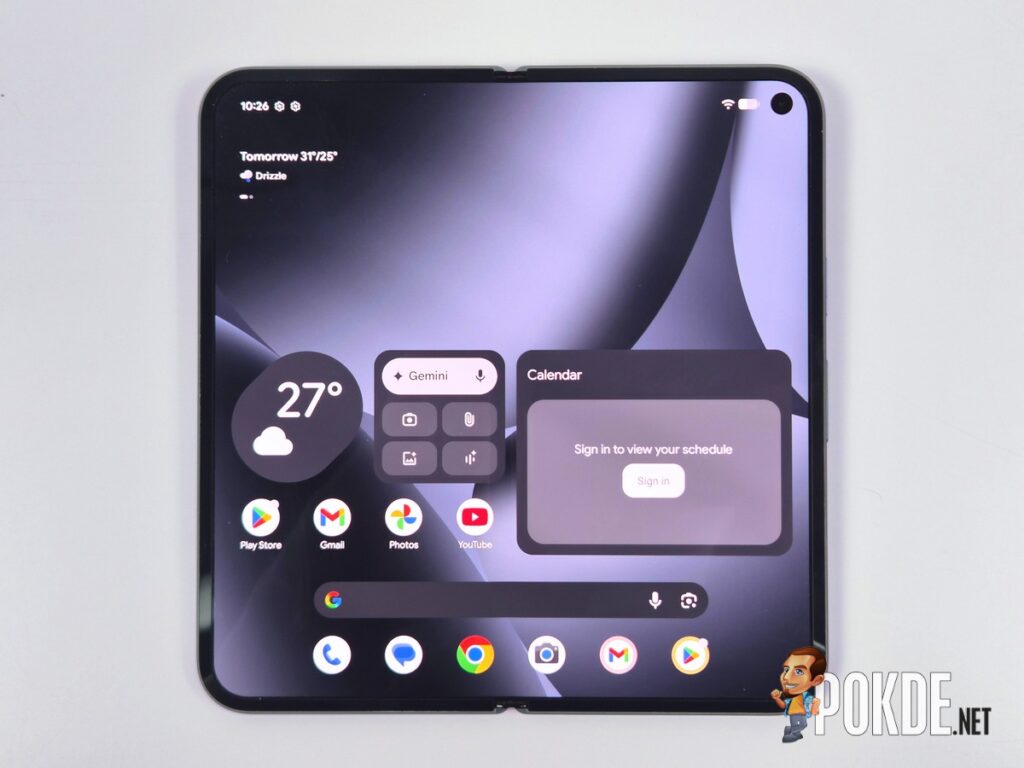
The Pixel 10 Pro Fold supports two simultaneous apps on the inner display plus one floating window, which is capable but falls behind what the most advanced foldable software offers. There is no DeX-style desktop mode, fewer shortcuts for launching app pairs, and less flexibility in how apps are arranged and mixed on the larger inner screen. For productivity-focused buyers who want the most capable multitasking experience available, this remains an area where the Pixel falls short.
No Charger in the Box
At RM7,999 retail, the absence of a charging brick is a frustration. Reaching full fast-charging speeds requires a 30W PPS-compatible charger sold separately, which is an additional purchase that should not be necessary at this price point.
Inner Display Crease Is Still Present
The Ultra Thin Glass inner display is excellent in use, but the fold crease remains visible at certain angles and discernible by touch. It has been improved with additional anti-impact film layers, but it has not been eliminated, and buyers expecting a crease-free inner display will need to manage their expectations accordingly.
Camera Module Causes Wobble on Flat Surfaces
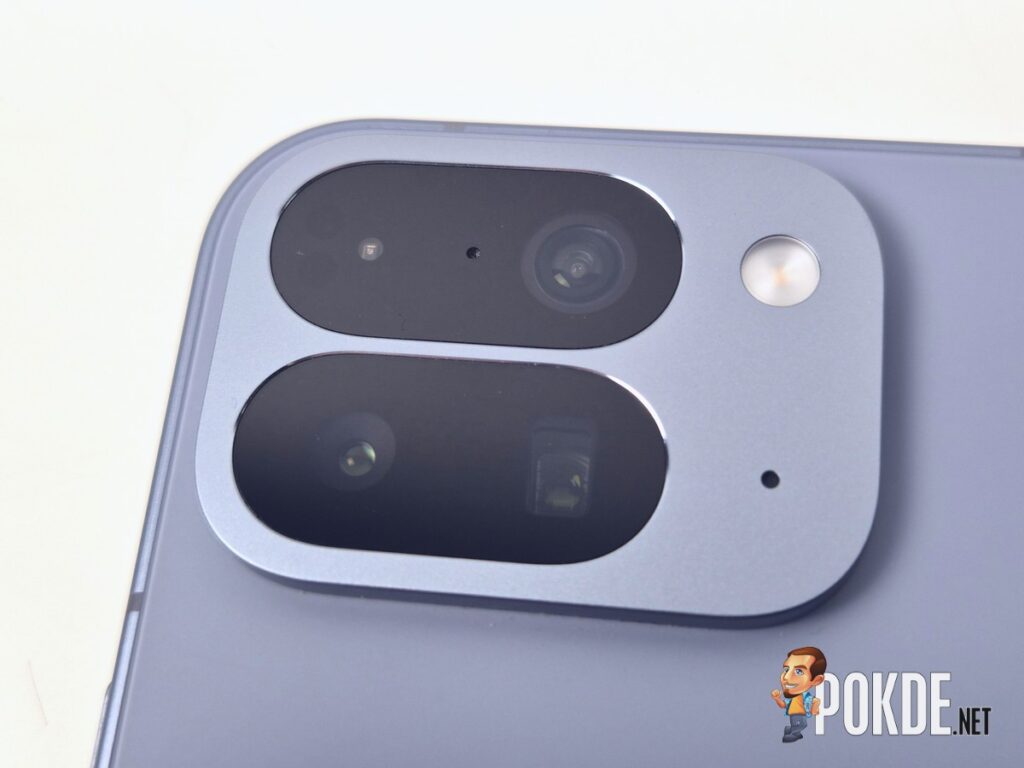
The prominent rear camera module means the phone does not sit flat on a desk or table when placed screen-down, rocking slightly when touched. It is a minor daily inconvenience rather than a functional issue, but it is the kind of thing you notice multiple times a day.
Google Pixel 10 Pro Fold Verdict
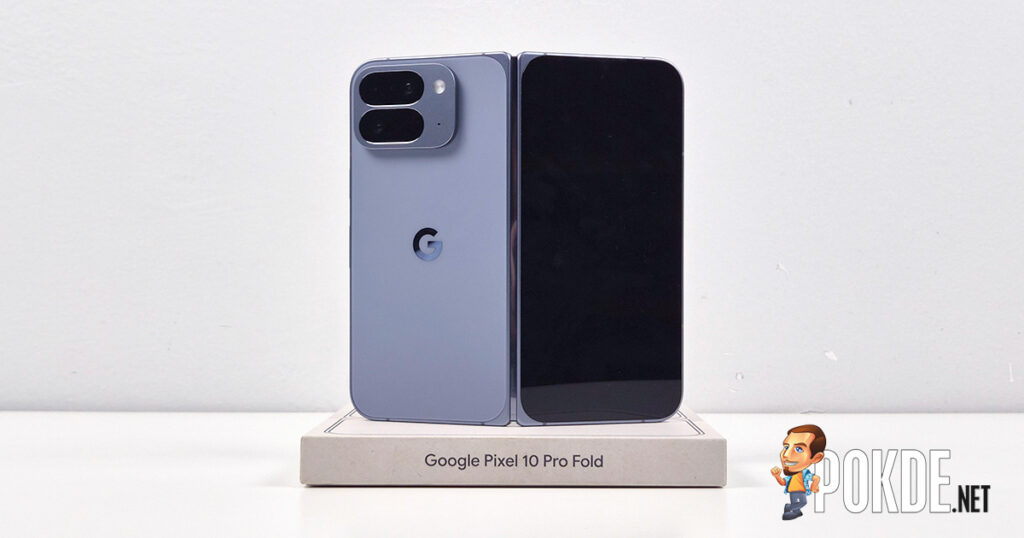
The Google Pixel 10 Pro Fold is a compelling and capable foldable that earns its position as one of the better options in the category. The camera system is genuinely the best I have used on a folding phone, the IP68 rating is a meaningful durability advantage, battery life is a clear improvement over the previous generation, and the on-device AI features deliver real utility rather than marketing theatre. For anyone who prioritises photography, software quality, and long-term update support in a folding phone, it makes a strong case.
But at RM7,999 retail it is difficult to ignore the fact that it is heavier and bulkier than competing foldables, the multitasking software trails the best in the category, wired charging is conservative for the price, and there is no charger in the box. The online market pricing of RM5,999 to RM6,599 for new units these days changes the value equation considerably and makes the Pixel 10 Pro Fold a much easier recommendation at that level. At full retail, the gap between what you pay and what you get relative to the competition is harder to bridge.
With that in mind, I award the Google Pixel 10 Pro Fold with our Silver Pokdeward.

Big thanks to Google Malaysia for sending us this foldable smartphone for the purpose of this review.