



A new whitepaper by Mastercard and GXBank has found that financial health among Malaysians is shaped more by behavioral habits than by income or demographic background. The study draws on 12 months of pseudonymized transactional data from more than 39,000 GXBank customers who opened accounts between November 2023 and December 2024, alongside qualitative focus groups conducted in September 2025.
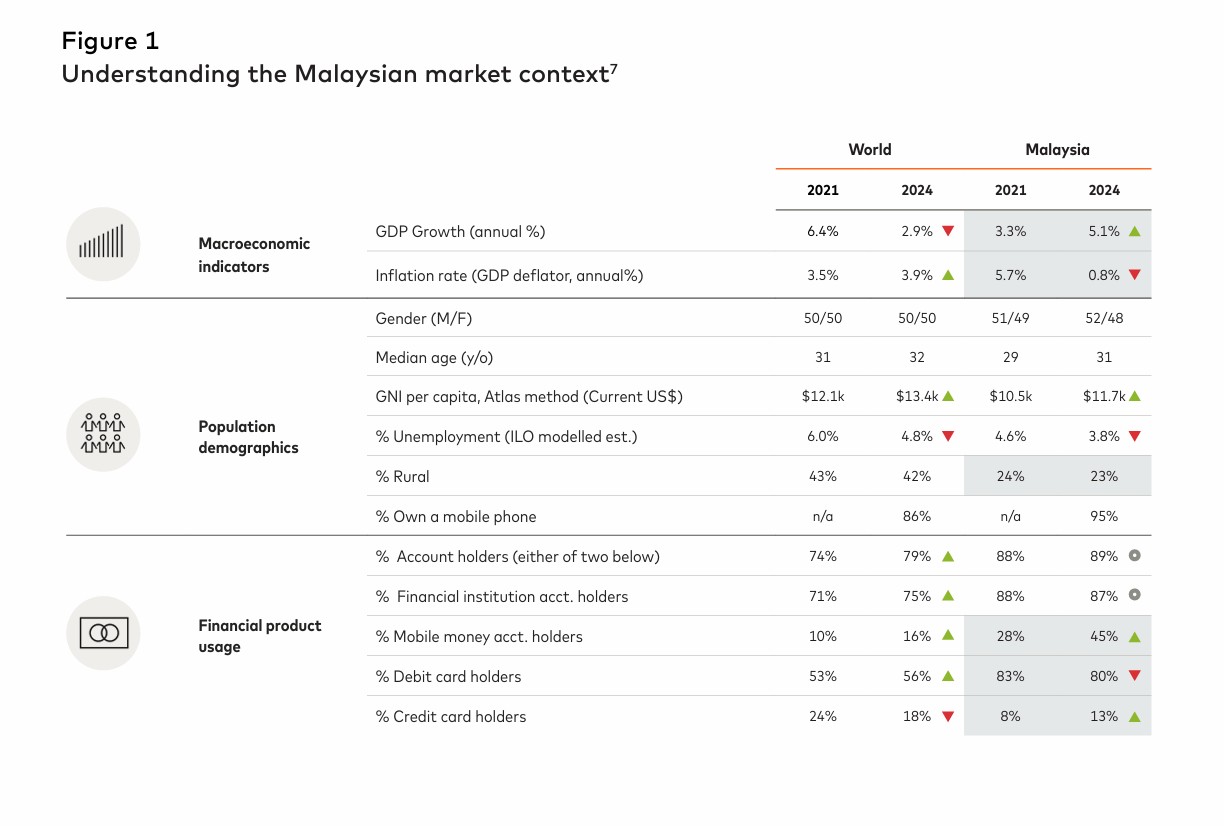
Malaysia has made significant progress in expanding financial access, with 89% of Malaysians now holding a financial account. However, only 52.5% have saved money at a formal financial institution, and just 15% have borrowed from one. The research highlights that access alone does not translate into active participation or financial resilience.
Mastercard & GXBank Whitepaper’s Key Findings
The research identifies four principles that financial institutions can act on to help consumers move from account access toward genuine financial health.
The first focuses on the critical nature of the first 60 days – among active GXBank customers, debit card transactions grew by 250% within their first two months, alongside increases in QR payments, peer-to-peer transfers and deposits. The findings suggest that clear onboarding, intuitive design and proactive in-app guidance play a significant role in forming lasting digital banking habits.
The second principle concerns rewards and routine: well-designed incentives such as cashback and bonus interest can reinforce everyday financial behaviors, but perceived value is essential. A notable 38% of disengaged customers cited declining rewards as the reason they reduced their activity, underlining that incentive programs must remain meaningful over time.
On disciplined saving, the research found that consumers who placed 10% to 20% of their deposits into a goal-based savings tool progressed further along their financial journey 22% more often. Those saving 15% or more were 31% less likely to move backwards financially, pointing to the tangible impact that structured saving habits can have even at modest levels.
The fourth principle relates to product design as a progression tool. Customers who adopted multiple complementary products within the same month were four times more likely to reach what the study defines as the Financial Security stage. The research also cautions that adoption is most effective when consumers have had adequate time to grow comfortable with an initial product before being introduced to additional tools.



Beyond behavioral habits, trust and data security emerged as strong indicators of financial health progression. GXBank customers who were actively engaged with the bank adopted GXBank’s Cyber Fraud Protect insurance three times faster than less engaged counterparts, suggesting that confidence in digital security supports broader financial participation.
The whitepaper forms part of a broader global research series by Mastercard examining financial inclusion in emerging markets. Previous studies in the series covered Nubank in Brazil, RCBC in the Philippines and Access Bank in Nigeria, making Malaysia the latest market to be included with locally sourced data.
Pokdepinion: Turns out the secret to financial health is just not being bad with money – groundbreaking stuff.