
- Unboxing
- Walkaround
- Specifications
- Performance
- Camera
- The Good
- One of the Only Compact Android Flagships Worth Buying
- Design and Color Execution Are Excellent
- Gemini Software Integration Adds Genuine Utility for Malaysian Users
- 7 Years of Software Support
- PixelSnap and Qi 2.2 Wireless Charging
- Display Quality Is Excellent for the Size
- The Bad
- GPU Performance Is Genuinely Poor for This Price
- The Base Model Gets Less RAM Than Its Predecessor
- HiLight Is a Gimmick in Its Current Form
- Some AI Features Still Feel Immature
- Google Pixel 11 Pro Verdict

Offer price: 5599
Currency: MYR
-
Appearance - 8/108/10
-
Efficiency - 7.5/107.5/10
-
Features - 7/107/10
-
Materials - 8.5/108.5/10
-
Performance - 5/105/10
-
Portability - 8/108/10
-
User Experience (UX) - 7/107/10
-
Value - 7/107/10
Summary
The Google Pixel 11 Pro is a phone that knows exactly what it is trying to be, and succeeds at some of it more convincingly than others.
Overall
7.3/10Pros
- One of the Only Compact Android Flagships Worth Buying
- Design and Color Execution Are Excellent
- Reliable Camera That Rarely Misses
- Gemini Software Integration Adds Genuine Utility for Malaysian Users
- Seven Years of Software Support
- PixelSnap and Qi 2.2 Wireless Charging
- Display Quality Is Excellent for the Size
Cons
- GPU Performance Is Genuinely Poor for This Price
- The Base Model Gets Less RAM Than Its Predecessor
- Battery Life Requires Daily Charging for Most Users
- Charging Speeds Are Slow by 2026 Standards
- HiLight Is a Gimmick in Its Current Form
- 120x Zoom Produces AI-Generated Rather Than Photographed Results
- Some AI Features Still Feel Immature
Unboxing
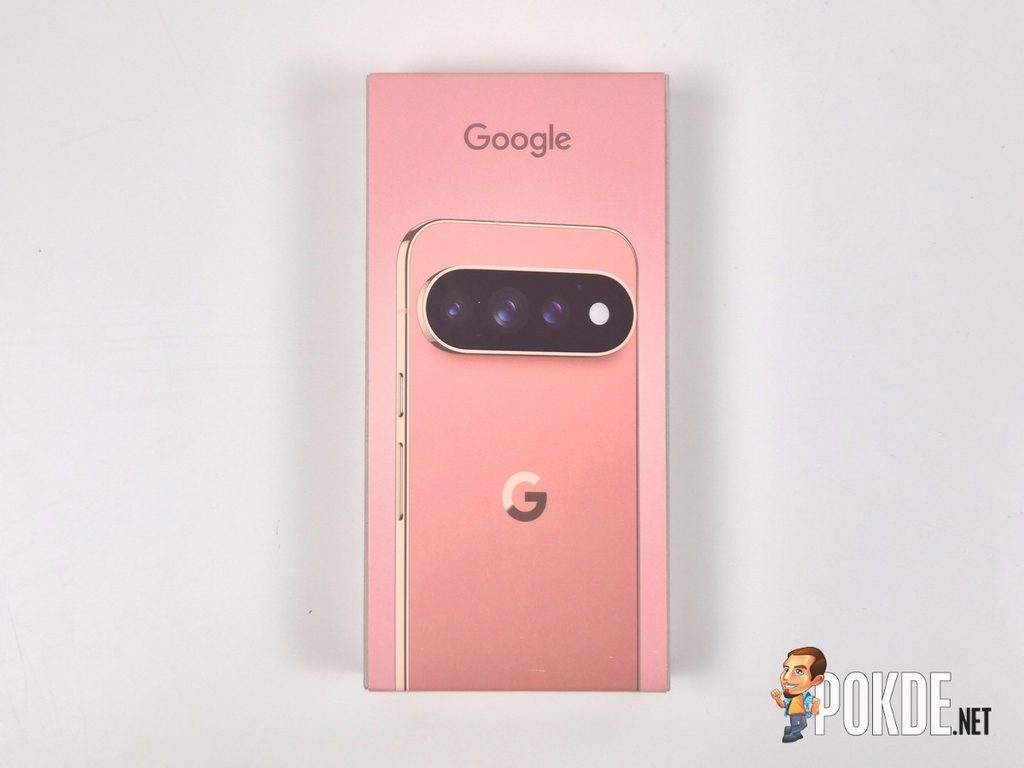
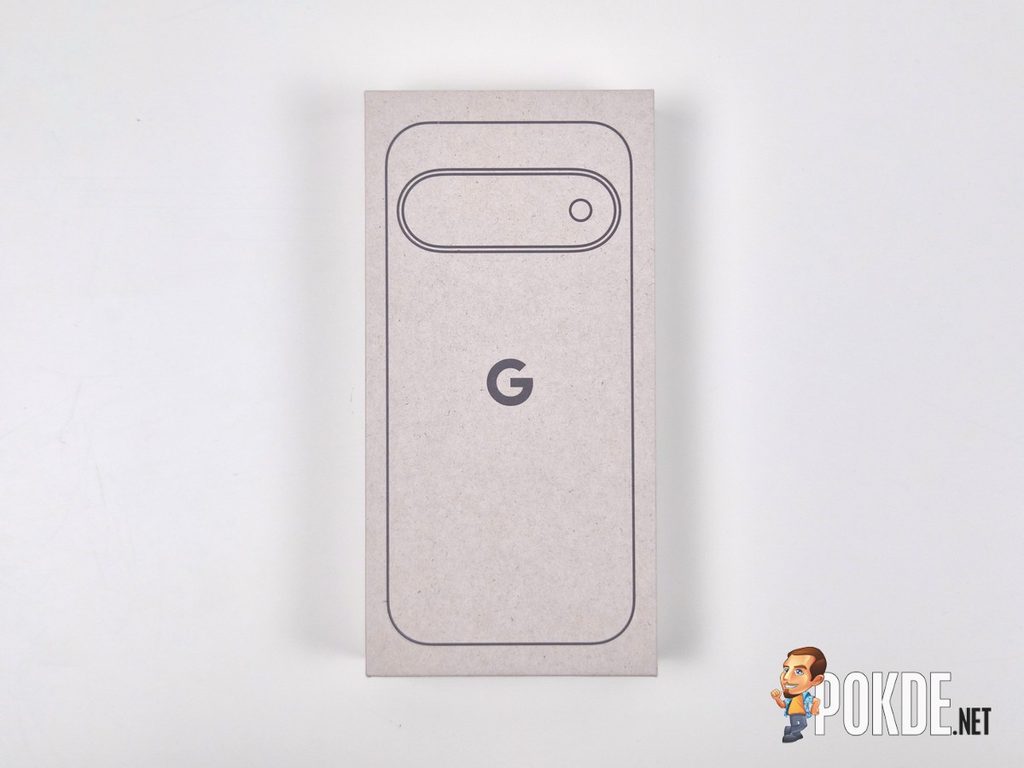
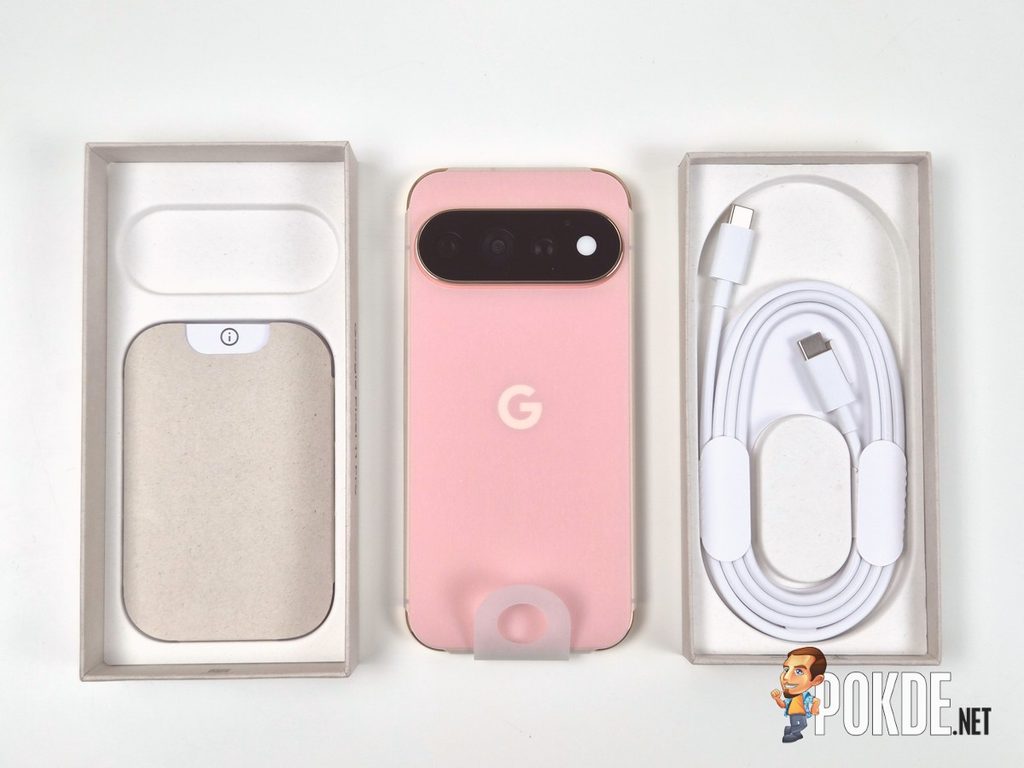
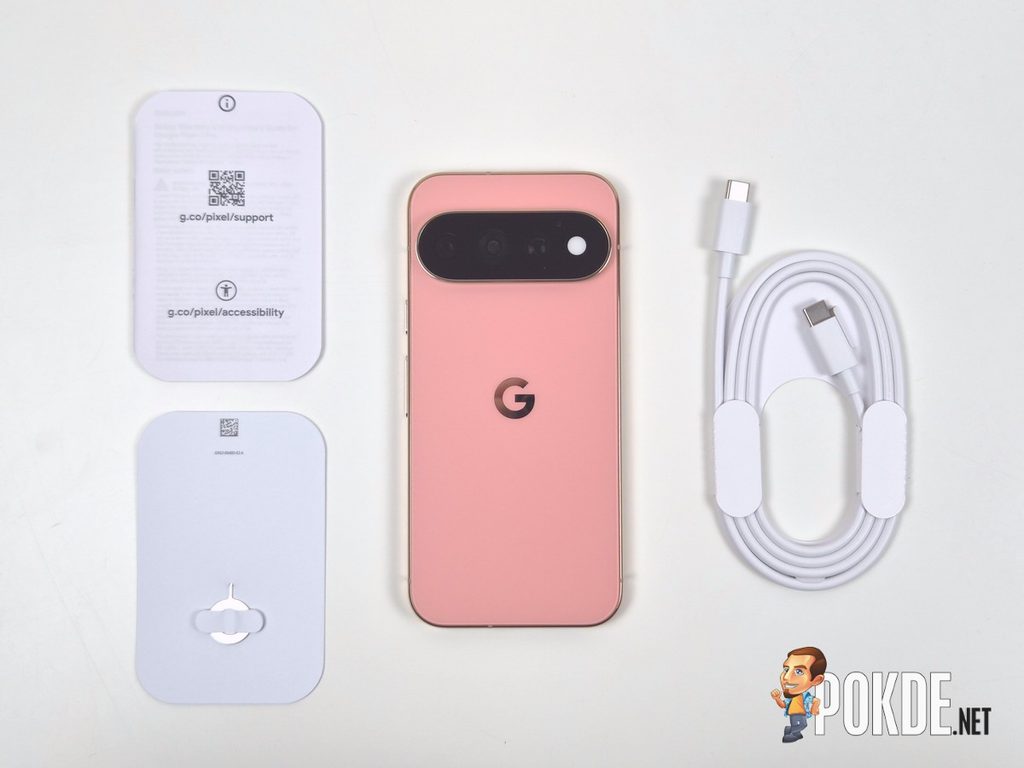
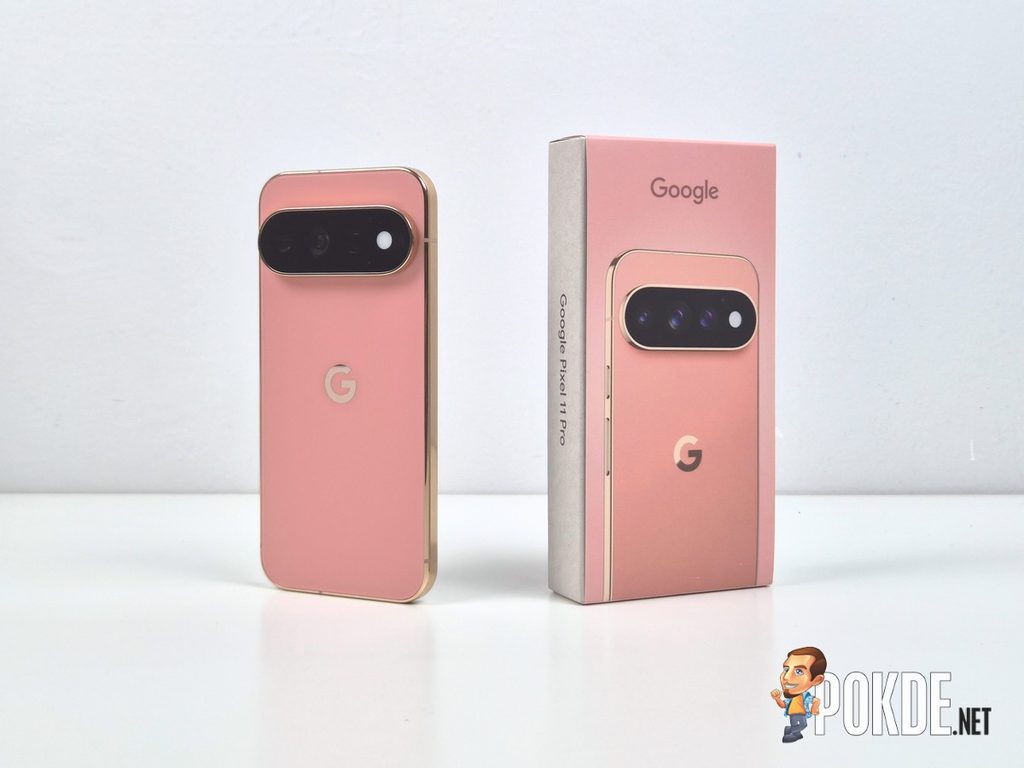
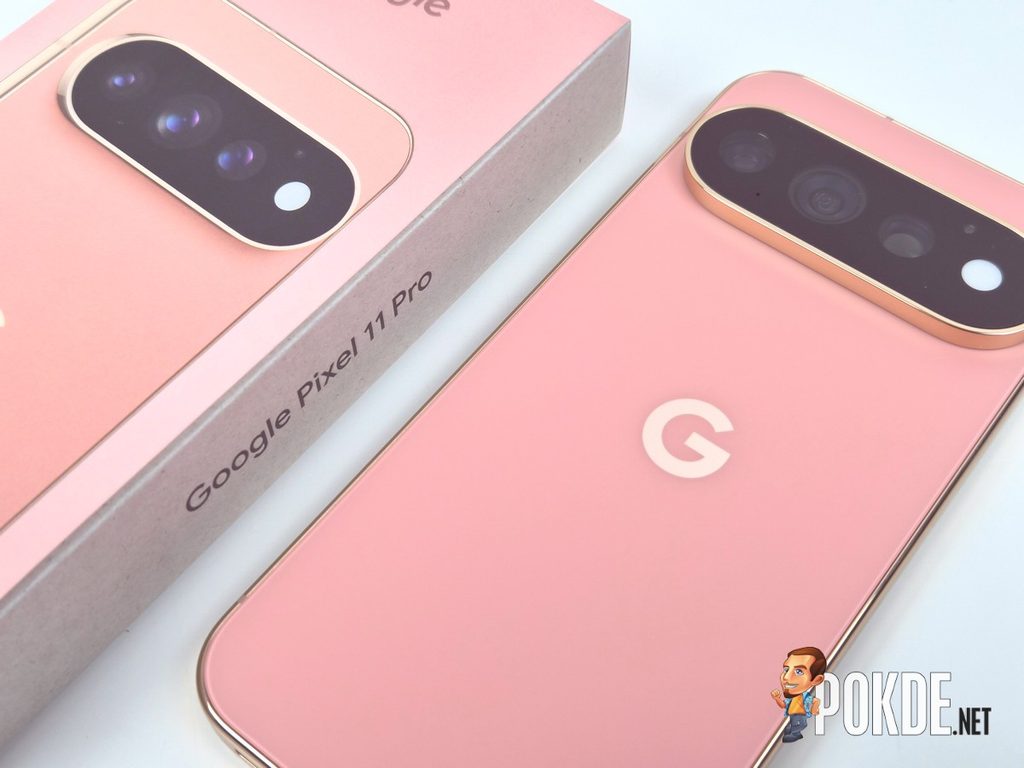
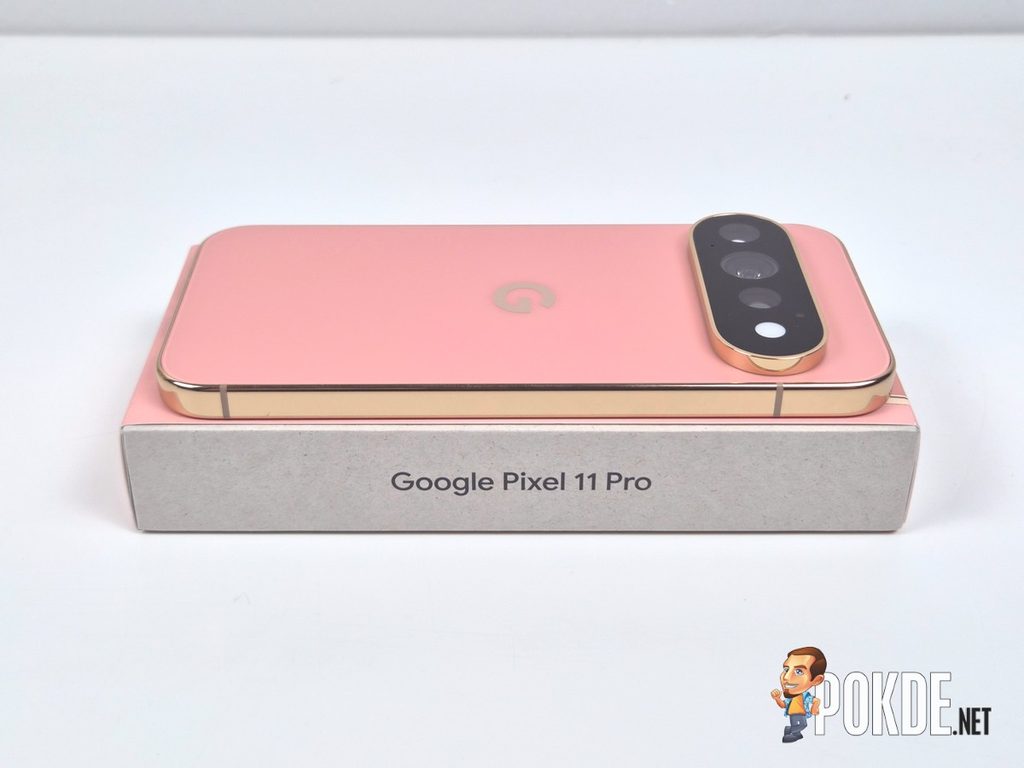
The Google Pixel 11 Pro arrives in packaging that follows the same eco-friendly, minimalist theme as recent Pixel generations. The box is simple in nature, made from recycled materials, and inside you get the phone, a USB-C cable, and documentation. There is no charger in the box, which has become standard practice for Google and most flagship Android manufacturers, so factor in a compatible fast charger separately if you do not already have one.
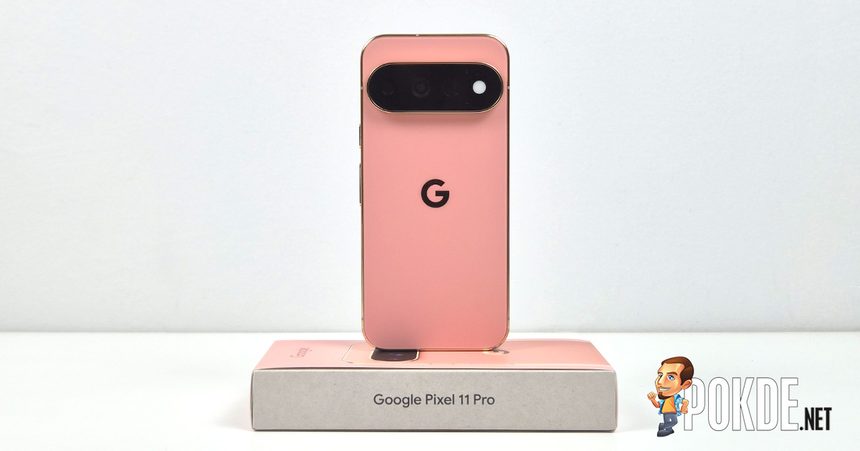
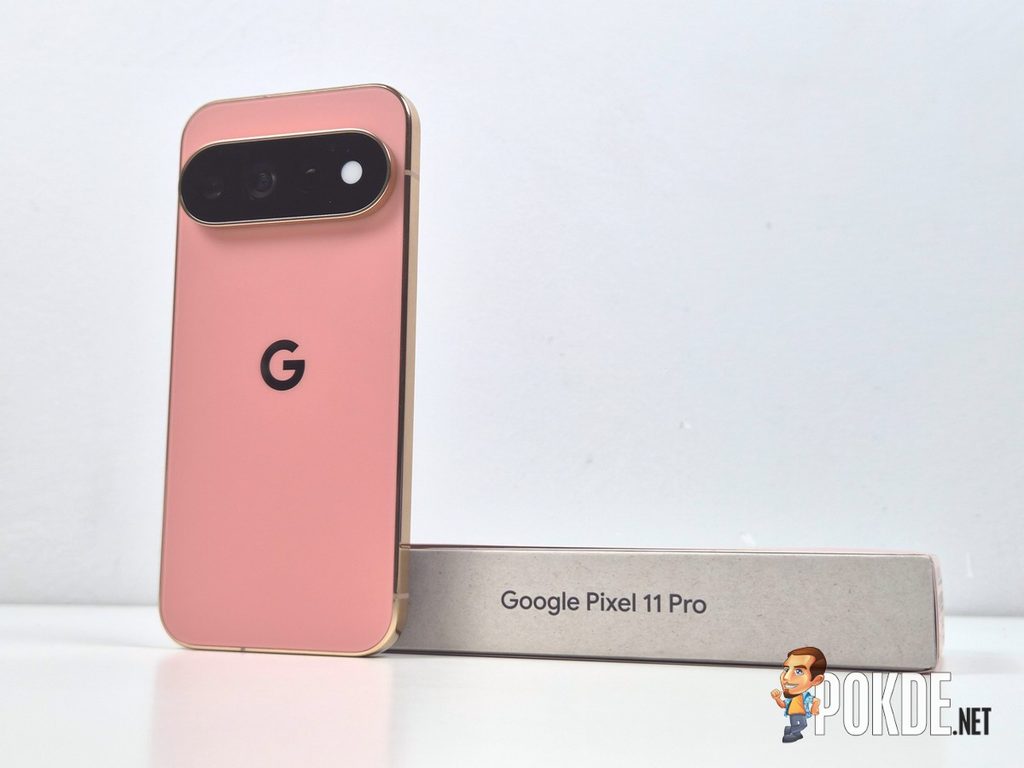
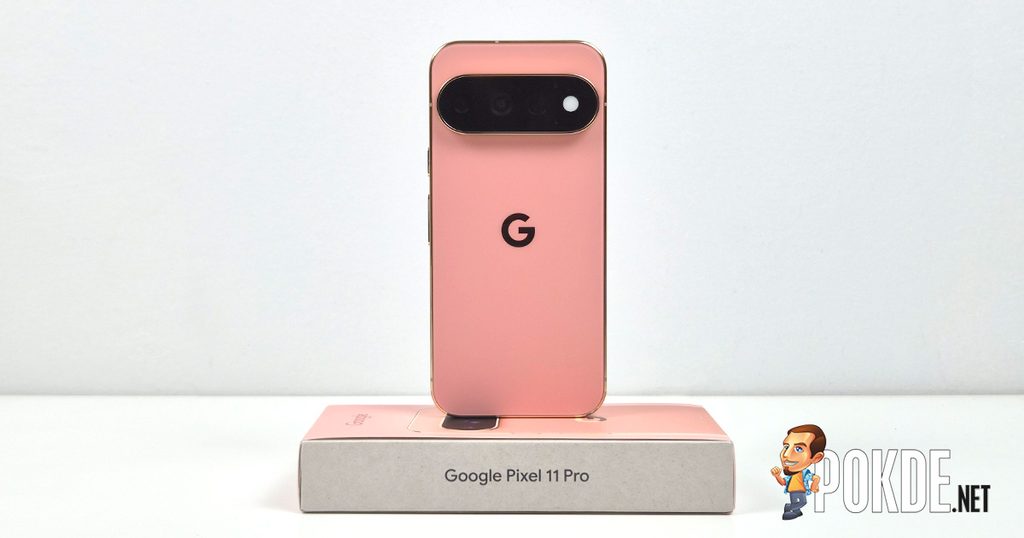
Our review unit is in Canyon, one of four color options alongside Olive, Fog, and Obsidian.
Walkaround
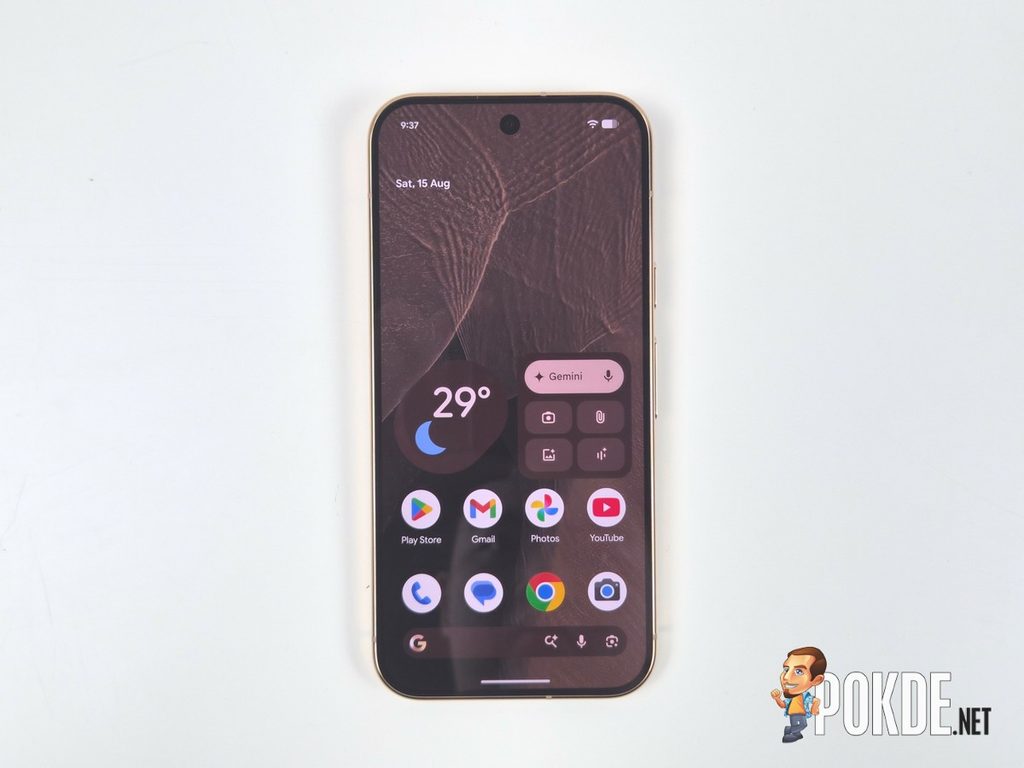
The Google Pixel 11 Pro is one of the very few Android phones in 2026 that fits a near-complete flagship feature set into a genuinely compact body. At 6.3 inches, it sits in a size category that most Android manufacturers have largely abandoned in favour of larger displays, and for anyone who finds modern smartphones too big to comfortably use one-handed, that alone makes it worth paying attention to.
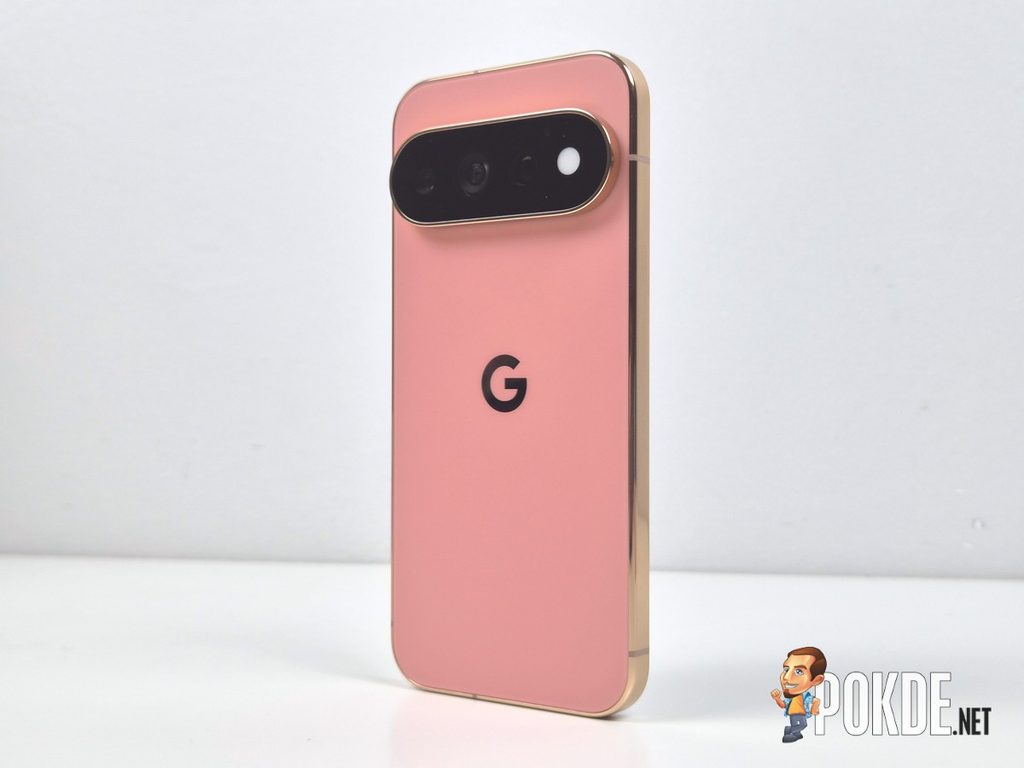
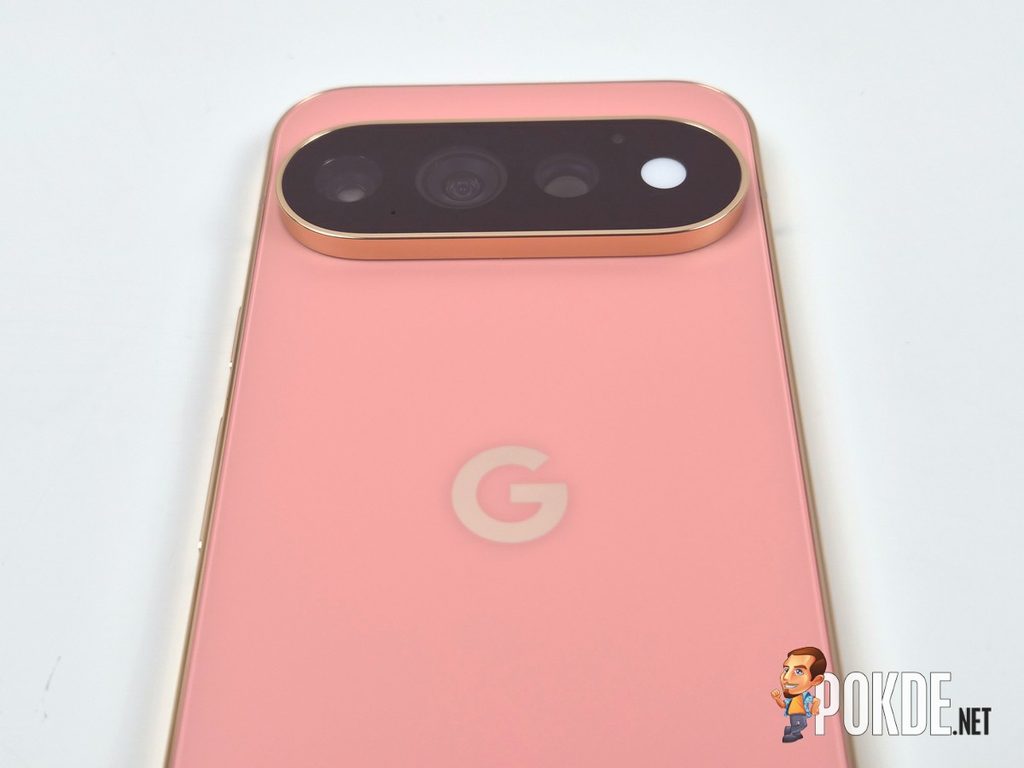
The design language is consistent with the Pixel 10 Pro, which is not a criticism. The soft, rounded sides and flat back feel excellent in the hand, and at 204g it is marginally lighter than its predecessor. The camera bar on the rear has been refined slightly, with the glass covering now running edge-to-edge rather than stopping partway, giving it a cleaner look. The practical benefit of a rear camera bar is also worth noting: the phone rests flat and stable on a table without rocking, which makes checking notifications without picking it up considerably less annoying.
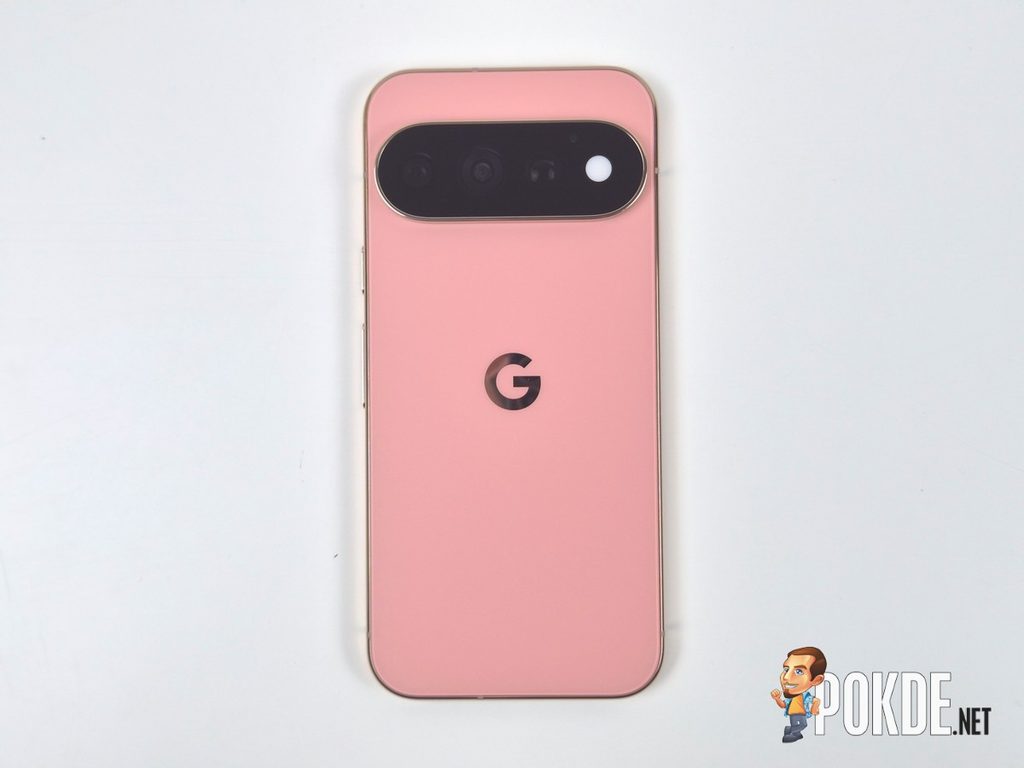
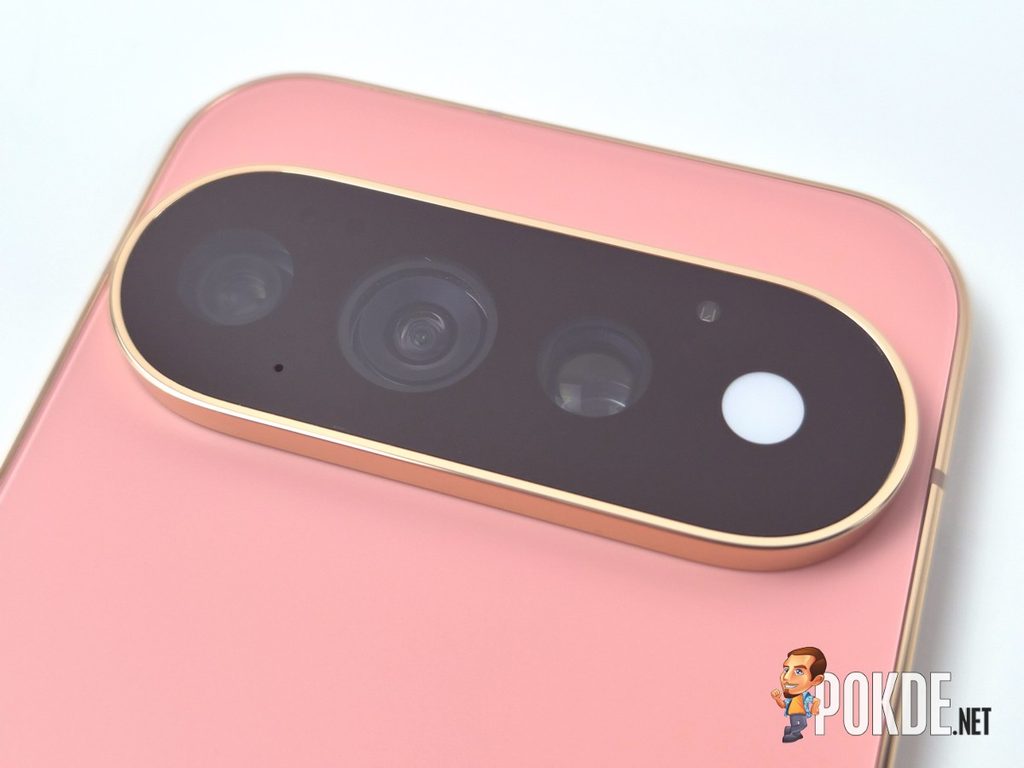
The color execution is genuinely impressive this year. Olive is a moody, sophisticated green that photographs differently depending on the light. Canyon is a tasteful pinky red that avoids being gaudy. Fog is a fresh take on silver. Even Obsidian, typically the most unremarkable choice, benefits from a matte finish on the sides that makes it more visually interesting than a standard gloss black.
Google has introduced HiLight this year, a multi-color LED on the rear of the phone that has been positioned as a meaningful feature addition. In practice it is one of the most underwhelming additions to a flagship phone I can remember. Currently it turns blue when you speak to Gemini and flashes during incoming calls. There is no support for third-party notifications, no customisation for individual apps, and no recording indicator despite the light being perfectly positioned for one. You also need the phone to be face-down to see it. Given how creatively other brands have used similar notification light concepts, the HiLight implementation as it stands is a gimmick that does not justify the marketing attention it has received.
Build quality is solid throughout. The display is covered by Gorilla Glass Victus 2 with a new anti-scratch coating that Google claims is twice as resistant to scratching as the previous generation. The phone carries IP68 dust and water resistance. Google has also noted that all magnets in the Pixel 11 series use 100% recycled elements and the battery uses 100% recycled lithium, continuing the brand’s sustainability commitments.
![[Updated: Pricing] COROS PACE 4 Pro Now Available With Larger Display And Longer Battery Life - 207](https://cdn.pokde.net/wp-content/uploads/2026/10/14185816/corospace4procover-330x220.jpg "[Updated: Pricing] COROS PACE 4 Pro Now Available With Larger Display And Longer Battery Life - 208")

Specifications
| Display | 6.3-inch OLED, 1080 x 2410 (default), 1280 x 2856 (enabled in settings) |
| Refresh Rate | 1 to 120Hz adaptive |
| Peak Brightness | 3,600 nits |
| Display Protection | Gorilla Glass Victus 2 with anti-scratch coating |
| Chipset | Google Tensor G6 |
| Security Chip | Titan M3 |
| RAM | 16GB LPDDR5 |
| Storage | 512GB (UFS) |
| OS | Android 17 |
| Software Support | 7 years OS updates, Pixel Drops, and security patches |
| Rear Cameras | 50MP main, 48MP ultrawide, 48MP telephoto |
| Front Camera | 42MP with autofocus |
| Max Zoom | 120x Pro Zoom |
| Battery | 4,850mAh |
| Wired Charging | Up to 26W (Extreme Charging mode) |
| Wireless Charging | Qi 2.2 via PixelSnap (MagSafe compatible) |
| Connectivity | Wi-Fi 7, Bluetooth 6.0, 5G, NFC, eSIM + physical SIM |
| Water Resistance | IP68 |
| Colors | Olive, Canyon, Fog, Obsidian |
| In the Box | Phone, USB-C cable, documentation |
| Price | RM4,999 (256GB / 12GB RAM), RM5,599 (512GB / 16GB RAM), RM6,799 (1TB / 16GB RAM) |
Performance
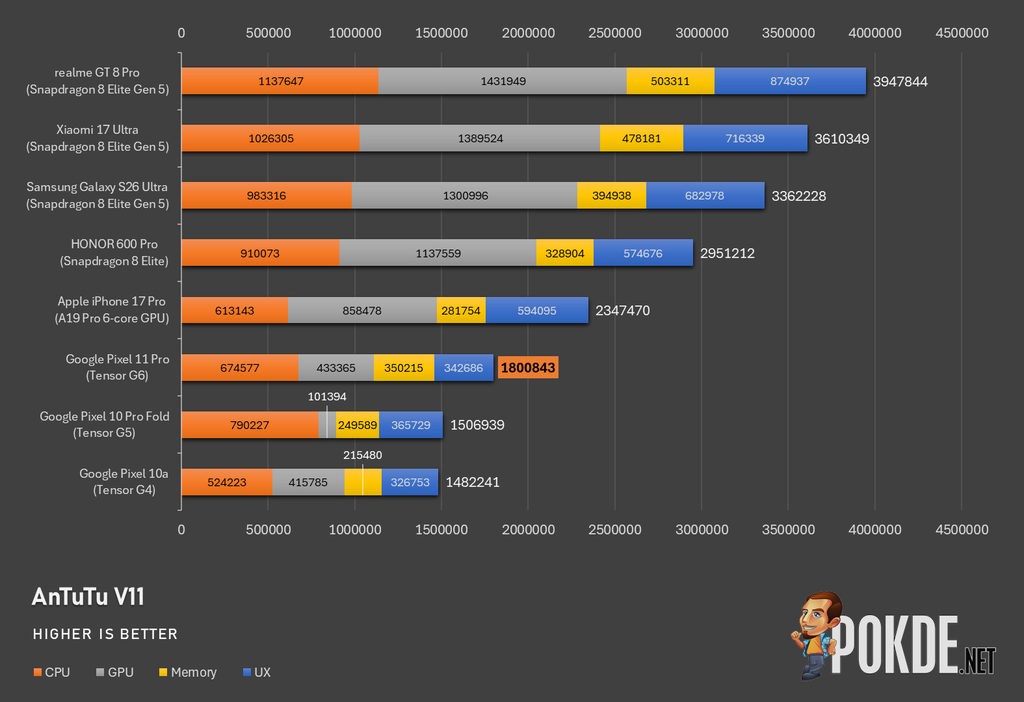
Starting off our benchmark suite with Antutu v11, the Google Pixel 11 Pro did not fare well. It’s certainly a notable improvement over the older Tensor G5 and G4, but the Tensor G6 is still significantly outclassed by Qualcomm’s older flagship, the Snapdragon 8 Elite. It’s not a good start, but let’s see how it fares in other tests first.
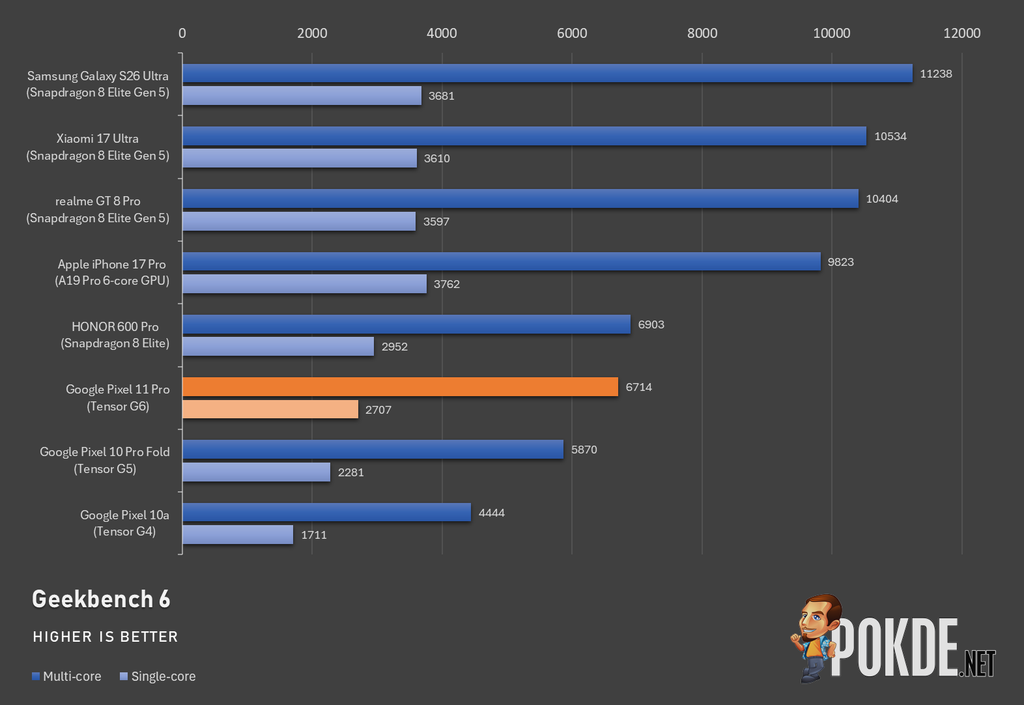
In Geekbench 6, it doesn’t seem as bad as both the single and multi core performances of the Tensor G6 are closer to the Snapdragon 8 Elite. With that being said however, the Snapdragon 8 Elite Gen 5 is practically running circles around it across 3 different smartphone models at least.
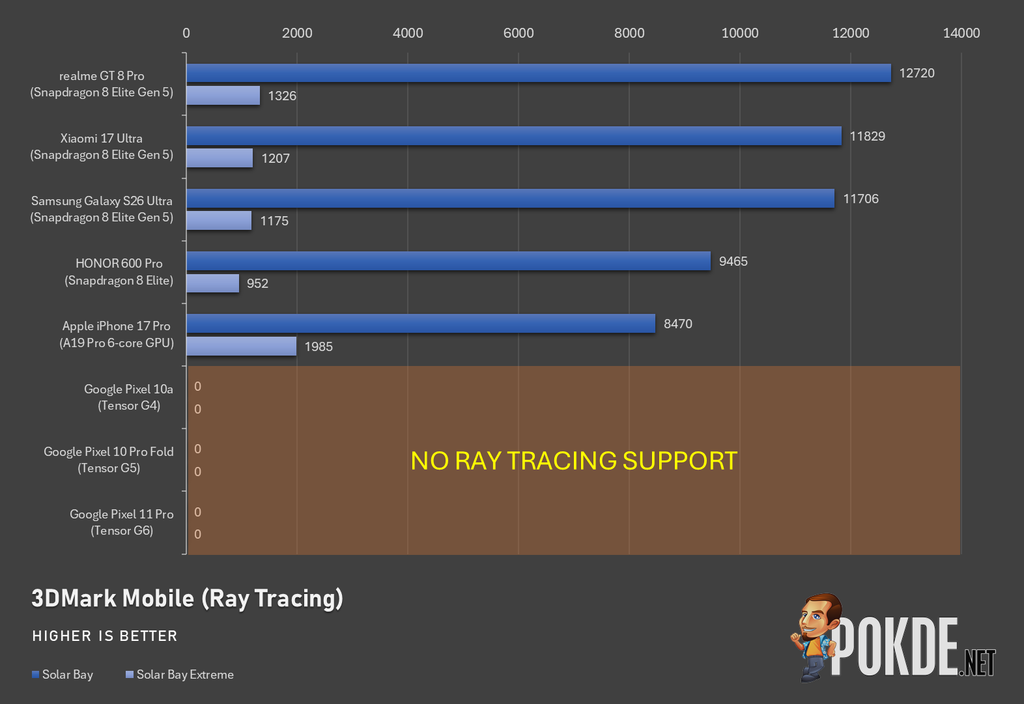
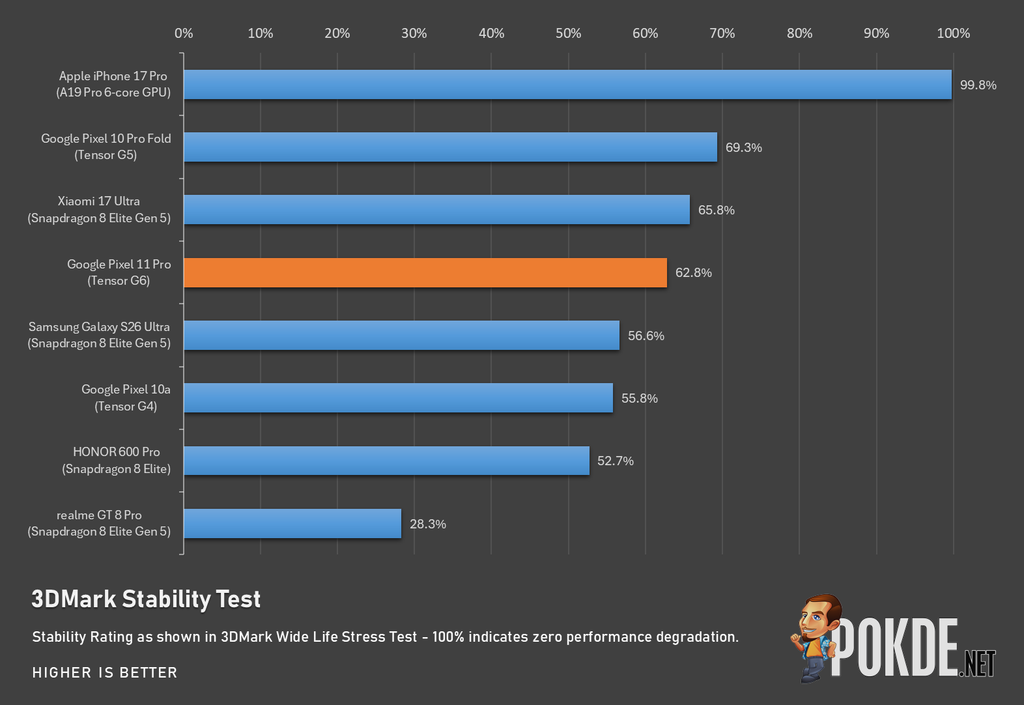
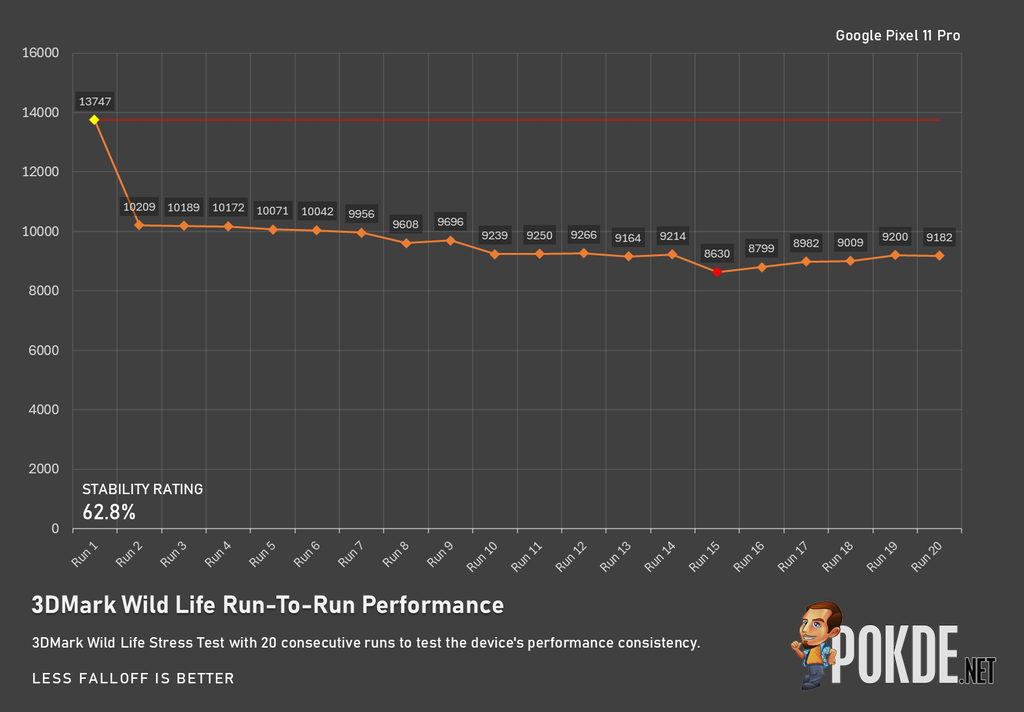
Moving on to 3DMark, we once again see that the Tensor G6 chip isn’t doing too great as it’s lagging behind in 3D performance across all areas. The ray tracing benchmark will not run as the chip isn’t designed to run it, but even if it could, I definitely wouldn’t be expecting much from it. While you might expect that it would be able to excel in efficiency, that’s clearly not the case here as it only has a stability reating of 62.8%, which is a step down from the Tensor G5 as that one nearly touched the 70% mark. In simpler terms, it heats up quite a bit and the Google Pixel 11 Pro is forced to throttle down the performance, and this happens more so than in its predecessor.
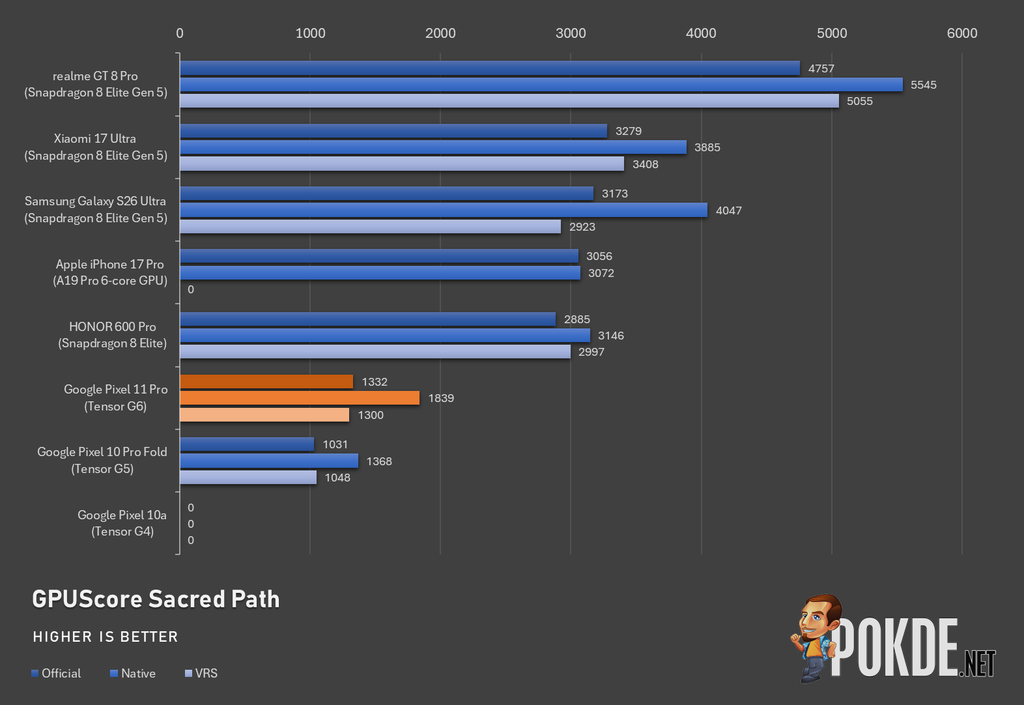
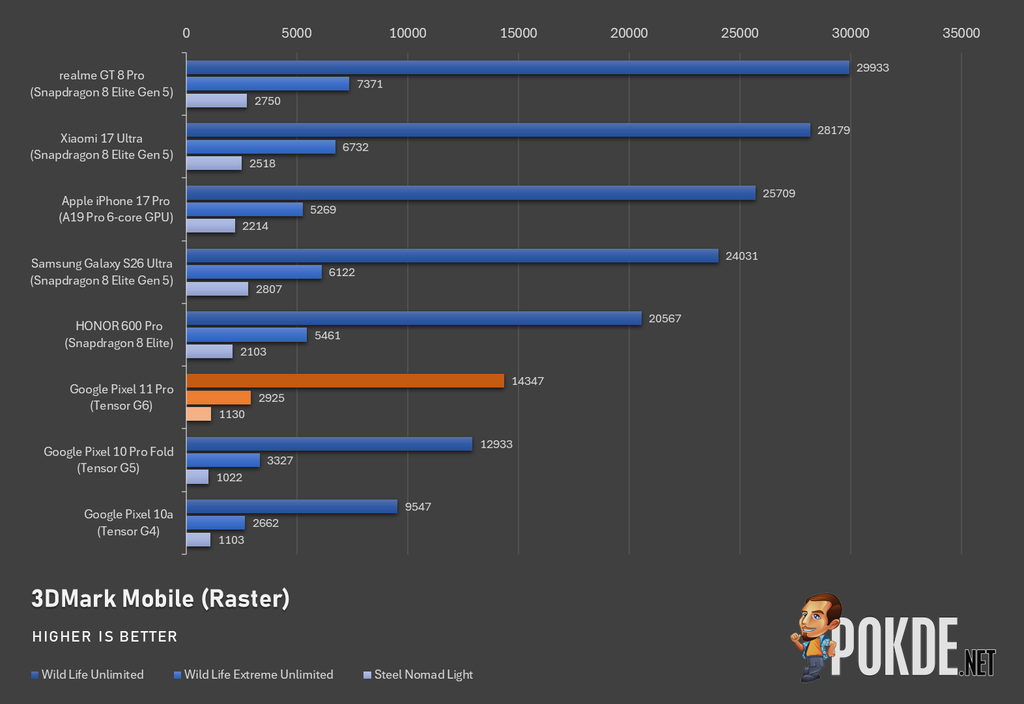
Just in case you thought it was a fluke, the Tensor G6 once again suffers in GPUScore Sacred path, significantly lagging behind Qualcomm and Apple’s own chips across all three tests. The only consolation I can give is that at least it’s an improvement over the Tensor G5, albeit a minor one.
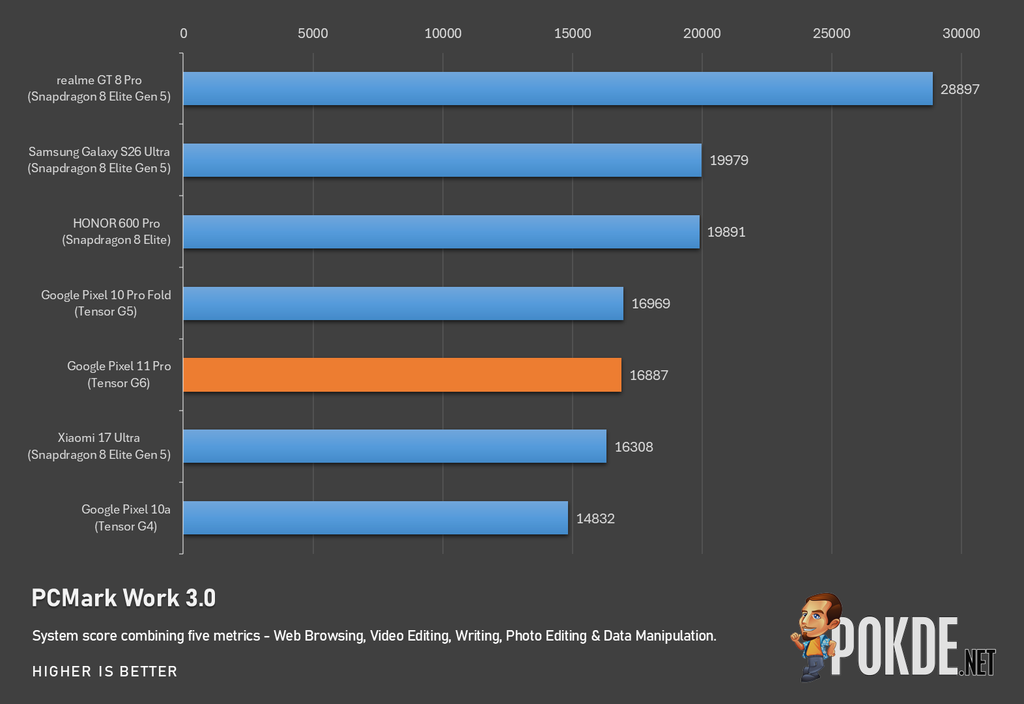
Lastly on PCMark’s Work 3.0 benchmark, it actually performed surprisingly well, outperforming the Xiaomi 17 Ultra even. Sure, there are other devices running the same chip that performed better but I genuinely expected a lower score given what we’ve seen thus far. This points towards the Google Pixel 11 Pro being a solid daily driver.
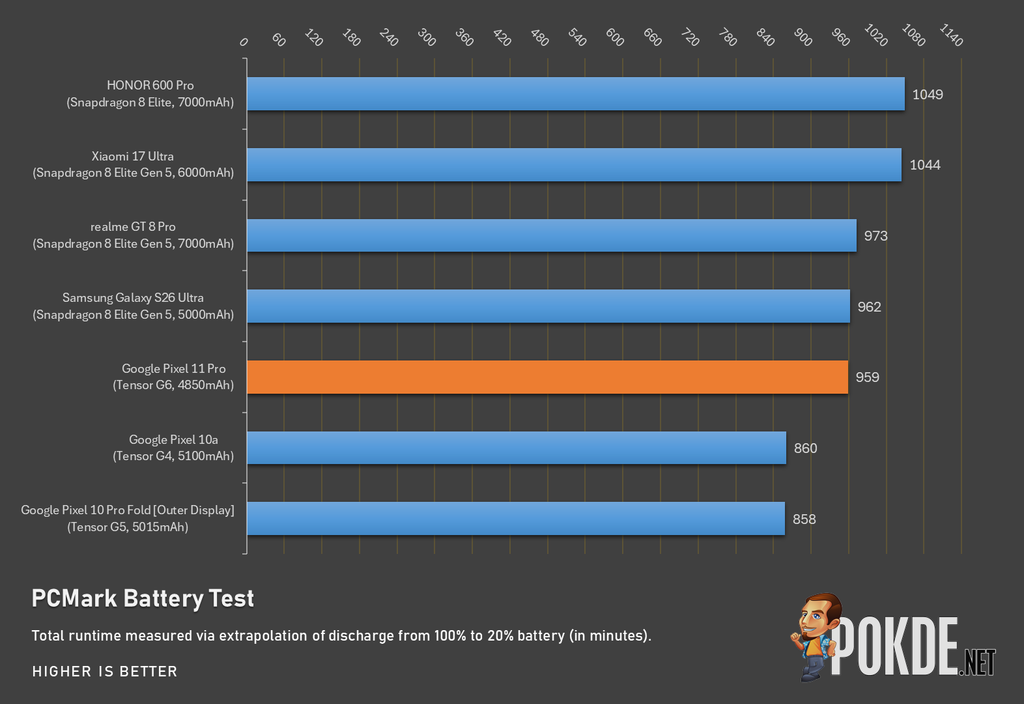
For those of you who are wondering about battery life, the Google Pixel 11 Pro is pretty efficient in this area. It managed to last 15 hours and 59 minutes (959 minutes) in our PCMark endurance test. It’s easy to look at the graph above and think that there are a number of devices that outlasts it but do take note that all the devices shown above it have bigger battery capacities whereas this one only has a 4850 mAh capacity. As for charging speed, here’s what I got using a 100W GaN charger starting from 2% battery life:
- 15 minutes = 31%
- 30 minutes = 60%
- Full charge = 1 hour 18 minutes
It’s worth noting that the charging was done with Extreme Charging mode enabled. Without it, a full charge from very low levels will take nearly 2 hours. Do keep in mind that you will need to toggle Extreme Charging mode manually, and it’s not something that will be toggled automatically.
Camera


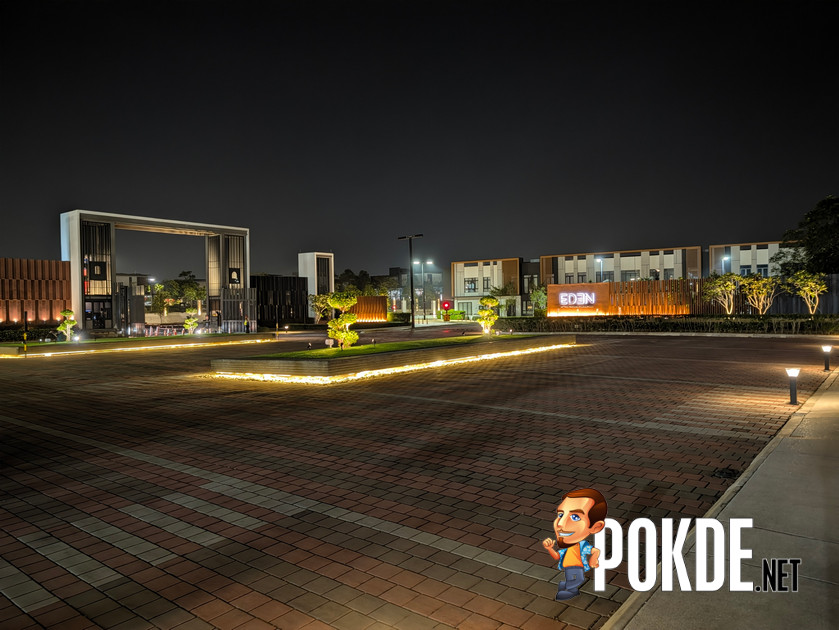
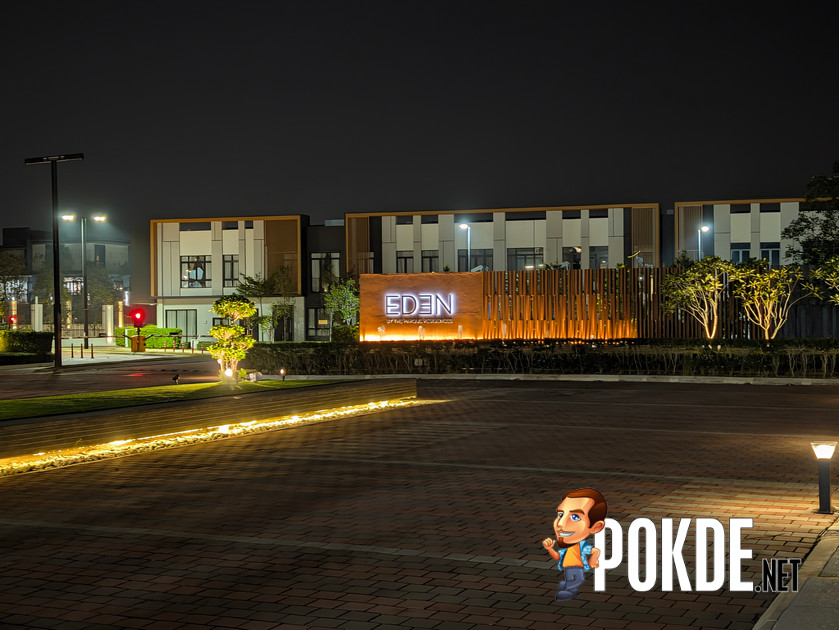
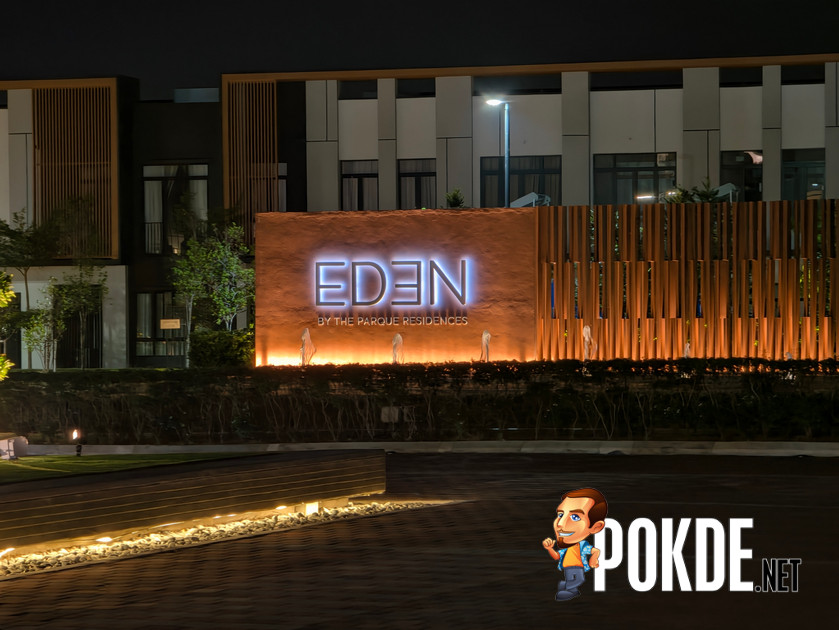
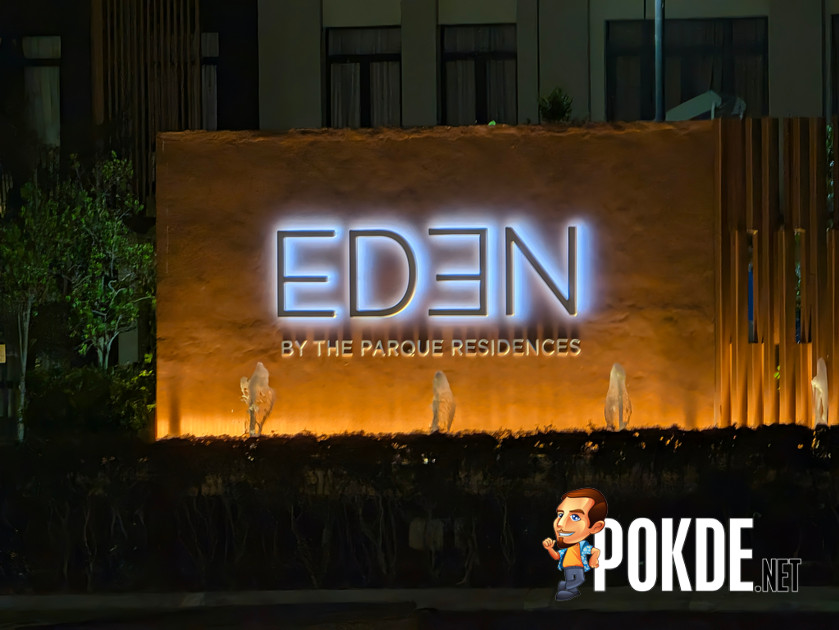
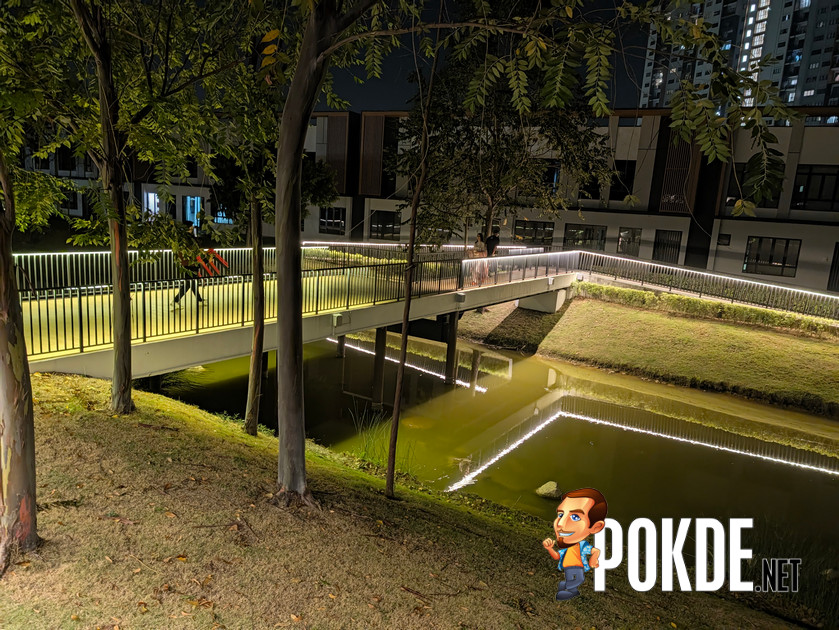
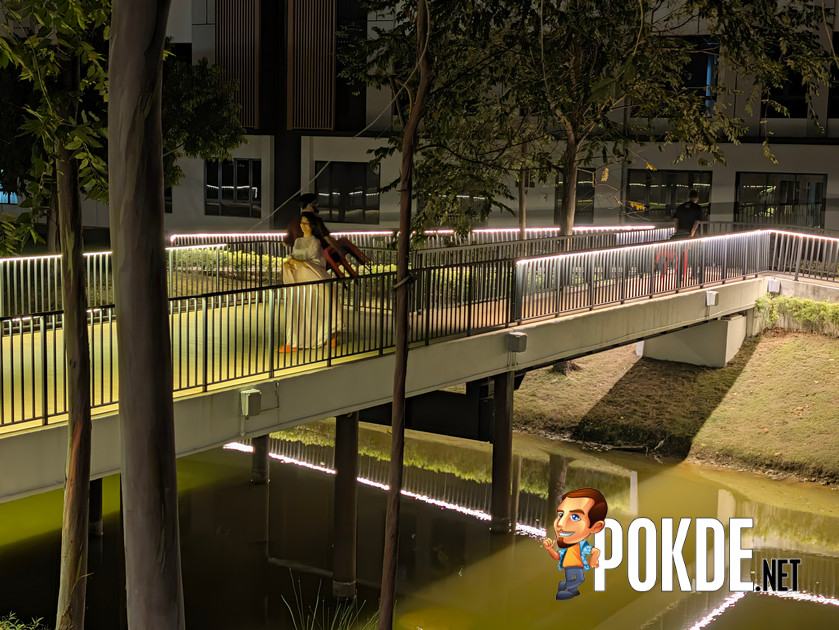
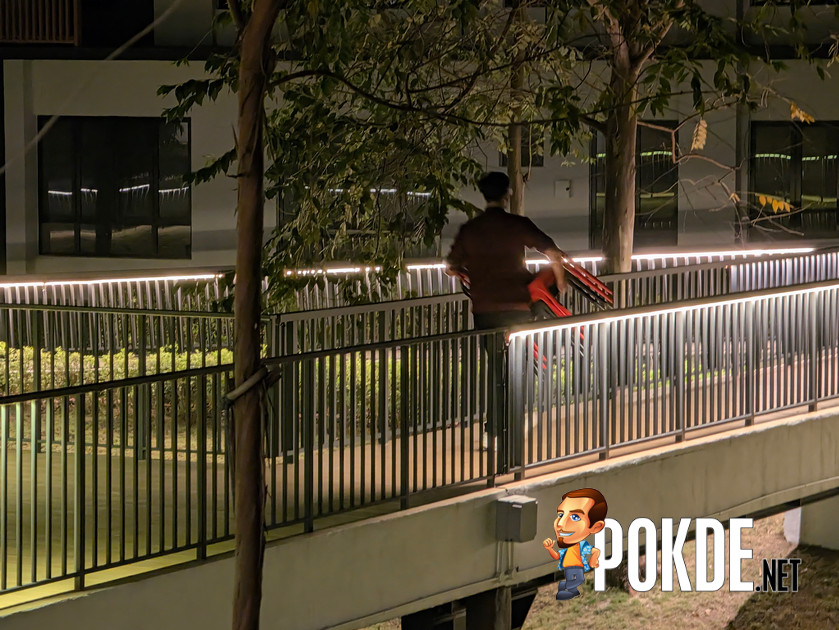
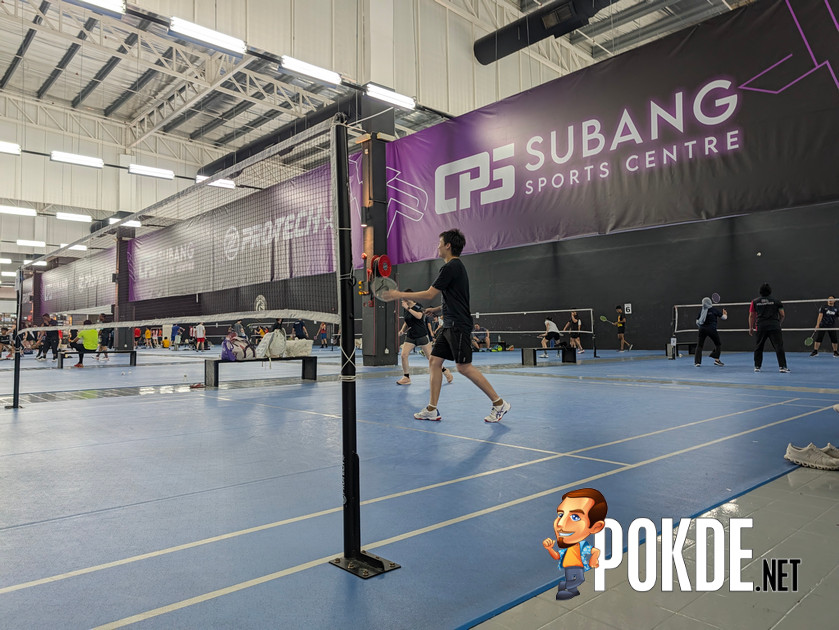
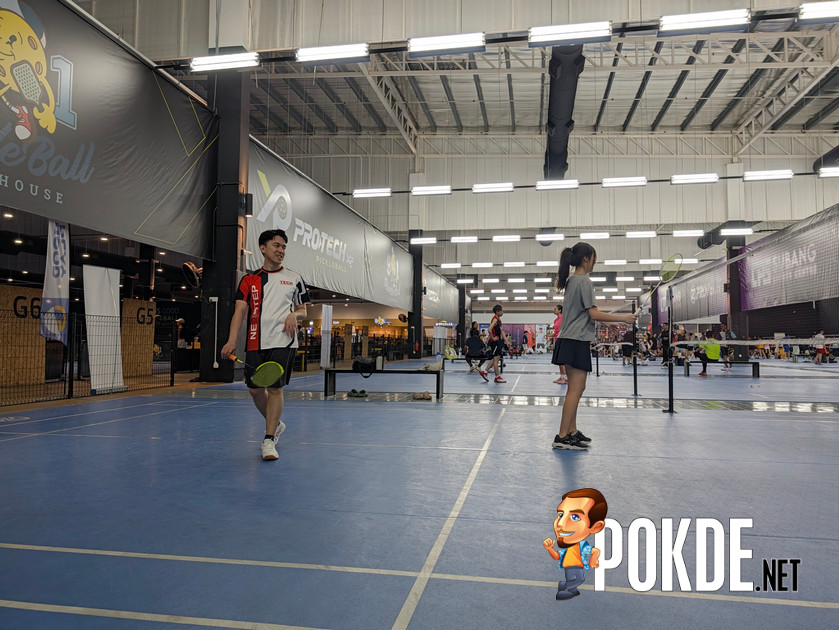













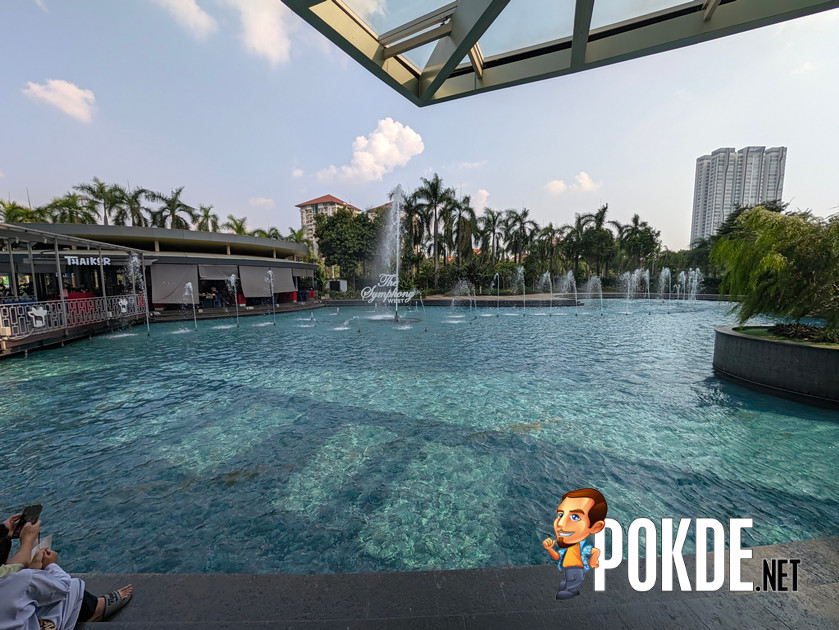
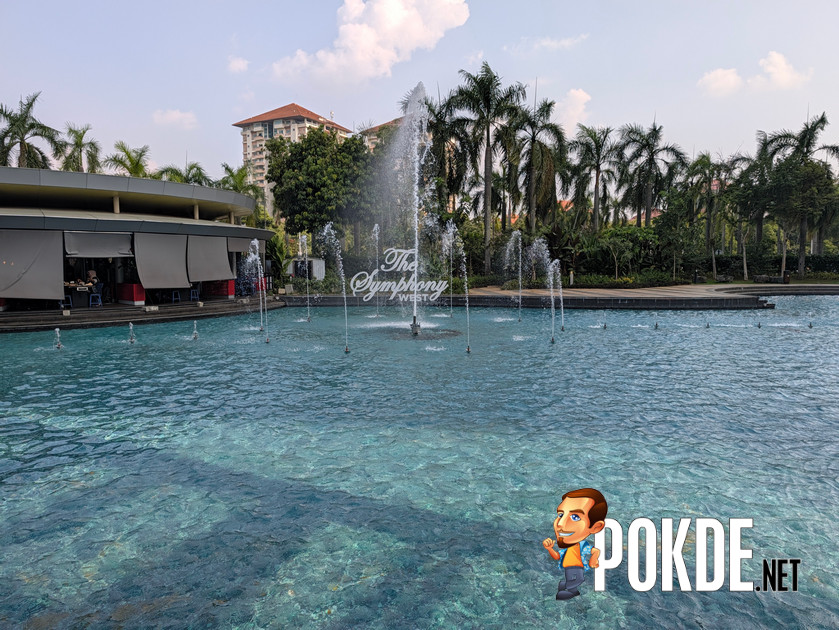


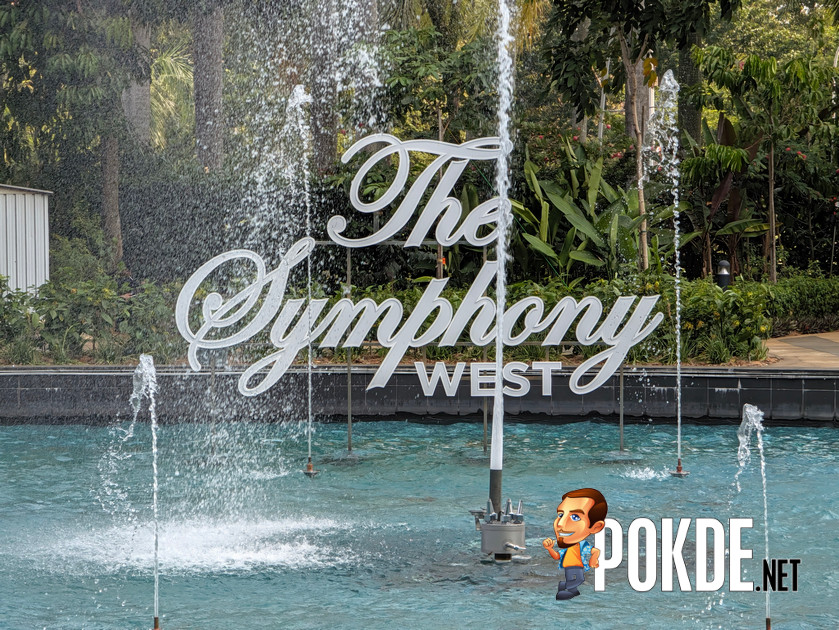
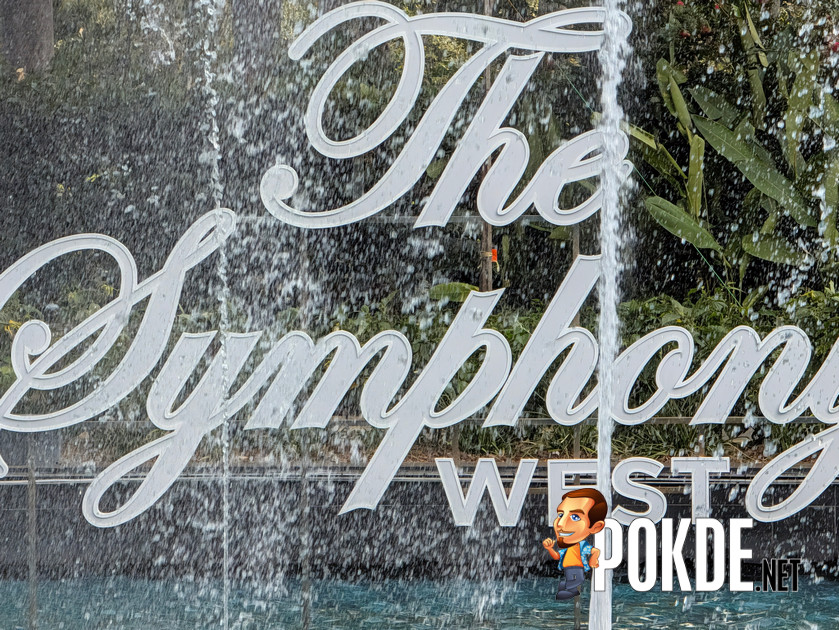
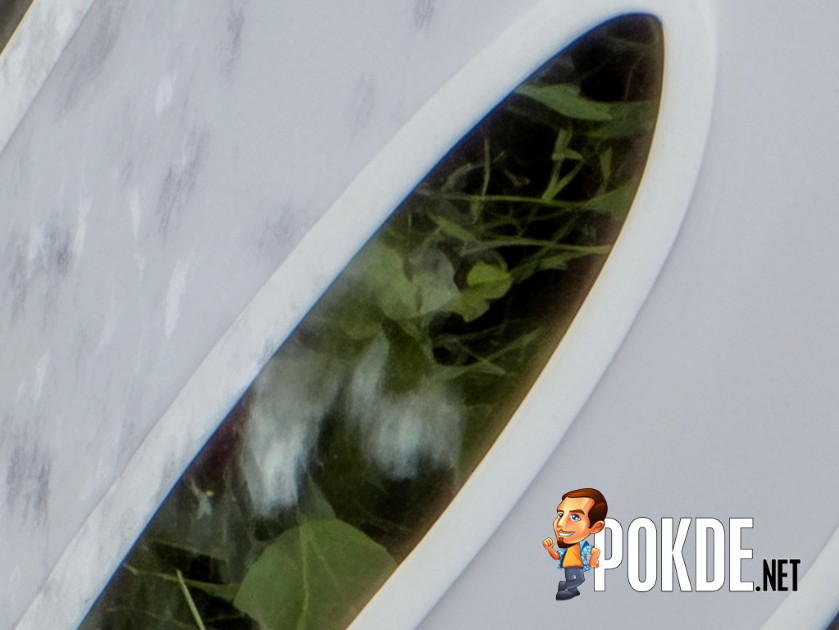
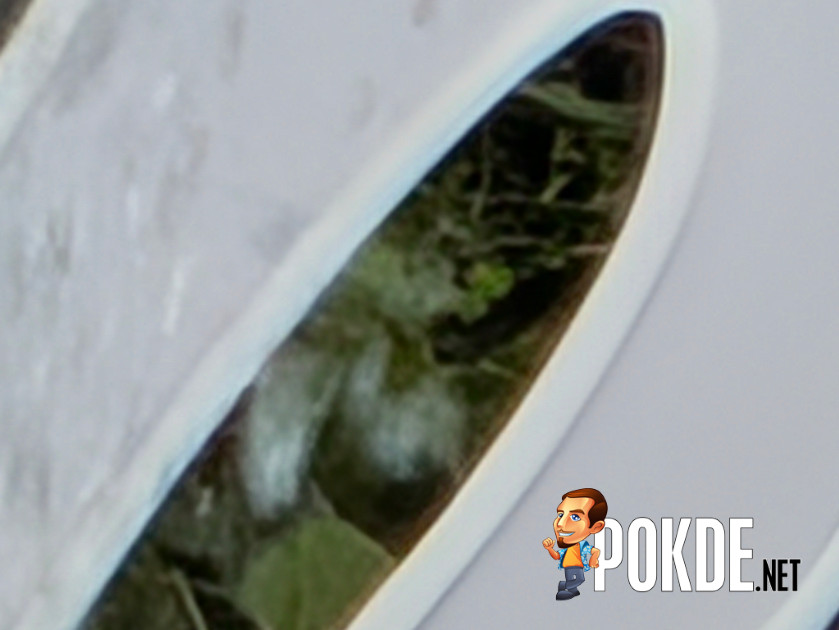














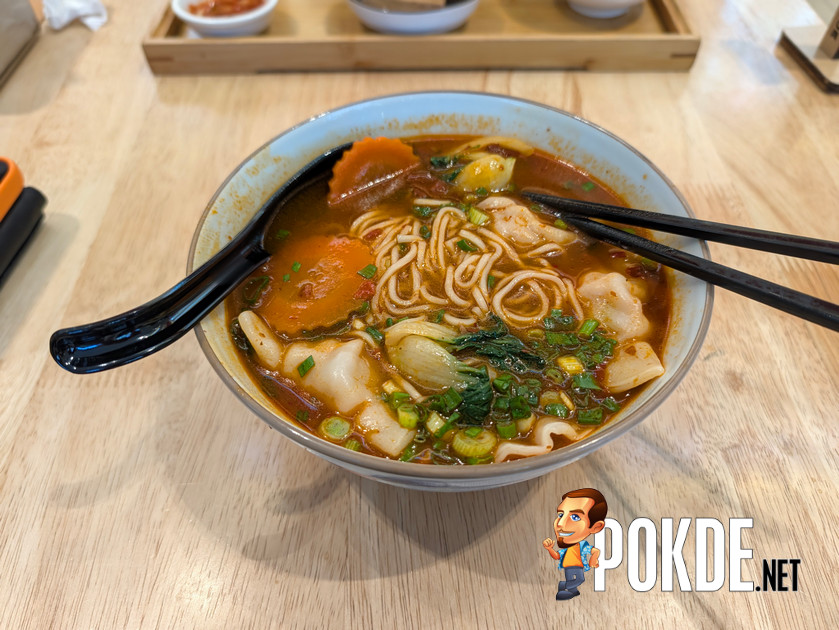
The Pixel 11 Pro’s camera system remains one of its strongest selling points, even if it is no longer the outright leader in mobile photography. The triple rear camera comprises a 50MP main, 48MP ultrawide, and 48MP telephoto, supported by a 42MP autofocus front camera. The hardware specifications are similar to last year, but the upgraded ISP in the Tensor G6 and the 50% more powerful TPU bring meaningful improvements to processing speed and computational photography.
The main camera produces reliably excellent results. Photos are fast to capture, colors are vivid and well-managed, detail in well-lit scenes is impressive, and the camera rarely misses a usable shot. Low-light performance via Night Sight has been improved with a new Instant Night Sight mode that removes most of the processing wait, though this is limited to 12MP stills at 10x zoom and below. The results are consistently good, with strong light pulling and detail retention.
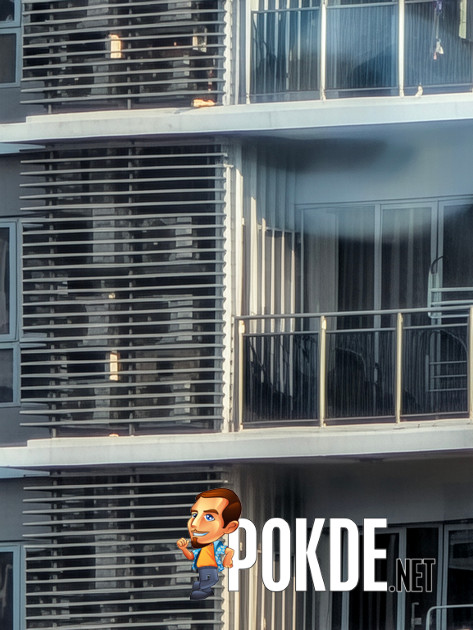
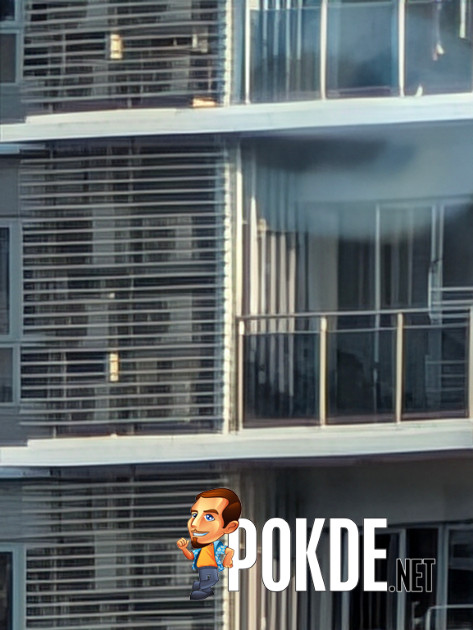
The 5x, 10x, and even 30x zoom focal lengths deliver versatile and genuinely useful results with consistent color rendering between them. The newly introduced 120x Pro Zoom is a different matter. Google achieves this through a combination of the telephoto sensor and on-device AI model processing, which means the output is partially generated rather than purely captured. On stationary subjects with strong contrast such plants or architecture, it can produce surprisingly sharp results. On people or animals the output becomes unrealistically smooth and cartoon-like. It is a technically impressive demonstration that I would not rely on for anything I actually want to keep.
A welcome addition is the customisable camera Looks feature, which lets you adjust the entire image pipeline rather than just applying a filter. The four options, Original, Natural, Shadows, and Vanilla, give meaningful control over the final color and contrast character of your images. Creator Suite adds a teleprompter overlay for video recording, which is a niche but genuinely useful tool for anyone who records directly to camera.
Magic Capture, which uses Gemini to automatically take photos and video on your behalf, produced consistently weaker results than simply shooting manually in my testing. The premise is useful for spontaneous moments, but the execution does not yet inspire enough confidence to risk missing the shot you actually want.
The Good
One of the Only Compact Android Flagships Worth Buying
At 6.3 inches, the Google Pixel 11 Pro occupies a market position that very few Android manufacturers are serving with a full flagship feature set in 2026. For anyone who wants proper flagship hardware without a 6.7-inch display or larger, the options are genuinely limited, and the Pixel 11 Pro fills that gap more convincingly than any competitor. This is of course under the assumption that it’s capable of doing what you need to do, but I’ll save that part for later.
Design and Color Execution Are Excellent
Google has produced some of its best color options this year, and the physical design of the standard Pixel 11 Pro feels better suited to its compact dimensions than the larger Pro XL. The soft rounded sides, flat back, and matte texture in certain colorways combine into a phone that is genuinely pleasant to hold and carry. The 204g weight is well-managed for the feature set on offer.
Gemini Software Integration Adds Genuine Utility for Malaysian Users
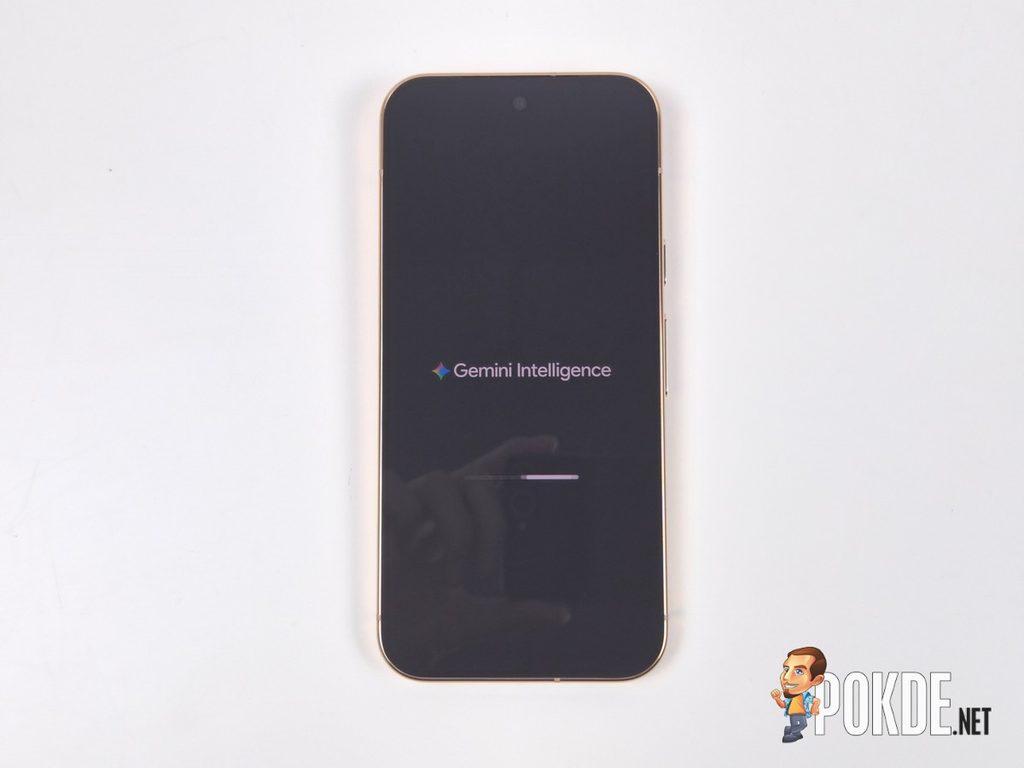
In Malaysia, several of the most useful Gemini features are fully available, including Proactive Assistant, which reads your screen context and surfaces relevant suggestions around restaurant menus, travel bookings, and calendar events. Rambler, which intelligently cleans up voice dictation by removing corrections and filler words, is one of the most practically useful AI features I have used on a phone. Gemini’s ability to read app screens and respond to contextual queries within third-party apps like messaging platforms also adds real daily utility once you build the habit of using it.
7 Years of Software Support
7 years of OS updates, Pixel Drops, and security patches remains one of the strongest long-term software commitments on any Android phone, and it meaningfully strengthens the value proposition of a phone at this price point. Buying a Pixel means the software will remain current and secure well beyond the useful life of most competing devices.
PixelSnap and Qi 2.2 Wireless Charging
The inclusion of magnets for PixelSnap wireless charging and full Qi 2.2 compatibility makes the Pixel 11 Pro one of a very small number of Android phones that can use MagSafe accessories natively. For anyone already invested in a MagSafe ecosystem of chargers, cases, and mounts, this compatibility is a meaningful practical advantage.
Display Quality Is Excellent for the Size
The 6.3-inch OLED panel with a peak brightness of 3,600 nits is bright, vivid, and handles direct sunlight well. HDR content looks impressive, and the adaptive refresh rate between 1Hz and 120Hz keeps the display smooth during scrolling and efficient during static use. The improved anti-scratch coating adds a layer of practical durability confidence for everyday carry.
The Bad
GPU Performance Is Genuinely Poor for This Price
The Tensor G6’s GPU is one of the most significant weaknesses of the Pixel 11 Pro. Demanding games run poorly or not at all at acceptable settings, and paired with the thermal behaviour that sees the phone warming up during sustained heavy workloads, gaming is a use case this phone simply cannot support. At RM5,599 for the 512GB model, this is a meaningful limitation that buyers should understand clearly before purchasing.
The Base Model Gets Less RAM Than Its Predecessor
The RM4,999 256GB variant ships with 12GB of RAM, a step down from the 16GB that the Pixel 10 Pro offered as standard. Given the growing demand that on-device Gemini processing places on RAM, this is a genuine regression on the entry-level model. Buyers who want 16GB need to commit to the RM5,599 512GB model at minimum.
HiLight Is a Gimmick in Its Current Form
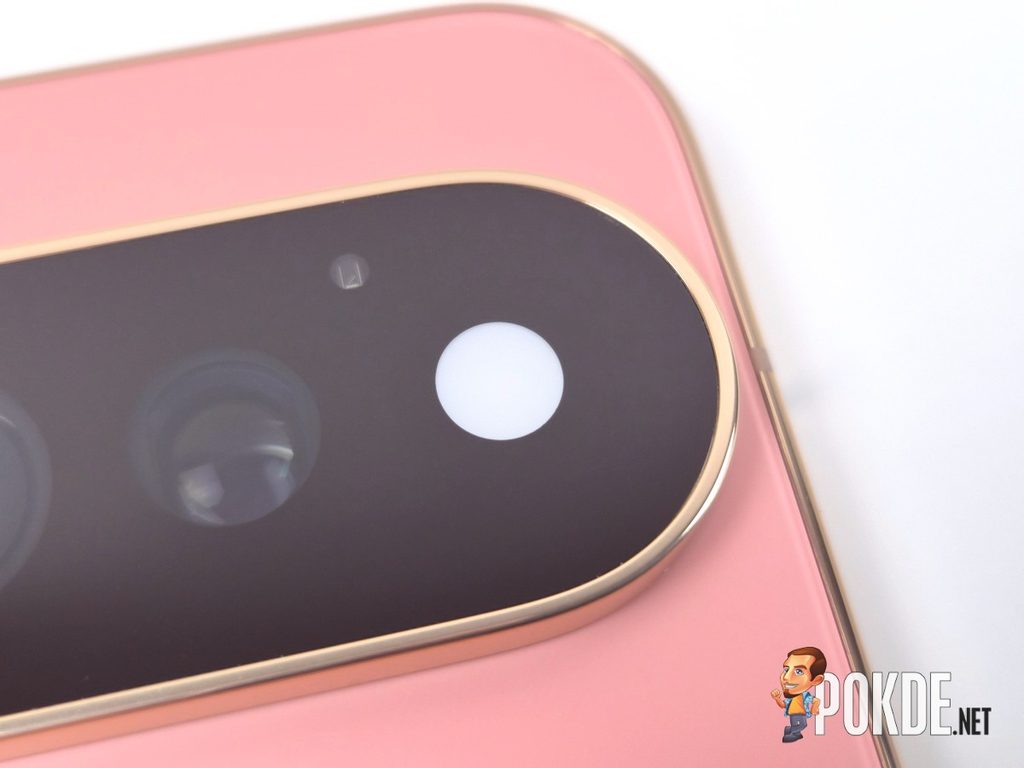
The rear notification LED turns blue during Gemini interactions and flashes during calls. It has no third-party app support, no recording indicator, and no meaningful customisation. It requires the phone to be face-down to be visible. As currently implemented, it adds nothing of practical value and should not be a feature that features in any serious marketing material for the Pixel 11 Pro series.
Some AI Features Still Feel Immature
Magic Capture consistently produced weaker results than manual shooting in testing. The writing tools and AI-generated image and video creation features produce output that feels unnatural and generic. Magic Cue, which is supposed to surface useful contextual suggestions, was largely unnoticeable during daily use despite being enabled. The ratio of genuinely useful AI features to features that sound good in marketing is still not as favourable as it should be at this price point.
Google Pixel 11 Pro Verdict
The Google Pixel 11 Pro is a phone that knows exactly what it is trying to be, and succeeds at some of it more convincingly than others. As a compact Android flagship with a reliable and versatile camera system, excellent Gemini software integration, a genuinely premium design, and 7 years of software support, it makes a strong case for a specific kind of buyer.
But the Tensor G6’s GPU weakness is not a minor caveat, it is a fundamental limitation that rules out gaming entirely and causes thermal discomfort during other sustained heavy workloads. Charging speeds that trail the competition by a significant margin, a base model that actually delivers less RAM than last year for a higher price, and a HiLight feature that adds nothing of value are all frustrations that sting more at RM5,599 than they would at a lower price point.
If you are an Android user who prioritises software quality, camera reliability, compact size, and AI utility over raw performance and gaming, the Google Pixel 11 Pro remains the most coherent choice in its size category. For everyone else, the compromises are real enough that the Pixel 10 Pro at a reduced price may represent the more honest recommendation. As such, we award the Google Pixel 11 Pro with our Bronze Pokdeward.

Big thanks to Google Malaysia for sending us this flagship smartphone for the purpose of this review.