
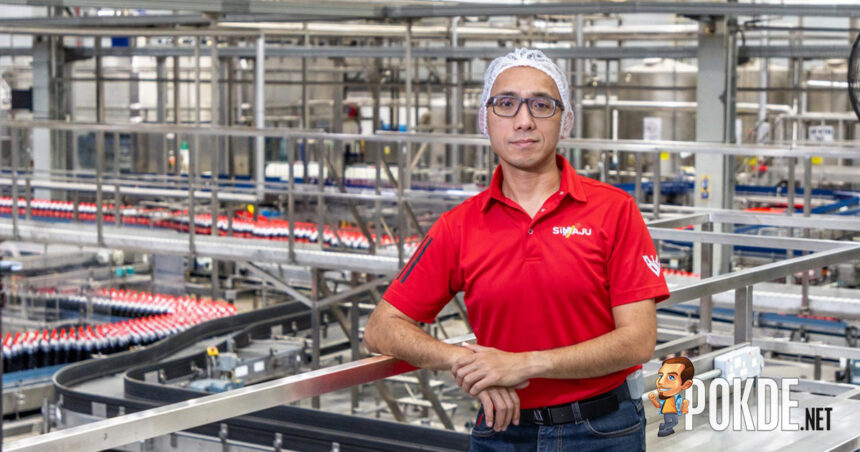
Hatta Idris, Head of Manufacturing at Coca-Cola Beverages Malaysia, Singapore and Brunei, has outlined the company’s approach to manufacturing under Malaysia’s New Industrial Master Plan 2030 (NIMP 2030), emphasizing that workforce capability development is as critical as technology adoption in achieving the plan’s goals.
Coca-Cola: People Remain Key To NIMP 2030 Plans
Idris said Malaysia’s manufacturing sector faces a challenge beyond adopting new technology, noting that manufacturers need the people, capabilities, and operating models to translate technology investments into lasting results. He said automation and data have improved productivity and quality across factories over the past decade, but that these tools alone no longer serve as a defining competitive advantage.
“The manufacturers that stand out are those that integrate technology into the way they work, develop their people alongside it and continue improving their operations over time,” Idris said, adding that a common misconception is that technology replaces workers, when it instead changes what is expected of them.
He said the modern manufacturing workforce is increasingly expected to interpret data, solve problems, and make faster decisions on the production floor, rather than solely operate machinery. “Buying new technology is often the easiest part,” he said. “The harder work begins afterwards, when organizations need to build the skills, processes and mindset to make that technology part of everyday operations.”

Idris pointed to the company’s experience over the past 15 years at its Bandar Enstek manufacturing and distribution hub in Negeri Sembilan, describing an Automated Storage and Retrieval System (ASRS) introduced at the facility as the first high-throughput, high-density system of its kind within Coca-Cola in Southeast Asia. He said the system has shifted workers’ focus toward system optimization and data analysis rather than manual warehouse operations.
The company has also adopted Power BI as an integrated reporting platform, consolidating production, maintenance, quality, and utility data into a single system. Idris said this has allowed teams to monitor plant performance in real time and make faster, data-driven decisions, while improving collaboration across departments.
Reduced Electricity Use Through Operational Improvements

Idris said sustainability outcomes have increasingly resulted from operational efficiency improvements rather than standalone initiatives. He said the company reduced electricity consumption by approximately 66,000 kWh per month while maintaining production performance, through engineering optimization projects involving air handling units, compressors, and chiller systems.



He added that onsite solar generation currently supplies around 30% of the plant’s electricity demand, which he said demonstrates how operational improvements can support both competitiveness and reduced environmental impact.
Idris said achieving the goals set out under NIMP 2030 will require continued investment from industry and government, along with closer collaboration with education institutions to align workforce skills with the evolving needs of the manufacturing sector. “The businesses that succeed will not be those with the most advanced systems alone,” he said. “They will be those that build the skills, ways of working and culture needed to turn technology into better decisions, stronger operations and sustainable growth.”
Pokdepinion: Idris makes a fair point that technology alone doesn’t guarantee results, but the electricity savings and automation gains cited here are specific to one facility, so it remains to be seen how easily this approach scales across Malaysia’s broader manufacturing base.






![[Updated: Pricing] COROS PACE 4 Pro Now Available With Larger Display And Longer Battery Life - 57](https://cdn.pokde.net/wp-content/uploads/2026/10/14185816/corospace4procover-330x220.jpg "[Updated: Pricing] COROS PACE 4 Pro Now Available With Larger Display And Longer Battery Life - 58")