
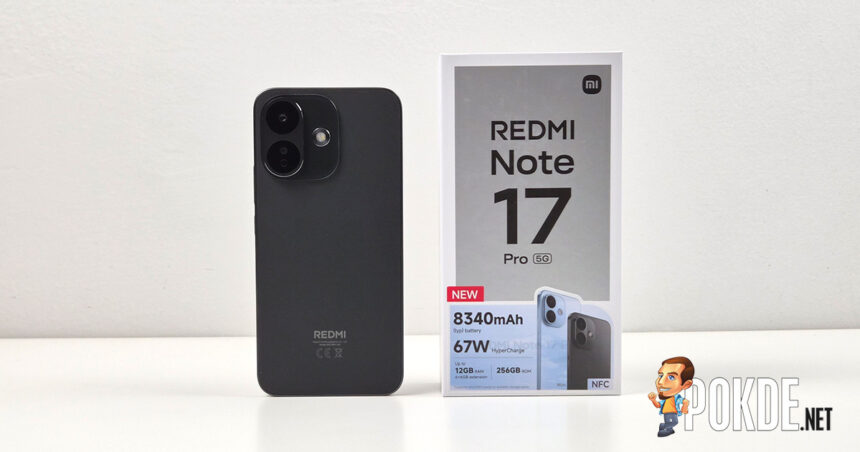
Earlier this month we have reviewed REDMI’s new Note 17 Pro Max smartphone, and not long after that we’re given the chance to look at its sibling model – the REDMI Note 17 Pro. We thought it’d be an opportunity to make this one a bit of a comparison instead of the usual review. Most of our takeaways in the Pro Max review remains applicable to this Pro model, but in this one, we’ll talk about some specific differences and the key things you might want to consider when choosing between the two.
Unboxing & Walkaround
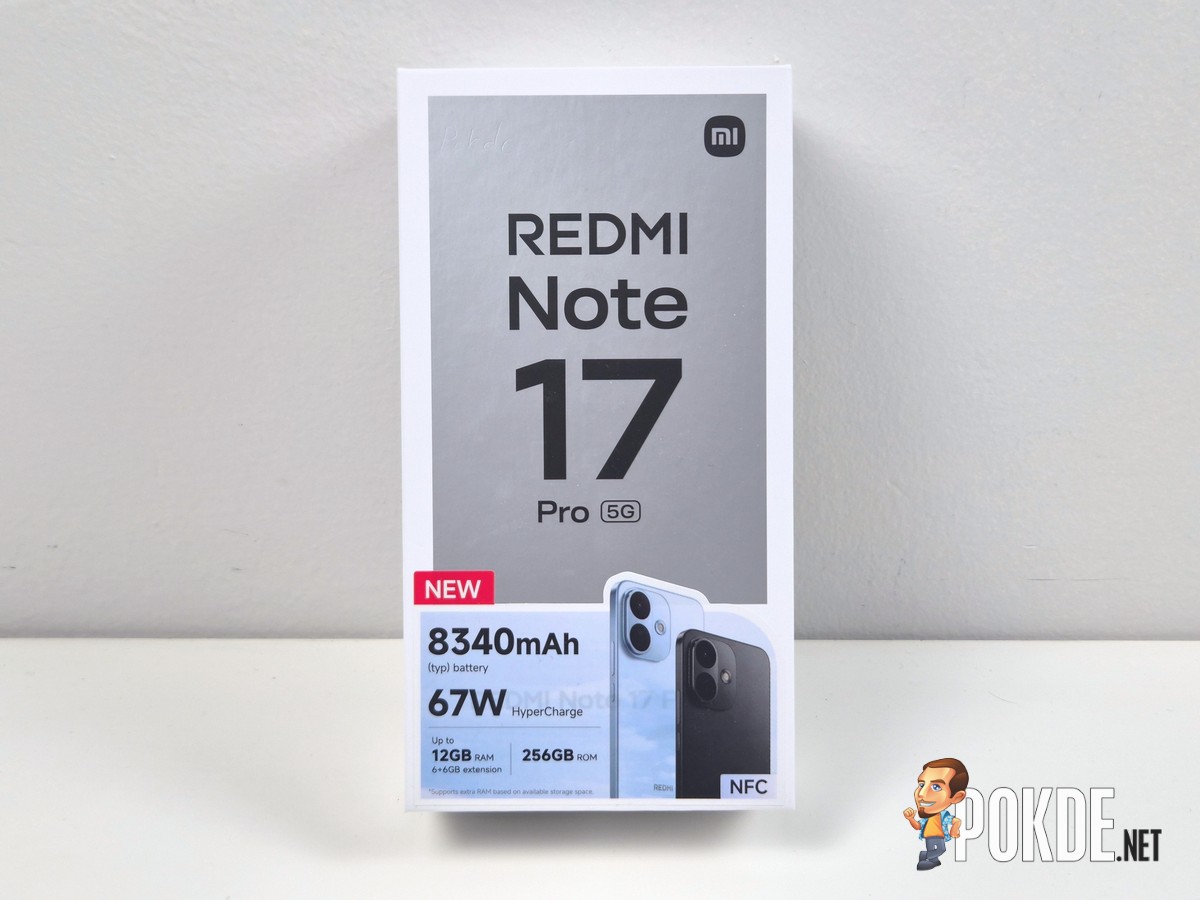
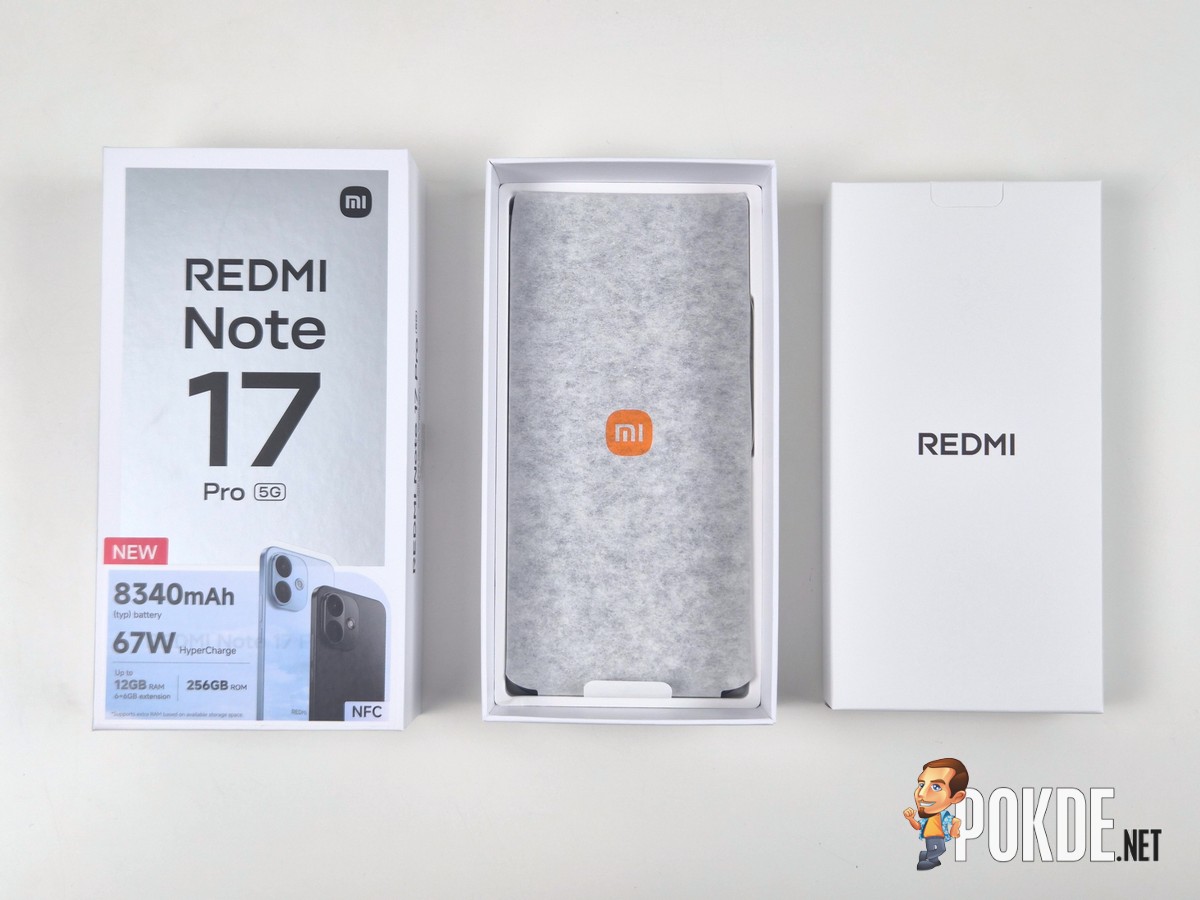
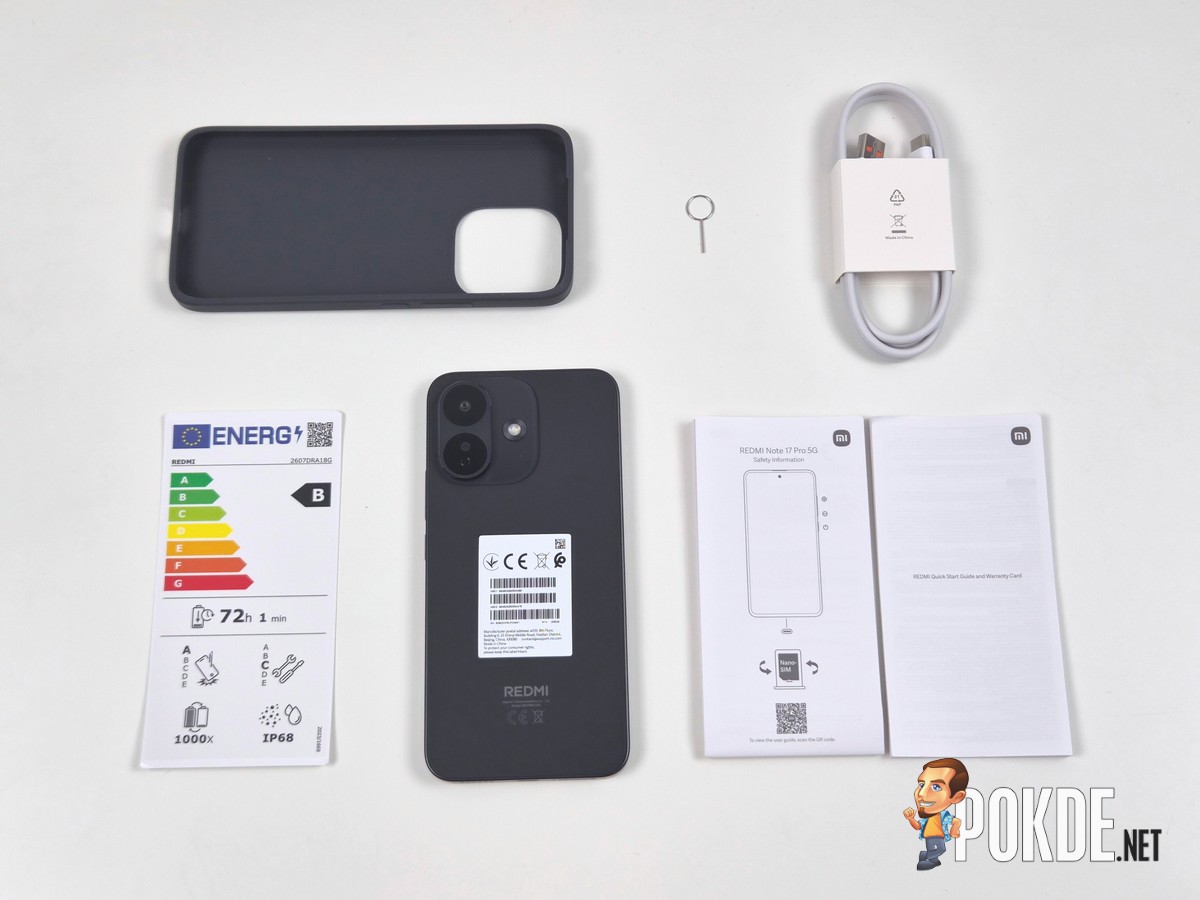
While the box looks the same on the front, there is a big difference between what you get in the Pro Max and the Pro: gone is the wall charger which resulted in a slimmer box overall, so you’ll have to source that yourself; otherwise, the items included are just about the same (ignoring the fact that our review unit is a European model which conveniently comes with a label that lays out key metrics at a glance, such as durability, repairability, battery longevity, and such).
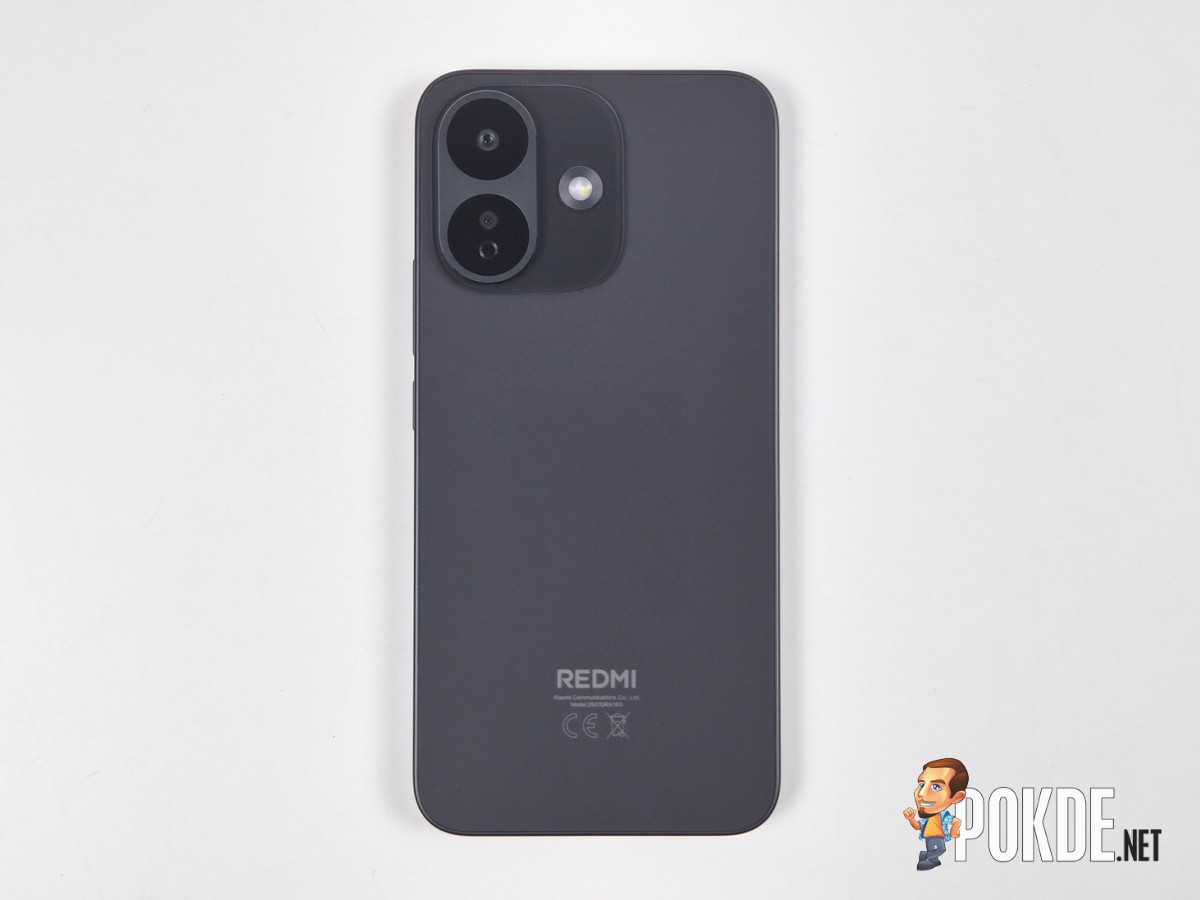
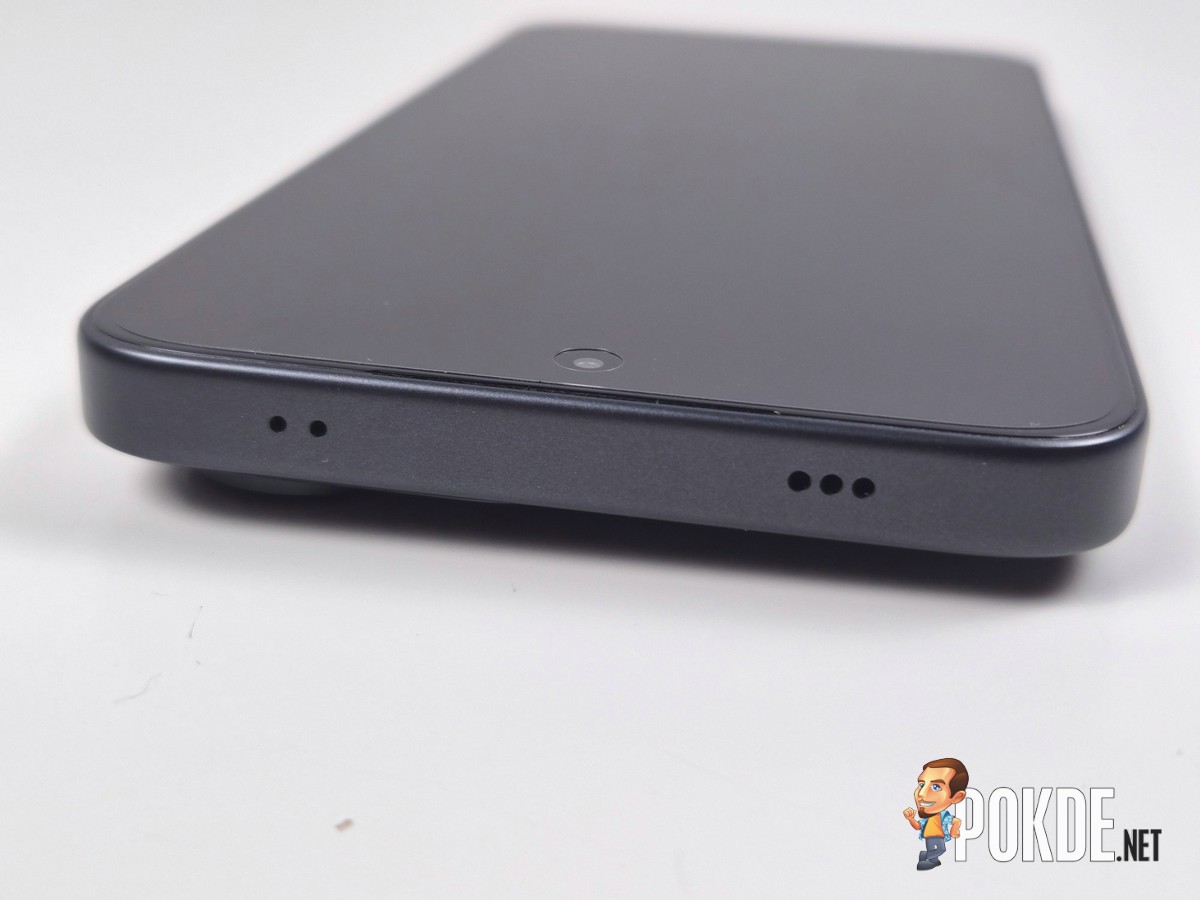
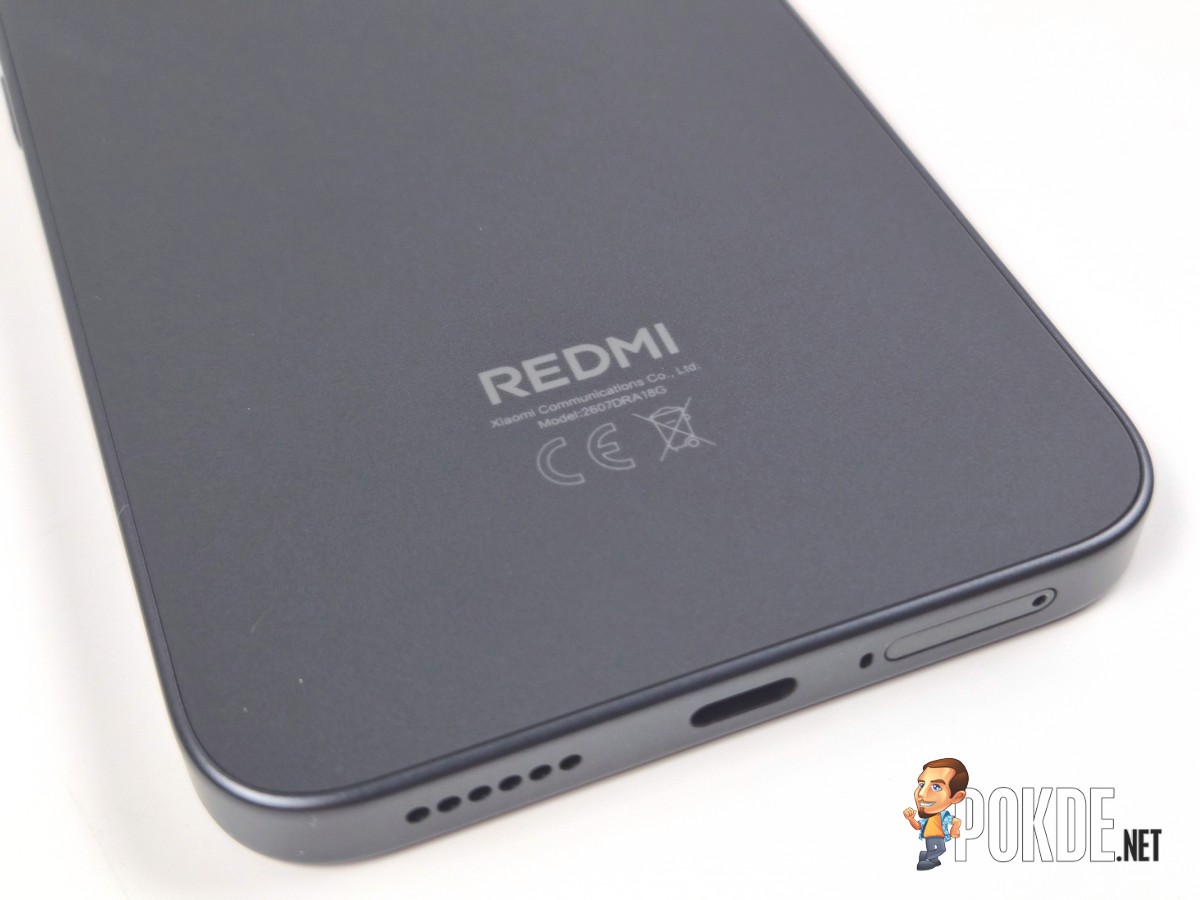
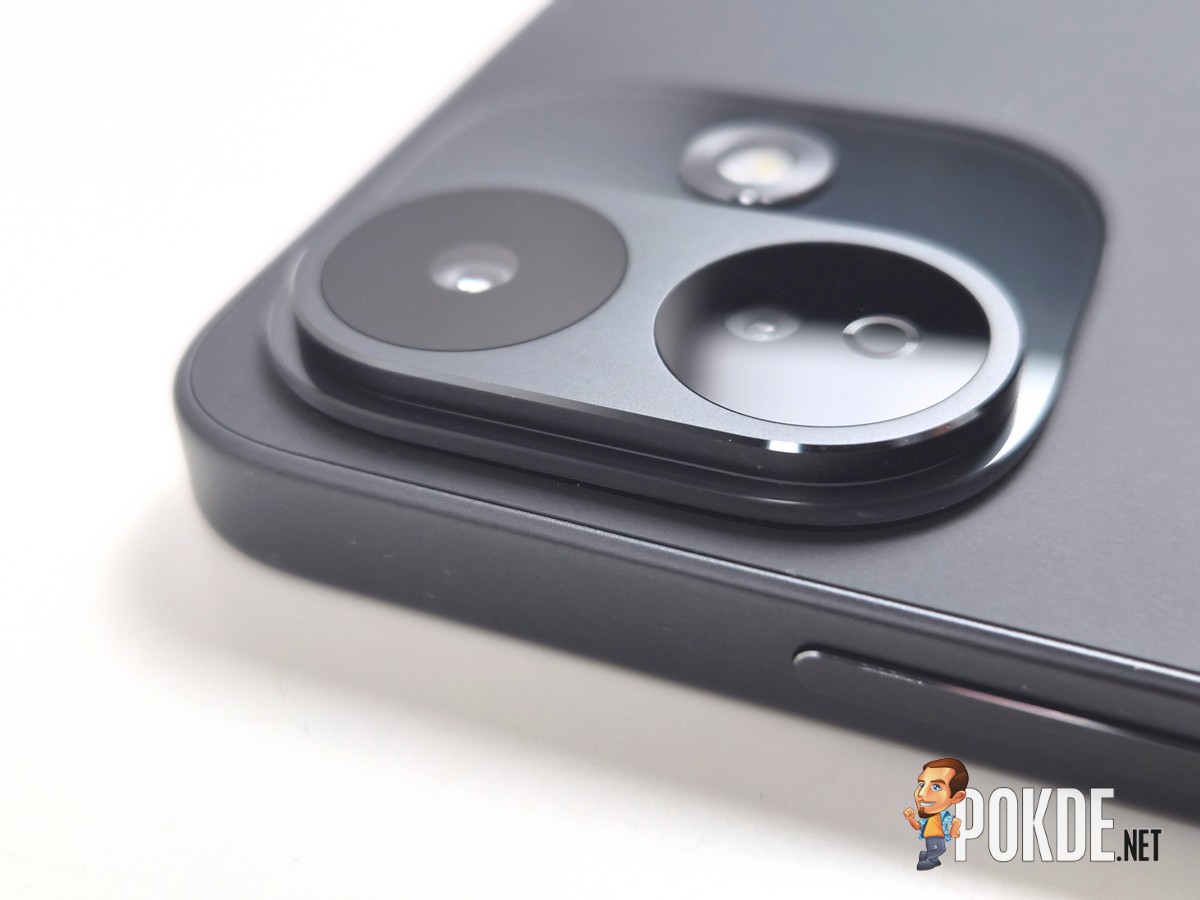
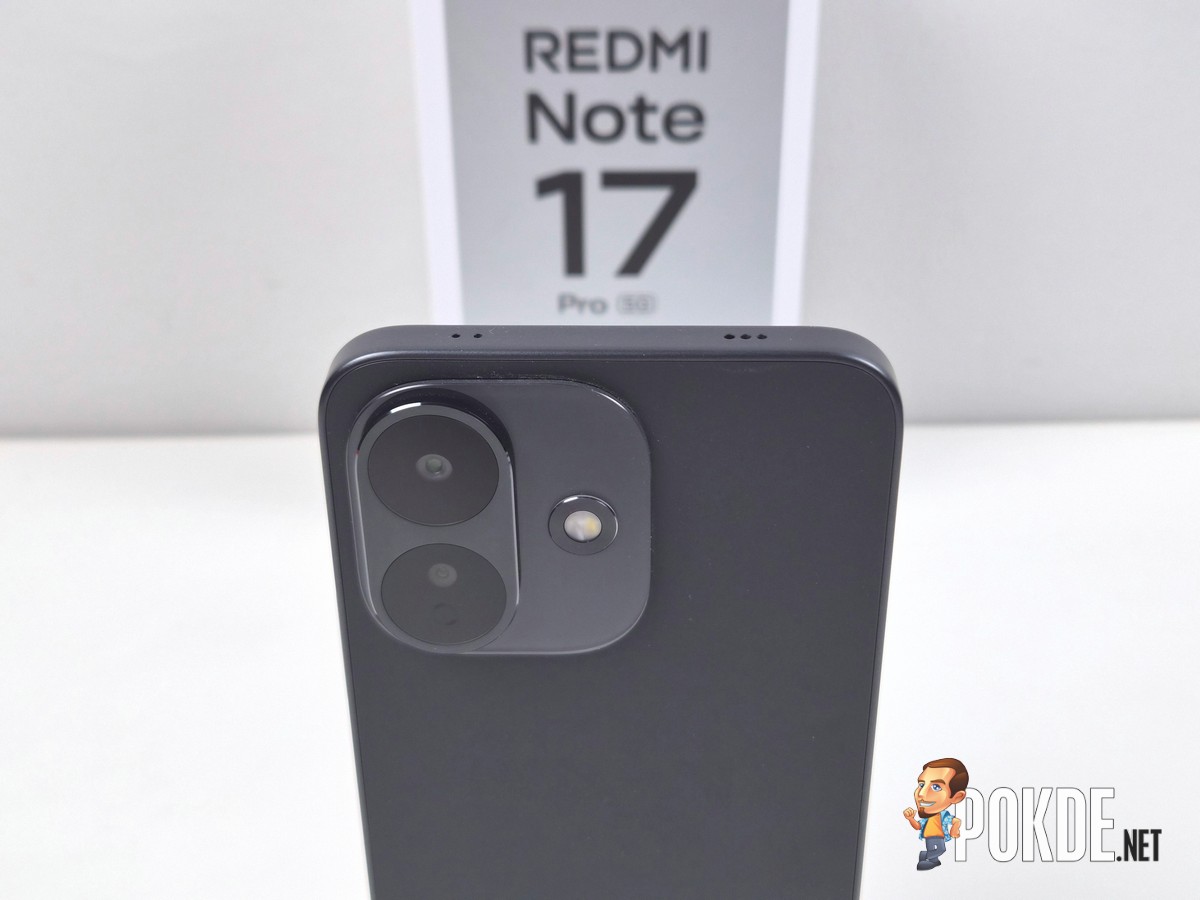
The REDMI Note 17 Pro features a slightly different camera bump on the rear, though the camera hardware is largely the same (with the exception that 50MP sensor is physically smaller than the Pro Max); the LED flash is also repositioned to the middle instead of the top-right corner found in Note 17 Pro Max. The chassis is otherwise virtually identical in size and weight when comparing against each other.
Specifications
Differences are highlighted in underlined text.
| Comparison | REDMI Note 17 Pro Max Official Specs | REDMI Note 17 Pro Official Specs |
|---|---|---|
| Form Factor & Build | Smartphone (candybar) Corning Gorilla Glass Victus 2 front Aluminum alloy frame | |
| Chipset | Qualcomm Snapdragon 6 Gen 5 (4nm, TSMC N4) | Qualcomm Snapdragon 6s Gen 4 (4nm, Samsung 4LPX) |
| CPU | 8-core (4P+4E) Performance: 4x Arm Cortex-A78 @ 2.6GHz Efficiency: 4x Arm Cortex-A55 @ 2.0GHz | 8-core (4P+4E) Performance: 4x Arm Cortex-A78 @ 2.4GHz Efficiency: 4x Arm Cortex-A55 @ 1.8GHz |
| GPU | Qualcomm Adreno 812 (256 ALUs) | Qualcomm Adreno 710 (256 ALUs) |
| NPU | Qualcomm Hexagon NPU + Qualcomm Sensing Hub | Qualcomm Hexagon NPU |
| RAM | 8GB LPDDR5X | 6GB LPDDR4X [As tested] 8GB LPDDR4X |
| Storage | 256GB UFS 4.1 512GB UFS 4.1 *No microSD expansion support | 128GB UFS 2.2 256GB UFS 3.1 [As tested] 512GB UFS 3.1 *No microSD expansion support |
| Display | 6.83″ AMOLED 89.5% screen-to-body ratio 2772×1280 (~19.5:9) 120Hz refresh rate Sampling rates: 240Hz standard, 3200Hz instantaneous Brightness: 3500 nits HDR peak, 2000 nits HBM, 1060 nits full panel 3840Hz PWM dimming + DC dimming support DCI-P3 color gamut 12-bit (68.7B) color depth 447 ppi pixel density Dolby Vision support HDR10+ support TÜV Rheinland Low Blue Light (Hardware Solution) Certified TÜV Rheinland Circadian Friendly Certified TÜV Rheinland Flicker Free Certified | 6.83″ AMOLED 89.5% screen-to-body ratio 2772×1280 (~19.5:9) 120Hz refresh rate Sampling rates: 240Hz standard, 3200Hz instantaneous Brightness: 3500 nits HDR peak, 1060 nits full panel 3840Hz PWM dimming + DC dimming support DCI-P3 color gamut 12-bit (68.7B) color depth 447 ppi pixel density TÜV Rheinland Low Blue Light (Hardware Solution) Certified TÜV Rheinland Circadian Friendly Certified TÜV Rheinland Flicker Free Certified |
| Audio | Dual stereo speakers 400% volume boost mode Dolby Atmos Hi-Res Audio No headphone jack (USB-C only) | |
| Cameras | Rear: Dual-camera – 50MP (26mm wide, 1/1.95″, f/1.5, 90° FOV, PDAF, OIS, 6P lens) – 8MP (15mm ultrawide, 1/4.0″, f/2.2, 120° FOV) Front: Single cut-out camera – 32MP (1/3.6″, f/2.2, 4P lens) | Rear: Dual-camera – 50MP (26mm wide, 1/2.76″, f/1.8, 90° FOV, PDAF, OIS, 6P lens) – 8MP (15mm ultrawide, 1/4.0″, f/2.2, 120° FOV) Front: Single cut-out camera – 16MP (1/2.8″, f/2.4, 5P lens) |
| Biometric sensors | Fingerprint scanner (under-display optical) | |
| Connectivity | Wi-Fi 6 (dual-band 2.4GHz+5GHz) Bluetooth 6.0 NFC IR blaster USB 2.0 Type-C | Wi-Fi 5 (dual-band 2.4GHz+5GHz) Bluetooth 5.1 NFC IR blaster USB 2.0 Type-C |
| Cellular Networks | Dual-standby 2x Nano-SIM / eSIM / mixed 2G: 850/900/1800/1900MHz 3G*: B1/2/4/5/8 4G: B1/2/3/4/5/7/8/12/13/17/18/19/20/26/28/32/38/40/41/42/48/66 5G Sub6: n1/2/3/5/7/8/12/20/26/28/38/40/41/48/66/77/78 5G mmWave: Not supported *3G network has been phased out in Malaysia. | Dual-standby 2x Nano-SIM / Nano-SIM + eSIM 2G: 850/900/1800/1900MHz 3G*: B1/2/4/5/8 4G: B1/2/3/4/5/7/8/12/17/18/19/20/26/28/32/38/40/41/42/48/66 5G Sub6: n1/2/3/5/7/8/12/20/26/28/38/40/41/48/66/77/78 5G mmWave: Not supported *3G network has been phased out in Malaysia. |
| Operating System | Android 16 (Xiaomi HyperOS 3) 4 years OS updates, 6 years security updates | |
| Battery | 10,000mAh silicon-carbon battery* 100W USB-C (PPS) wired charging 27W reverse wired charging *Some regional versions may feature smaller 9210mAh battery | 8,340mAh silicon-carbon battery* 67W USB-C (PPS) wired charging 22.5W reverse wired charging *Some regional versions may feature bigger 9000mAh battery |
| Ingress Protection | IP69K/IP69/IP68/IP66 | |
| Colors | Cloud Blush Purple Black | Sky Blue Purple Black [As tested] |
| Dimensions | 163.44 x 78.27 x 8.65 mm (Purple / Black) 163.44 x 78.27 x 8.57 mm (Cloud Blush) | 163.45 x 78.27 x 8.6 mm |
| Weight | 229.5g | 223g |
Performance
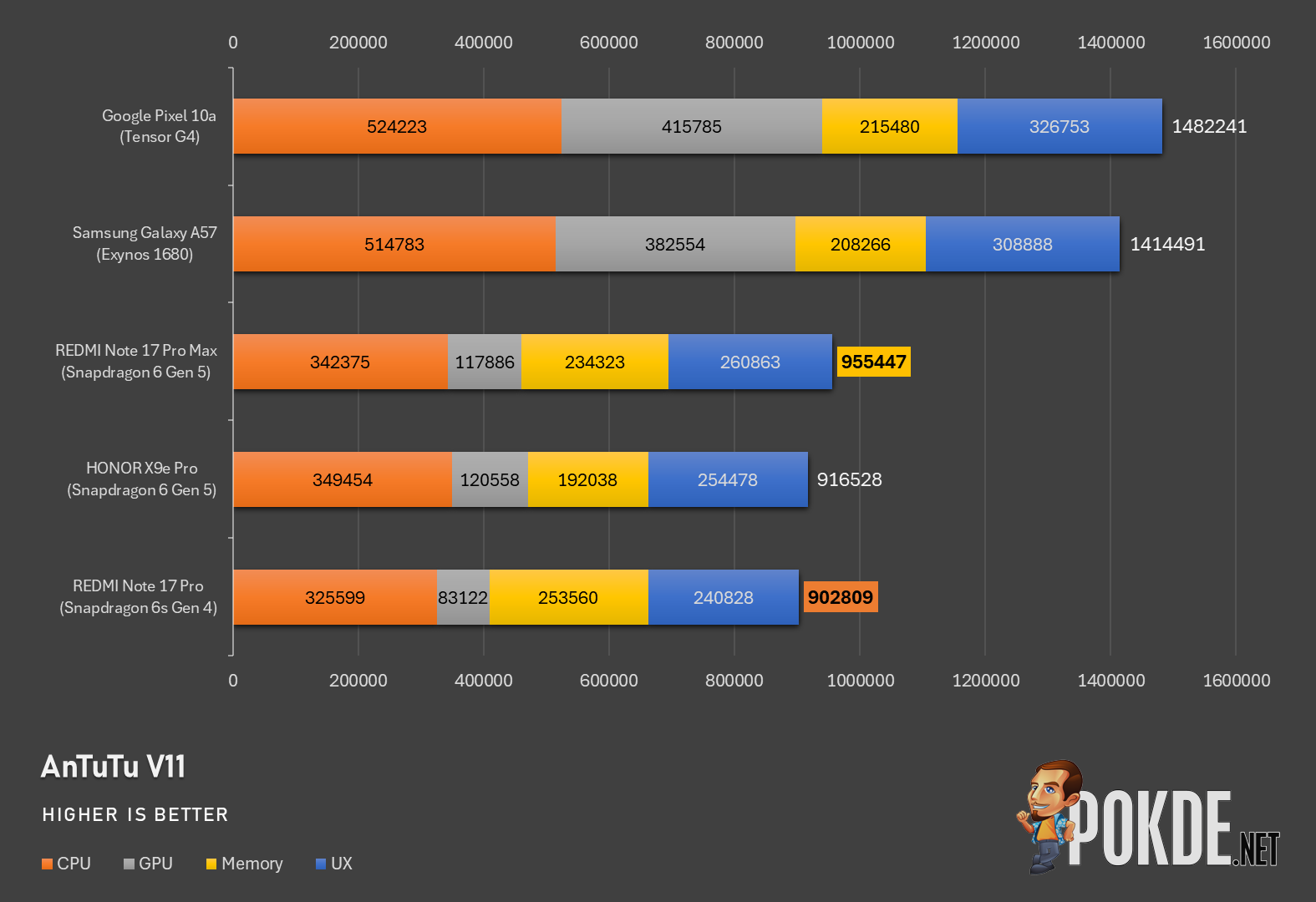
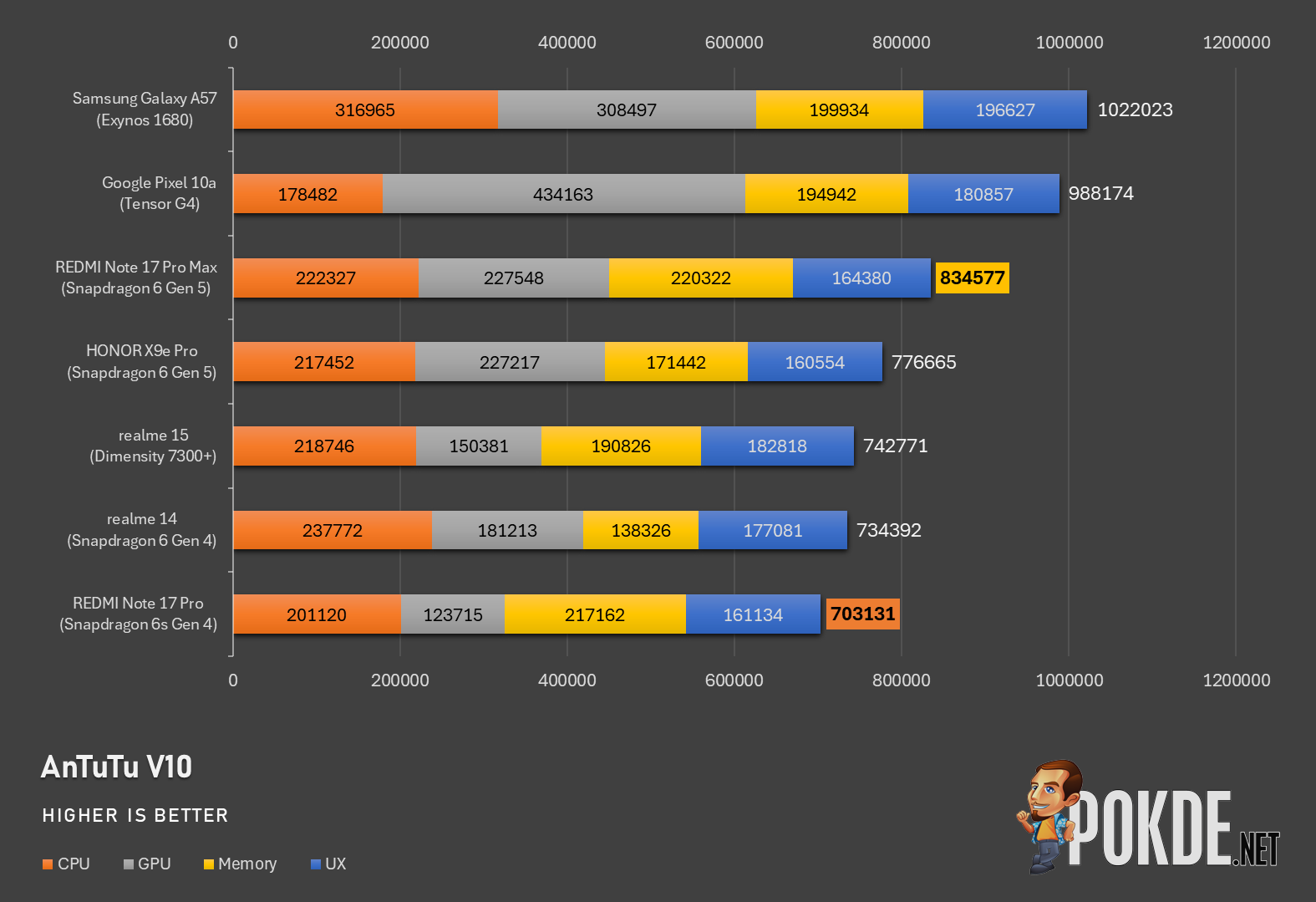
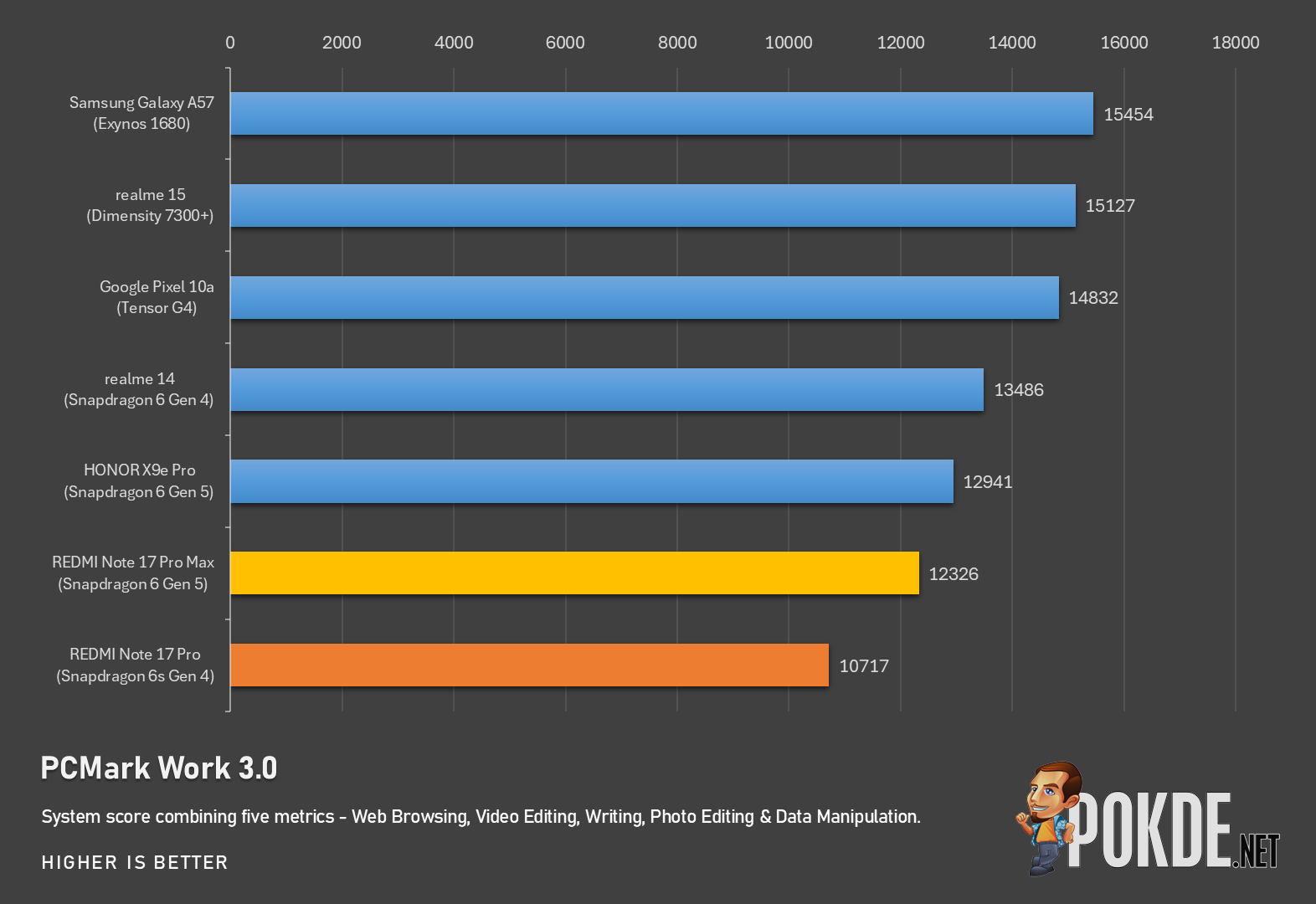
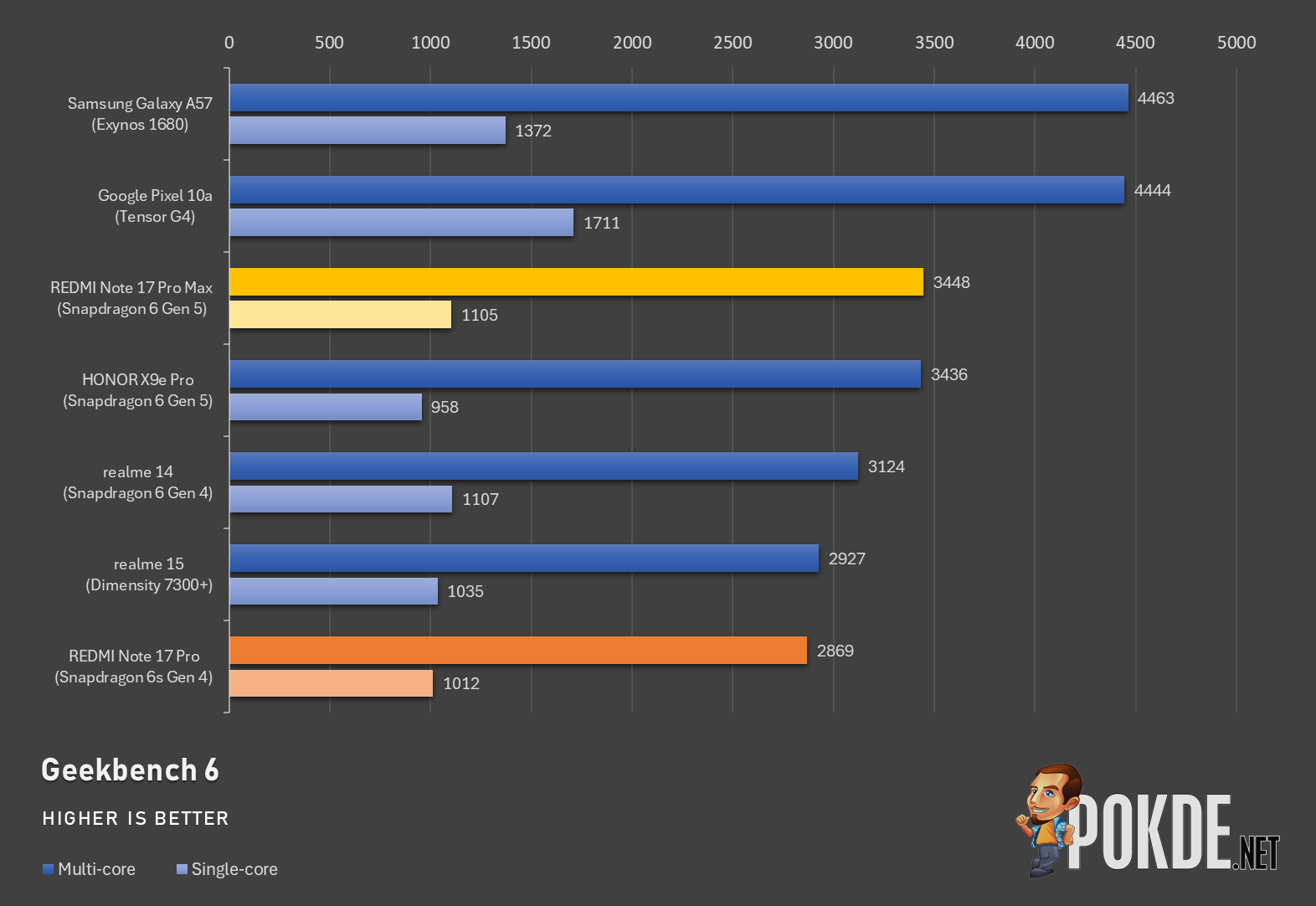
Despite having similar model names, the underlying hardware powering the REDMI Note 17 Pro and REDMI Note 17 Pro Max does differ significantly: the former is powered by Qualcomm Snapdragon 6s Gen 4, while the latter is powered by Qualcomm Snapdragon 6 Gen 5. The underlying CPU cores are the same – Arm Cortex-A78 big cores and Arm Cortex-A55 small cores respectively – only that the clock speeds are 200MHz lower in the case of Snapdragon 6s Gen 4.
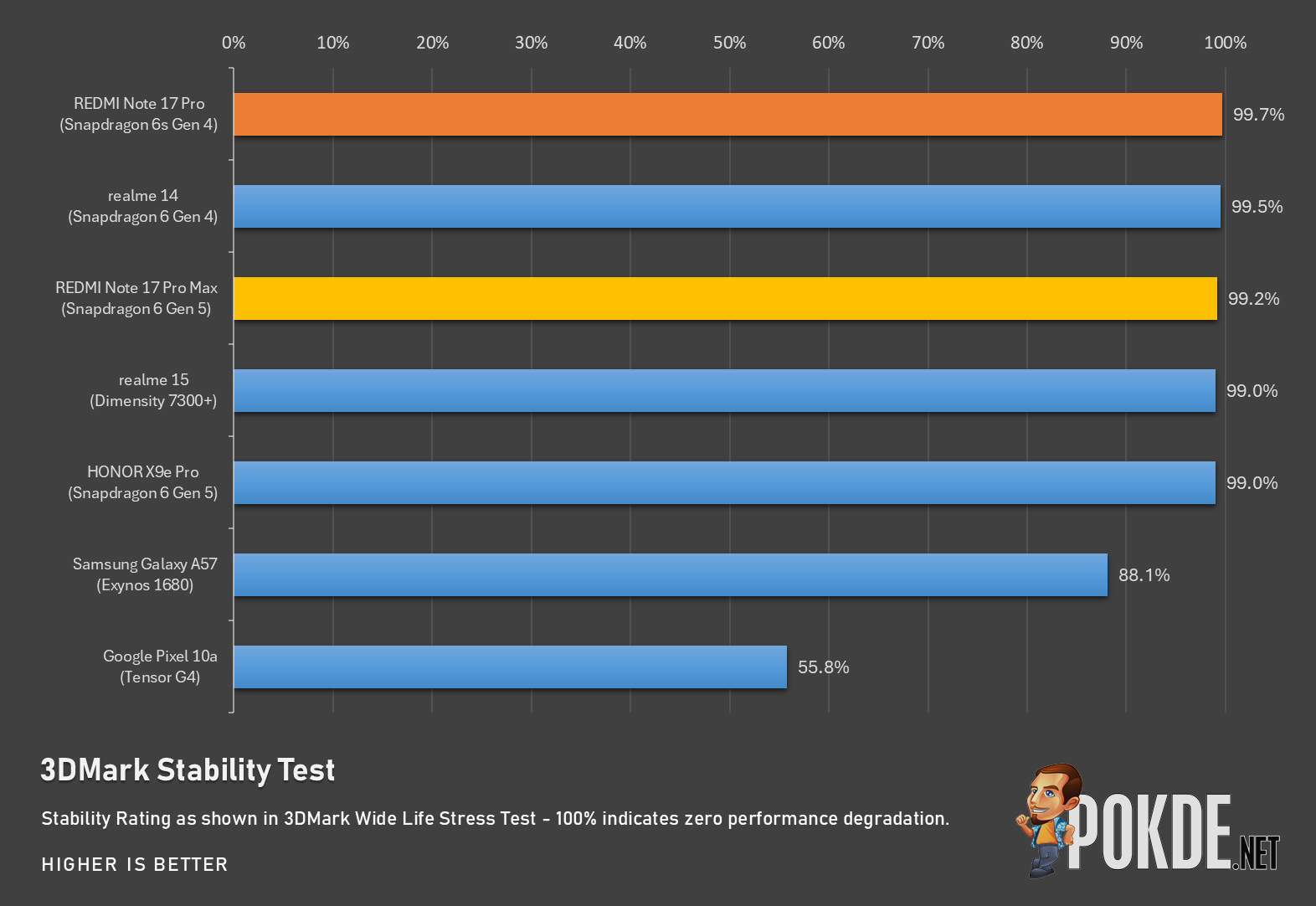
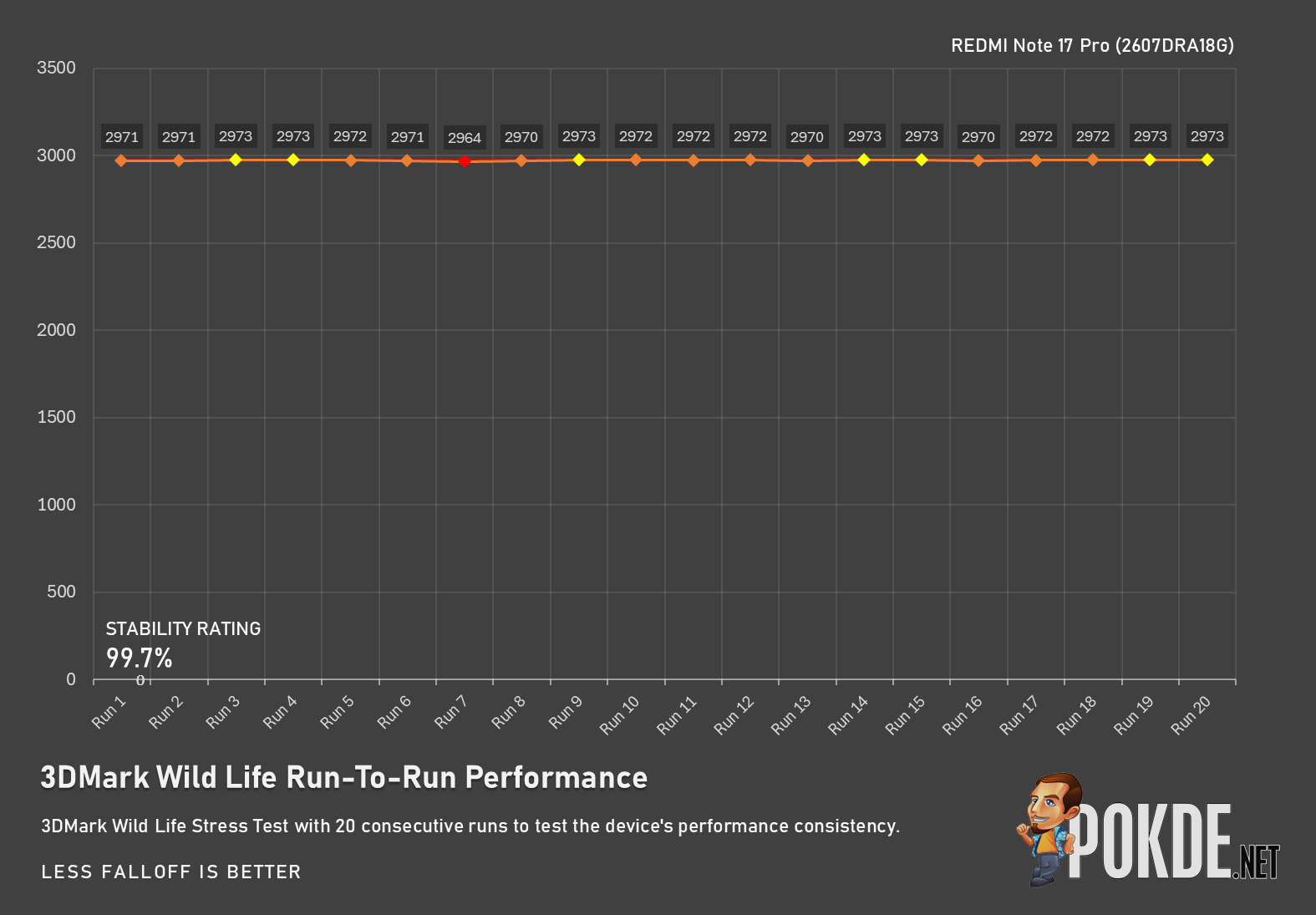
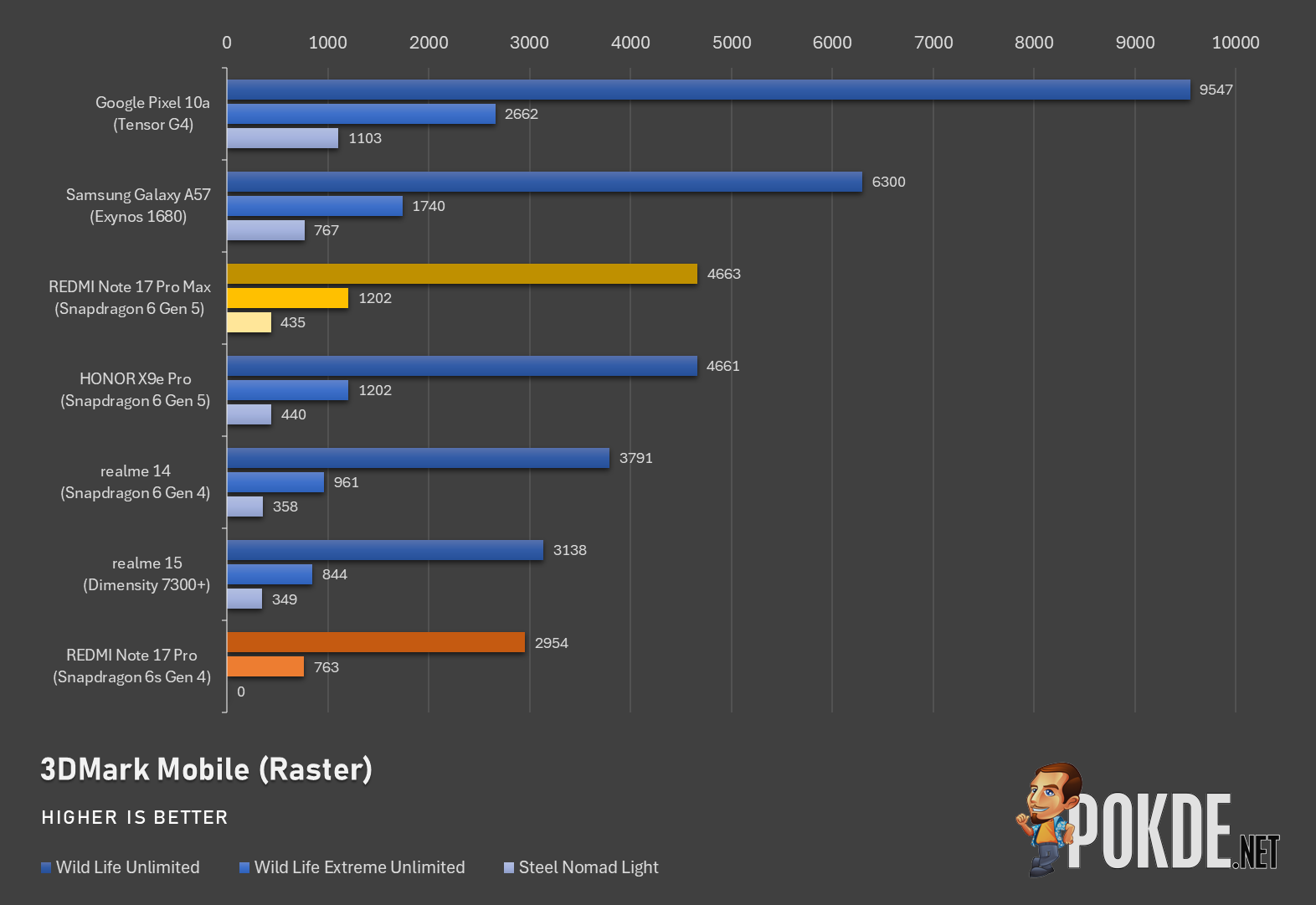
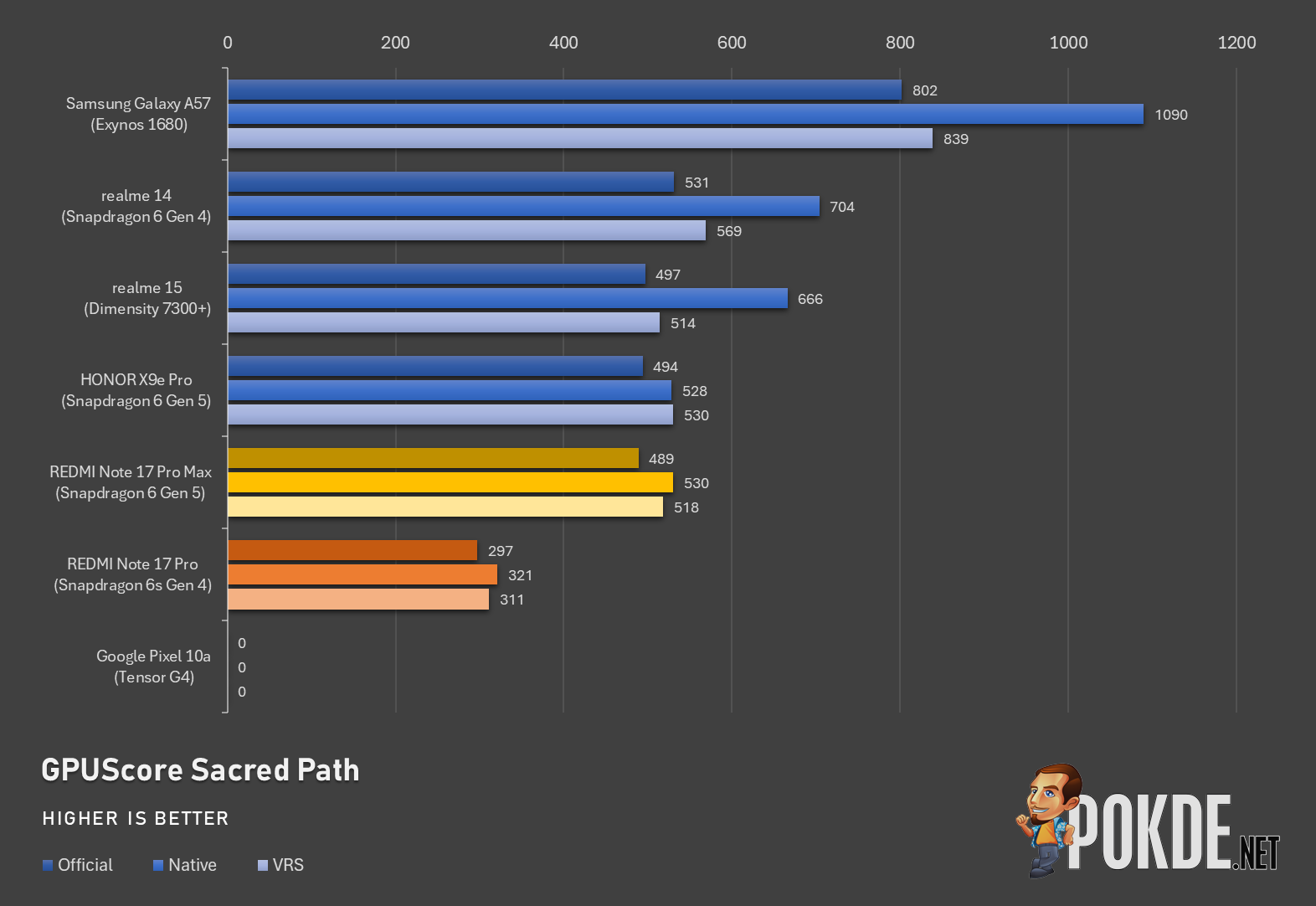
GPU-wise, the Pro Max’s 6 Gen 5 has an Adreno 812 GPU, while the Pro’s 6s Gen 4 has an Adreno 710 – as we can see, there are significant performance discrepancies between the two, with the Adreno 710 having roughly 60% of the performance of the Adreno 812. (Of course, it has to be said that both lack support for ray tracing.) In terms of performance stability, no issues here – both the Pro and Pro Max are very consistent, if not for the lack of performance to properly push its cooling system to the limit.
(Note – we cannot run Steel Nomad Light on the REDMI Note 17 Pro due to insufficient RAM for the test, as it required 8GB or above.)



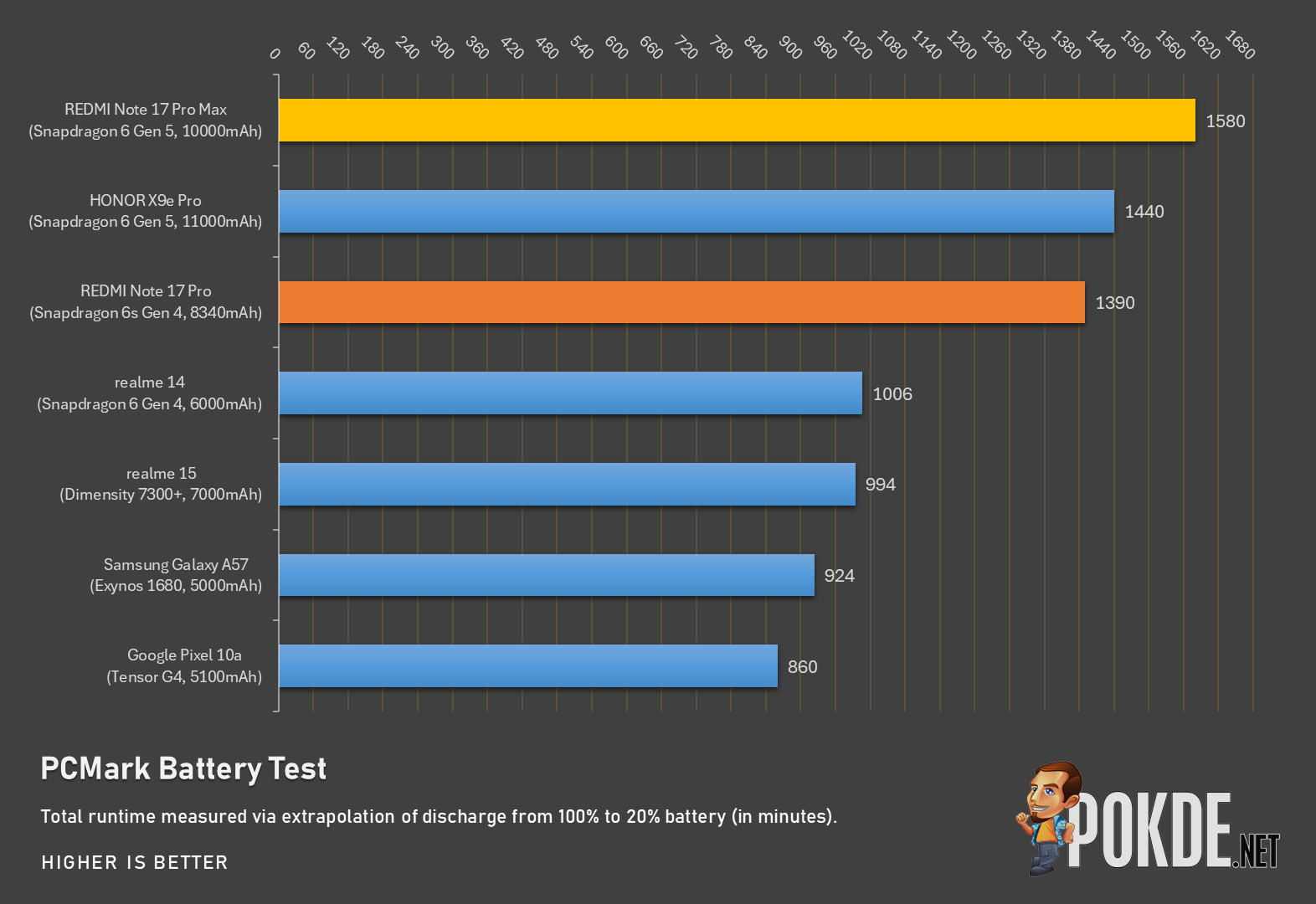
The main selling point of the Note 17 series is the battery life, and as we have shown in the Pro Max’s review, the battery easily lasts for days. While the REDMI Note 17 Pro has a smaller battery by comparison – 17% smaller than the Pro Max, to be precise – it still managed to last 23 hours and 10 minutes in this PCMark Battery Test, or 12% less runtime than the Pro Max. That said, this is still easily a smartphone with all-day battery given its sheer endurance.
Camera
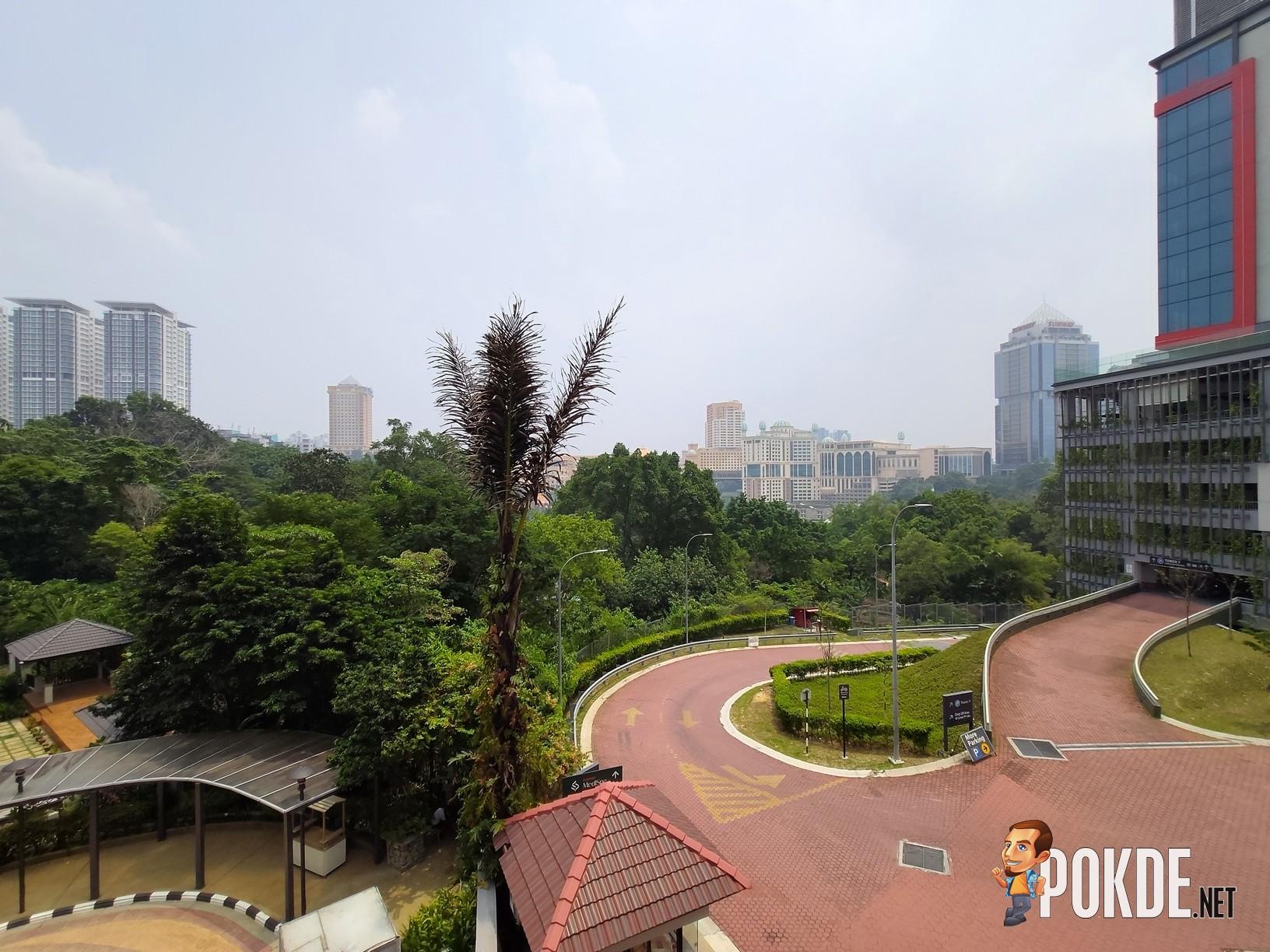

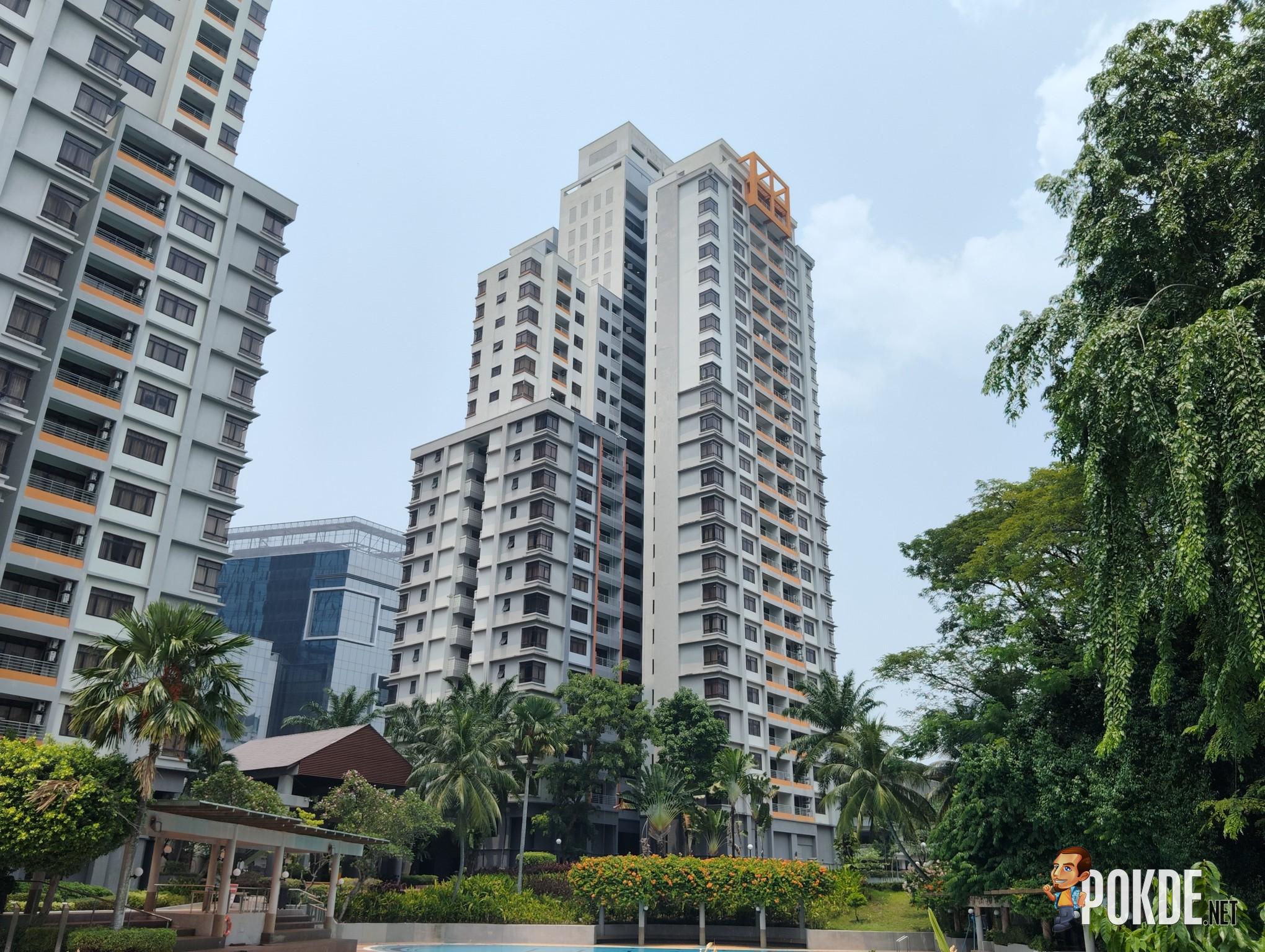



The camera capabilities of the REDMI Note 17 Pro is fairly limited, though that is to be expected from a budget smartphone. In daytime or well-lit scenarios, the camera often have tendencies to boost the brightness (the first image is supposed to be a cloudy afternoon just minutes away from rainfall). Color balance is often a weakness in interior shots as well.






Given its limited sensor size, night scenes is something that REDMI Note 17 Pro struggles with. Night mode is virtually mandatory, and while it improves some overblown parts, the overall quality does leave a lot to be desired. Above is the comparison shots using the phone’s zoom range, with Night Mode off and on, respectively, for reference.






Above are some of the extra examples of night time shots taken on the REDMI Note 17 Pro Max.
Key Takeaways
So, should you go for the REDMI Note 17 Pro, or the REDMI Note 17 Pro Max? That ultimately depends on the budget you have. If your priority is value for money and don’t care too much about heavy gaming, the Pro is the way to go to save some buck while still getting the benefit of all-day battery. Currently, 8+256GB versions of both cost RM1,599 and RM1,999 respectively right now (we should note that the 6+256GB Pro model we have here is not sold in Malaysia), so you can save quite a lot if you ultimately pick the Pro model instead.
If you’re looking for a slightly better camera, more gaming performance, even more battery, and the unique Cloud Blush color, then the REDMI Note 17 Pro Max is where it’s at. Either way, both offer 4 years of OS updates and 6 years of security updates, on top of the durability features that should make either one a long-lasting device down the line.